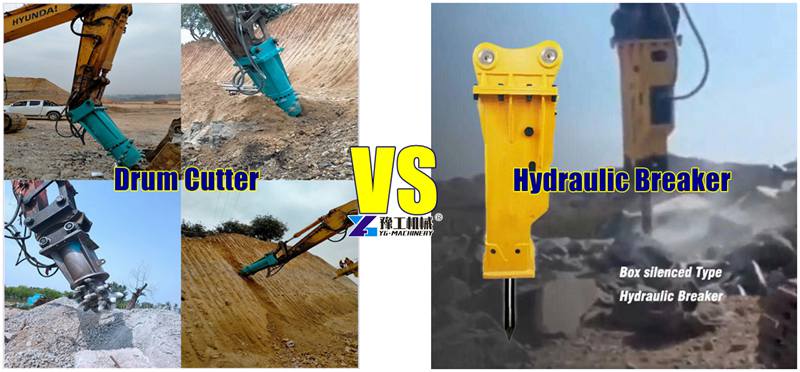
When an excavator needs to remove hard rock, concrete, asphalt, or other difficult materials, contractors often compare a drum cutter vs hydraulic breaker.
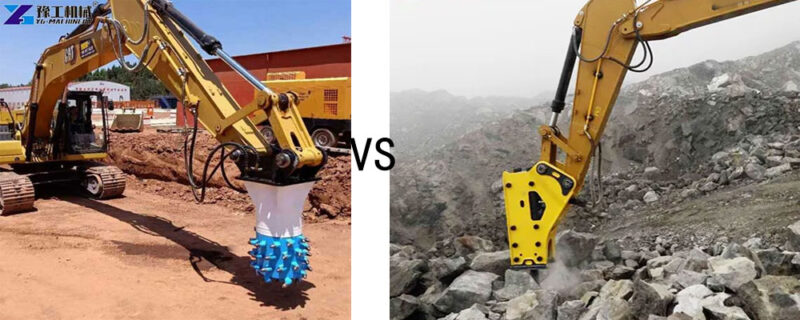
Both are excavator attachments for hard-material excavation, but they work in very different ways. A drum cutter uses continuous rotary cutting, while a hydraulic breaker uses repeated impact to fracture material.
The right choice depends on the material, required excavation profile, production requirements, vibration sensitivity, and excavator hydraulic system.
This guide explains the key differences between a drum cutter and hydraulic breaker and helps you determine which attachment is more suitable for your project.
Drum Cutter vs Hydraulic Breaker: Key Differences
The main difference is how each attachment removes material.
| Working Method | Continuous rotary cutting | Repeated impact |
| Material Removal | Progressive milling and cutting | Fracturing |
| Main Tool | Carbide cutting picks | Chisel or breaker tool |
| Vibration | Generally lower impact vibration | Generally higher impact vibration |
| Profile Control | More suitable for controlled cutting | Primarily designed for breaking |
| Typical Work | Trenching, profiling, tunnel excavation, concrete milling | Rock breaking, concrete demolition, foundation work |
| Cutting Action | Rotary | Impact |
Neither attachment is universally suitable for every project. The better choice depends on what the excavator needs to accomplish.
How Does a Drum Cutter Work?
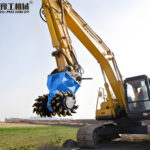
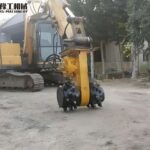
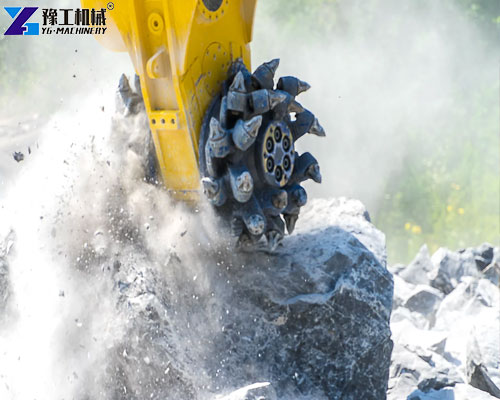
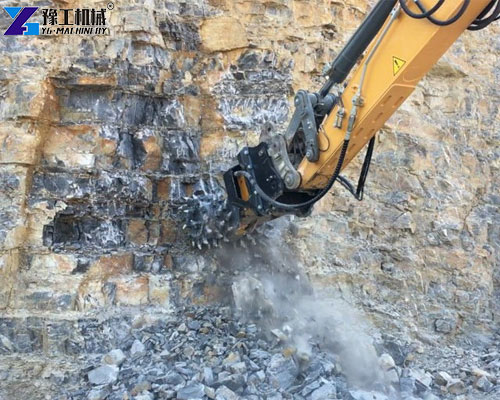
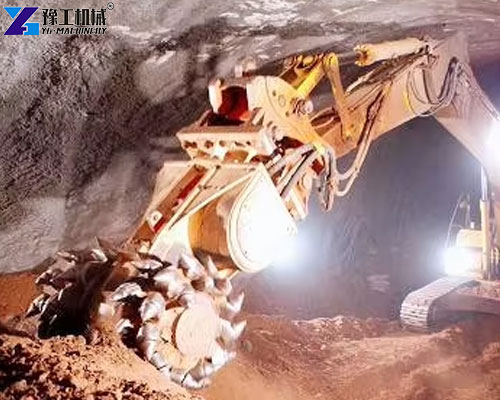
A drum cutter for excavator uses hydraulic power from the carrier to rotate one or two cutting drums.
The drums are fitted with carbide cutting picks. As the drum rotates, the picks progressively cut into rock, concrete, or other hard materials.
The basic process is:
- The excavator supplies hydraulic flow and pressure.
- A hydraulic motor drives the cutting drum.
- A reduction gearbox converts motor speed into usable cutting torque.
- Carbide picks continuously cut the material.
- The excavator operator controls the attachment movement and cutting path.
This continuous cutting action makes a drum cutter useful when the project requires controlled material removal, trenching, profiling, or surface milling.
For more information about the hydraulic system and configurations, see our Hydraulic Drum Cutter.
How Does a Hydraulic Breaker Work?
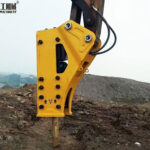
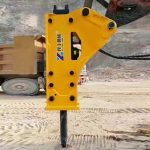
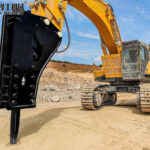
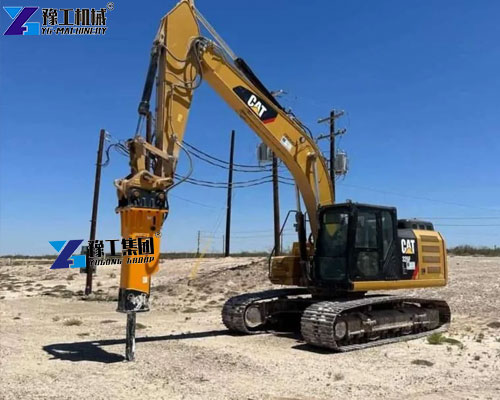
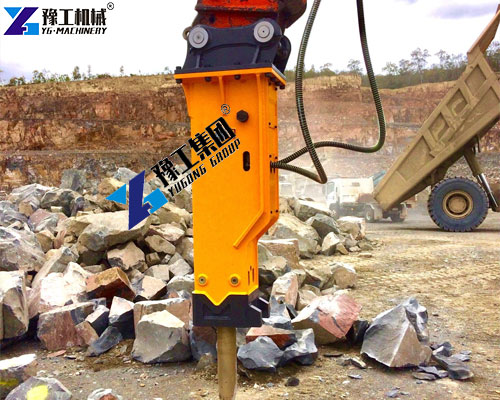
A hydraulic breaker for excavator uses hydraulic power to drive a piston and tool through repeated impact.
Instead of continuously milling the material, the breaker concentrates impact energy through the working tool. Repeated blows create cracks and fractures until the material can be removed.
Hydraulic breakers are commonly used for:
- Concrete demolition
- Reinforced concrete breaking
- Rock breaking
- Foundation demolition
- Asphalt removal
- Oversized rock reduction
This makes a hydraulic breaker particularly useful when the main requirement is to fracture hard material rather than cut it to a controlled profile.
For hydraulic breaker models, specifications, and excavator matching, see our Hydraulic Breaker for Sale.
Drum Cutter vs Hydraulic Breaker for Rock
Rock conditions are one of the most important factors when choosing between these two excavator attachments.
1.Drum Cutter for Controlled Rock Excavation
A drum cutter can be considered when the project requires:
- Controlled rock removal
- Rock trenching
- Tunnel profiling
- Excavation near existing structures
- Defined cutting paths
- Progressive material removal
The rotary cutting action allows the operator to gradually remove rock instead of relying on repeated impact.
2.Hydraulic Breaker for Rock Breaking
A hydraulic breaker can be considered when the primary requirement is to fracture:
- Large rocks
- Oversized stones
- Hard rock formations
- Rock obstructions during excavation
- Rock that needs to be broken before loading and removal
For heavy rock breaking, the breaker concentrates impact energy into a relatively small working area.
3.What Should You Consider?
Rock hardness alone does not determine the attachment choice. Contractors should also consider:
- Rock structure and abrasiveness
- Required excavation profile
- Production requirements
- Available working space
- Required cutting or breaking depth
- Excavator hydraulic capacity
Drum Cutter vs Hydraulic Breaker for Concrete
Both attachments can work with concrete, but their working methods make them suitable for different tasks.
1.Drum Cutter for Concrete Milling
A drum cutter may be useful for:
- Controlled concrete removal
- Concrete surface milling
- Concrete profiling
- Trenching through concrete
- Selective material removal
The rotating cutting drum can gradually remove concrete along a controlled path.
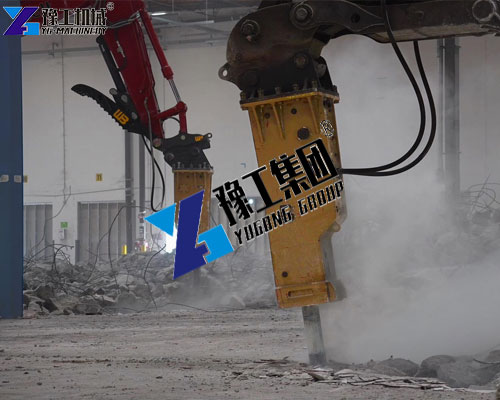
2.Hydraulic Breaker for Concrete Demolition
A hydraulic breaker is commonly used for:
- Concrete slabs
- Foundations
- Concrete walls
- Road bases
- Thick concrete sections
- Reinforced concrete structures
The impact tool fractures the concrete so that the broken material can then be removed.
For projects where precise cutting of reinforced concrete is required, other methods such as a concrete wire saw may also be considered depending on the structure and cutting requirements.
Which Has Lower Vibration?
A drum cutter generally produces lower impact vibration than a hydraulic breaker because it uses continuous rotary cutting rather than repeated impact.
This characteristic can be useful when excavation or demolition is carried out:
- Near existing buildings
- Around underground utilities
- In tunnels
- In confined construction areas
- Near vibration-sensitive structures
However, actual vibration and noise levels depend on the attachment, excavator, material, operating technique, and site conditions.
Lower impact vibration does not mean that a drum cutter is suitable for every low-vibration project. The complete working environment should still be evaluated before equipment selection.
Which Provides More Controlled Excavation?
For projects where the excavation profile matters, a drum cutter offers a different working method from a hydraulic breaker.
The operator can control the cutting path by moving the excavator boom and arm while the drum continuously mills the material.
This can be useful for:
- Tunnel profiling
- Rock trenching
- Concrete milling
- Controlled excavation
- Surface preparation
A hydraulic breaker is primarily designed to fracture material. It can remove material effectively, but it is generally less suited to applications where the main objective is controlled milling or profiling.
Drum Cutter or Hydraulic Breaker: Which One Should You Choose?
Instead of asking which attachment is universally better, start with the actual project requirement.
| Heavy rock breaking | Hydraulic Breaker |
| Oversized rock reduction | Hydraulic Breaker |
| Thick concrete demolition | Hydraulic Breaker |
| Foundation breaking | Hydraulic Breaker |
| Controlled rock excavation | Drum Cutter |
| Rock trenching | Drum Cutter |
| Tunnel profiling | Drum Cutter |
| Concrete milling | Drum Cutter |
| Controlled material removal | Drum Cutter |
These are general application guidelines rather than absolute rules. Material properties, project production targets, excavator specifications, and site conditions can change the appropriate choice.
How to Match the Attachment to Your Excavator?
Whichever attachment you choose, excavator compatibility is essential.
1. Excavator Operating Weight
The attachment should be within the recommended operating range of the excavator. An unsuitable attachment weight can affect stability and carrier performance.
2. Hydraulic Flow
The excavator must provide sufficient hydraulic flow for the selected attachment.
For a drum cutter, hydraulic flow affects the operating characteristics of the hydraulic motor. For a breaker, the required flow must match the breaker’s hydraulic circuit.
3. Hydraulic Pressure
Hydraulic pressure is another important compatibility factor. Incorrect pressure settings can reduce performance and increase component wear.
4. Attachment Weight and Mounting
Check:
- Attachment weight
- Mounting bracket
- Pin dimensions
- Hydraulic hose connections
- Quick coupler compatibility
The attachment should be matched to the actual excavator rather than selected only by nominal tonnage.
Drum Cutter vs Hydraulic Breaker: Main Decision Factors
Before requesting a quotation, define the following project information:
Material:
Rock, concrete, reinforced concrete, asphalt, or another material.
Working method:
Do you need to fracture material or progressively mill it?
Excavation profile:
Is a controlled trench, tunnel profile, or surface finish required?
Production target:
How much material needs to be removed per hour or per day?
Site conditions:
Consider restricted access, nearby structures, underground utilities, and vibration sensitivity.
Excavator specifications:
Provide the excavator model, operating weight, hydraulic flow, hydraulic pressure, and mounting dimensions.
This information allows the attachment to be selected according to the actual working conditions rather than simply choosing the largest available model.
FAQ about Drum Cutter & Hydraulic Breaker
1.Is a drum cutter better than a hydraulic breaker?
Neither attachment is universally better. A drum cutter uses continuous rotary cutting and is suited to controlled material removal and profiling, while a hydraulic breaker uses repeated impact and is suited to fracturing hard materials.
2.Can a drum cutter break rock?
A drum cutter can cut and progressively remove rock when its configuration and hydraulic power are suitable for the material and application. Rock hardness, abrasiveness, and required production should be evaluated before selection.
3.Can a drum cutter replace a hydraulic breaker?
Not in every application. A drum cutter and hydraulic breaker use different working methods. A breaker is designed primarily for impact breaking, while a drum cutter is designed for continuous rotary cutting.
4.Which attachment has less vibration?
A drum cutter generally produces less impact vibration because it does not rely on repeated impact blows. Actual vibration depends on the equipment, material, operating conditions, and worksite.
5.Which is better for tunnel excavation?
The choice depends on the tunnel work. A drum cutter can be useful for controlled rock excavation and profiling, while a hydraulic breaker may be used when the primary requirement is to fracture hard rock or concrete.
6.How do I choose between a drum cutter and hydraulic breaker?
Start with the material and required working method. Then consider excavation profile, production requirements, vibration sensitivity, excavator hydraulic flow and pressure, attachment weight, and mounting compatibility.
Conclusion
The key difference between a drum cutter and hydraulic breaker is their working method.
A drum cutter uses continuous rotary cutting for controlled material removal, trenching, profiling, and milling. A hydraulic breaker uses repeated impact to fracture rock, concrete, and other hard materials.
The right excavator attachment depends on the material, excavation requirements, production target, site conditions, and excavator hydraulic system.
If you are unsure which attachment fits your project, provide your excavator model, hydraulic specifications, material type, and application requirements. These details can be used to determine the appropriate equipment configuration.