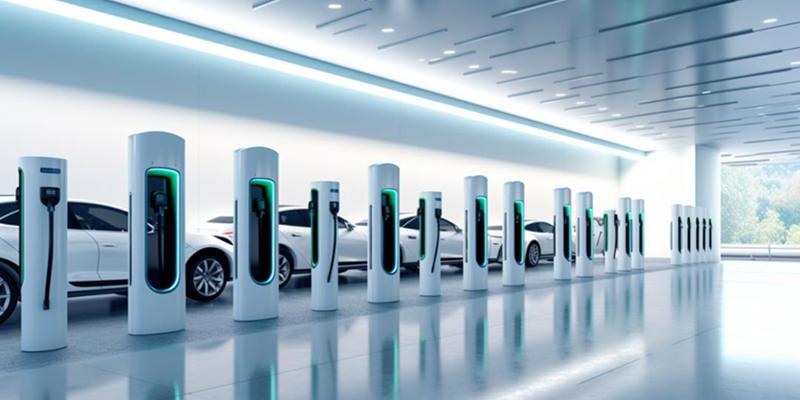
What is a Charging Pile?
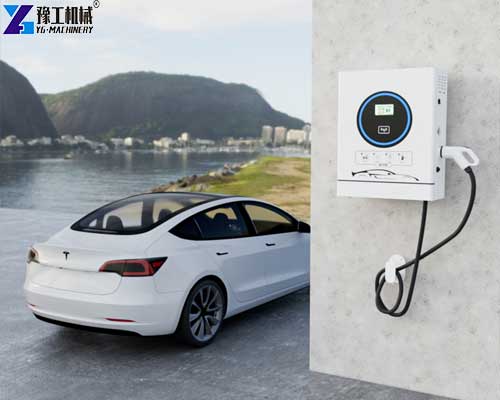
Charging pile, also known as an EV charging point or electric vehicle supply equipment (EVSE), is an energy replenishing device that provides electric vehicles with electricity. Its function is similar to the gas dispenser in a gas station. It can be fixed on the ground or wall and installed in public buildings (charging stations, shopping malls, public parking lots, etc.) and residents. In the community parking lot, various types of electric vehicles can be charged according to the adjusted voltage and current.
Charging Pile Parameters
| Product number | YG-60KW | YG-80KW | YG-120KW | |
| Detailed specification | rated power | 60KW | 80KW | 120KW |
| Charging equipment | User Interface | 7-inch LCD color display touchscreen | ||
| installation | Floor-standing/Down in down out | |||
| Routing mode device size | 635*423*1600(mm) | |||
| Input voltage | AC380V±20% | |||
| Input frequency | 45~65Hz | |||
| The output voltage | 200-750VDC | |||
| Single gun output current range | 200V-500V | 200V-500V | 200V-500V | |
| The output voltage | 0-90A | 0-120A | 0-160A | |
| Single gun output current range | 200V-750V | 200V-750V | 200V-750V | |
| The output voltage | 0-60A | 0-80A | 0-107A | |
| Charging equipment | Single gun output current range | 0-112A | 0-150A | / |
| Cable length | 5m | |||
| Electrical index | Measurement accuracy | Level 0.5 | ||
| Current limit protection value | ≥110% | |||
| Voltage regulation accuracy | ≤±0.5% | |||
| Steady flow accuracy | ≤±1% | |||
| Ripple coefficient | ≤±0.5% | |||
| effectiveness | ≥94.5% | |||
| Power factor | ≥0.99 (50% load or more) | |||
| Harmonic content THD | ≤5% (50% load or more) | |||
| Feature design | HMI | 7-inch LCD color display touch screen, LED indicator | ||
| Charging mode | Auto full / fixed power / fixed amount / fixed time | |||
| payment method | Credit card payment / APP payment /scan code payment | |||
| Communication Interface | Ethernet 2/3/4G (optional) | |||
| Safety design | Executive standard | GB\T 20234, GB/T 18487, GB/T 27930, NB\T 33008 | ||
| security function | Charge gun temperature detectionovervoltage protectionundervoltage protectionoverload protectionshort circuit protectiongrounding protectionover temperature protectionlow-temperature protectioninsulation monitoring protectionpolarity reverse connection protectionlightning protectionemergency stop protectionleakage protection | |||
| Environmental indicators | Operating temperature | -25°C~+50°C | ||
| Working humidity | 5%~95% non-condensing cream | |||
| Working elevation | <3000m | |||
| Protection level | IP54 | |||
| cooling method | Forced air cooling | |||
| Noise control | ≤60dB | |||
| MTBF | 100,000 hours | |||
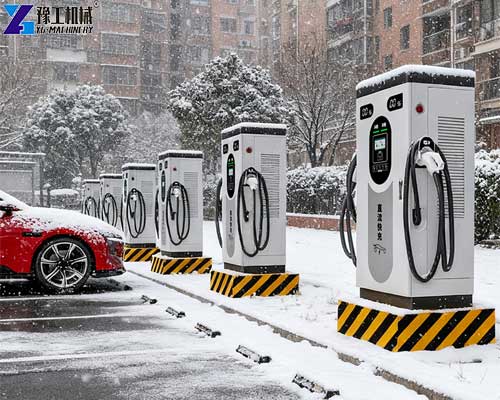
What is the difference between an electric vehicle charging pile and a charging station?
A charging pile is a single charging unit for one vehicle, but a charging station consists of multiple charging units to cater to multiple vehicles. Charging stations typically have more complex infrastructure, including energy management, monitoring systems, and additional amenities. In addition, the charging station can charge an electric vehicle up to 80% capacity in approximately 30 minutes.
| Feature | Charging Pile | Charging Station |
| Basic function | Charges EVs | Provides a complete charging facility |
| Number of chargers | Usually one unit | Multiple charging units |
| Infrastructure | Relatively simple | More comprehensive |
| Typical locations | Homes, offices, parking lots | Public and commercial sites |
| Management system | Basic or integrated | Often centralized |
Types of Charging Piles
By charging type
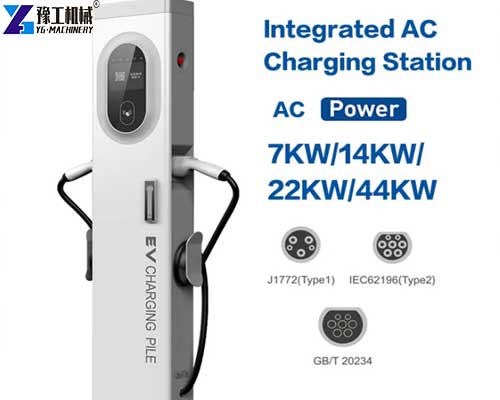
AC charging pile:
- Often called slow charging pile, charging time is longer (usually takes 6-10 hours).
- Suitable for home and public parking lots, with low power, usually connected to 220V power supply.
- Suitable for small passenger electric vehicles.
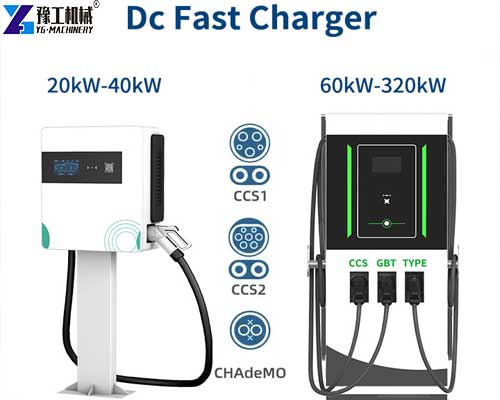
DC charging pile:
- Called fast charging pile, charging time is short (usually 30 minutes to 2 hours).
- Suitable for electric buses, taxis and other vehicles that need fast charging.
- The charging power is large, the installation requirements are high, and a special high-load transformer is usually required.
AC Charging Pile vs DC Charging Pile
The most important difference between AC and DC charging is how electrical power is converted and delivered to the vehicle.
| Feature | AC Charging Pile | DC Charging Pile |
|---|---|---|
| Charging speed | Slower | Faster |
| Typical application | Home, office, long-term parking | Public and commercial charging |
| Equipment power | Lower | Higher |
| Installation requirements | Generally simpler | Generally more demanding |
| Equipment cost | Usually lower | Usually higher |
| Best for | Long parking periods | Fast turnaround |
The actual charging time depends on charger power, vehicle charging capability, battery capacity, battery state of charge and other operating conditions.
By service object
Public charging pile:
- Established in public places, such as parking lots, for all electric car owners.
- DC charging piles, charging speed is fast.
Dedicated charging pile:
- Usually installed inside an enterprise or unit, for internal use only.
- Mostly slow charging piles.
Private charging pile:
- Charging piles installed by individuals, usually located in private homes, for personal vehicles.
By installation location
- Indoor charging pile: Installed indoors, with relatively low protection level and low cost.
Because they are less exposed to rain, sunlight and extreme weather, their environmental protection requirements may be different from outdoor equipment.
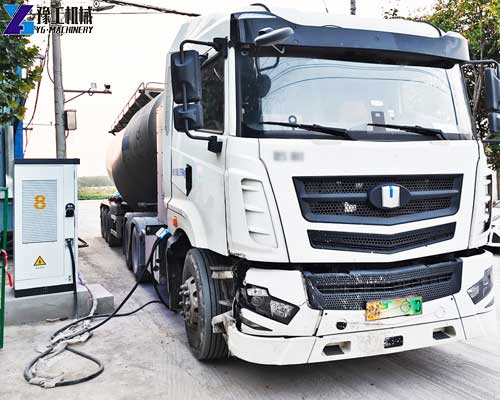
- Outdoor charging pile: Designed for outdoor environment, with high waterproof and dustproof level, able to withstand bad weather.
Outdoor charging piles are commonly used in:
- Public parking lots
- Commercial parking areas
- Highway service areas
- Fleet depots
- Outdoor charging stations
According to the number of charging ports
Single pile single gun: Each charging pile is equipped with one charging port.
It is suitable for:
- Home charging
- Small parking lots
- Individual parking spaces
- Dedicated vehicle charging
Single pile multiple guns: Allows charging of multiple electric vehicles at the same time, usually used in large parking lots.
This configuration is useful for:
- Large parking lots
- Fleet charging
- Commercial charging stations
- Bus depots
- Logistics centers
For fleet applications, multiple charging connectors can help improve charging capacity without requiring a separate charging unit for every parking space.
Know more about Car Charging Station Price in Netherlands
What Are the Requirements for Installing a Charging Pile?
Before installing an EV charging pile, several factors should be evaluated.
1.Electrical Capacity: The available electrical capacity must match the charger’s power requirements.
High-power DC charging equipment can require substantial electrical capacity and may need additional distribution equipment or transformer capacity.
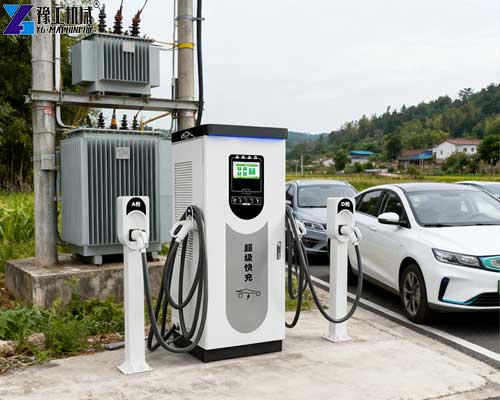
2.Installation Location: The installation area should have sufficient space for the charger, vehicle parking and cable operation.
For outdoor installations, drainage, weather exposure and physical protection should also be considered.
3.Grounding and Electrical Protection: Proper grounding and electrical protection are essential for safe operation.
Depending on the charger type and local regulations, suitable circuit breakers, residual-current protection, surge protection and other safety devices may be required.
4.Charging Connector Compatibility: The charging connector must be compatible with the target electric vehicles and the charging standards used in the intended market.
Before purchasing equipment, confirm the required connector type and charging protocol.
5.Communication and Payment: Public and commercial charging stations may require additional functions such as:
- RFID
- Mobile payment
- Remote monitoring
- User authentication
- Charging records
- Cloud management
- Fault alerts
These features are less important for some private home charging applications.
How to Choose the Right Charging Pile?
Choosing the right charging pile depends mainly on the vehicle, charging frequency, available power and installation environment.
1.For Home Charging: If the vehicle is parked overnight, an AC charging pile may be sufficient. A lower-power charger can provide convenient overnight charging without requiring the infrastructure of a high-power DC system.
2.For Public Charging Stations: If vehicles need to recharge quickly and return to service in a short period, a DC charging pile may be more suitable.
The required charging power should be selected according to vehicle compatibility, expected traffic and available electrical capacity.
3.For Commercial Fleets: Fleet operators should consider the number of vehicles, daily mileage, operating hours and charging schedule.
A multiple-gun system may be useful when several vehicles need to charge within the same period.
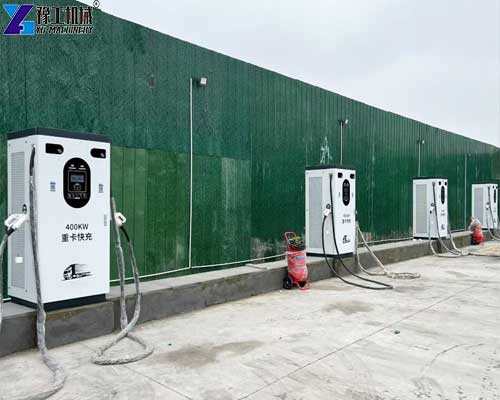
4.For Outdoor Applications: Choose equipment designed for outdoor conditions and verify its protection rating, operating temperature range, cable management and installation requirements.
How Much Does an EV Charging Pile Cost?
The price of a charging pile varies considerably depending on its configuration.
The main factors include:
- AC or DC charging type
- Rated charging power
- Number of charging guns
- Charging connector
- Display and control system
- Communication functions
- Payment system
- Protection level
- Installation requirements
- Transformer or distribution equipment
- Quantity ordered
In general, a basic AC charging pile is less expensive than a high-power DC fast charging system.
For a complete commercial charging station, the charger itself may only be part of the total investment. Electrical distribution, cables, transformers, civil works, installation and charging management systems can also affect the final project cost.
Therefore, it is better to request a project-based quotation rather than compare charging pile prices based only on the equipment itself.
How to Reduce EV Charging Infrastructure Costs?
Choosing the highest-power charger is not always the most economical solution.
For example, a workplace where vehicles remain parked for 8 hours may not need the same charging power as a highway fast-charging station where vehicles stay for only a short period.
To control costs:
- Select charging power according to actual demand
- Match the charger with vehicle charging capability
- Avoid unnecessary high-power equipment
- Plan the number of charging points according to traffic
- Check existing electrical capacity before installation
- Consider centralized management for multiple chargers
- Compare equipment and installation costs together
A correctly sized charging system can provide sufficient charging capacity without unnecessarily increasing equipment and infrastructure costs.
Common Applications of EV Charging Piles
EV charging piles are now used in many different environments.
- Residential Charging: Private AC chargers can provide convenient overnight charging for individual EV owners.
- Commercial Parking: Shopping malls, hotels and office buildings can provide EV charging services for customers and employees.
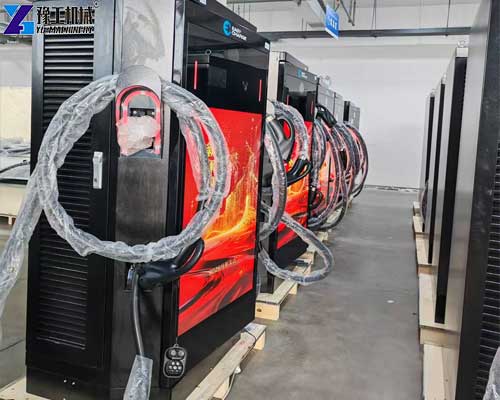
- Fleet Charging: Companies operating electric delivery vehicles, buses or taxis can install dedicated charging infrastructure according to fleet requirements.
- Public Charging Stations: Public charging stations combine multiple chargers with supporting electrical and management infrastructure to serve a large number of EV users.
FAQ about Charging Pile
1.What is a charging pile?
A charging pile is an EV charging device that supplies electrical energy to an electric vehicle. It can be installed in residential, commercial, industrial and public locations.
2.Is AC or DC charging better?
Neither is universally better. AC charging is suitable for longer parking periods and many home or workplace applications, while DC charging is better when faster charging is required.
3.Can one charging pile charge multiple vehicles?
Some charging piles have multiple charging guns and can serve multiple vehicles. However, the available power may be distributed between the connected vehicles.
4.What is the difference between a charging pile and an EV charger?
In many markets, the terms are used to describe similar equipment. “Charging pile” is commonly used in China and some international B2B markets, while “EV charger” or “EV charging station” is more common in English-language markets.
5.What should I provide when requesting a charging pile quotation?
For an accurate quotation, provide:
- Vehicle type and quantity
- Required charging power
- AC or DC preference
- Charging connector
- Number of charging guns
- Indoor or outdoor installation
- Available voltage and electrical capacity
- Required communication or payment functions
- Intended application
With this information, the supplier can recommend a more suitable configuration.
Conclusion
An EV charging pile is more than simply a device for supplying electricity. The right charging solution must match the vehicle, charging speed, electrical infrastructure, installation environment and actual usage requirements.
AC charging piles are suitable for many home, workplace and long-term parking applications, while DC charging piles are better suited to high-demand and fast-charging scenarios. Public, dedicated and private charging piles also have different requirements.
If you are planning an EV charging project, selecting the equipment based on your actual charging demand rather than simply choosing the highest power can help balance charging speed, installation requirements and total cost.
Need an EV charging pile for your project? Contact YG Machinery for a suitable configuration and quotation.