Tree care and pruning often become difficult when trees are located in narrow streets, landscaped parks, residential gardens, or other restricted-access areas. Traditional methods such as manual climbing, ladders, and large truck-mounted lifts may create safety risks or simply cannot reach the work location.
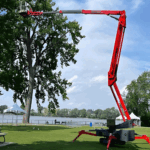
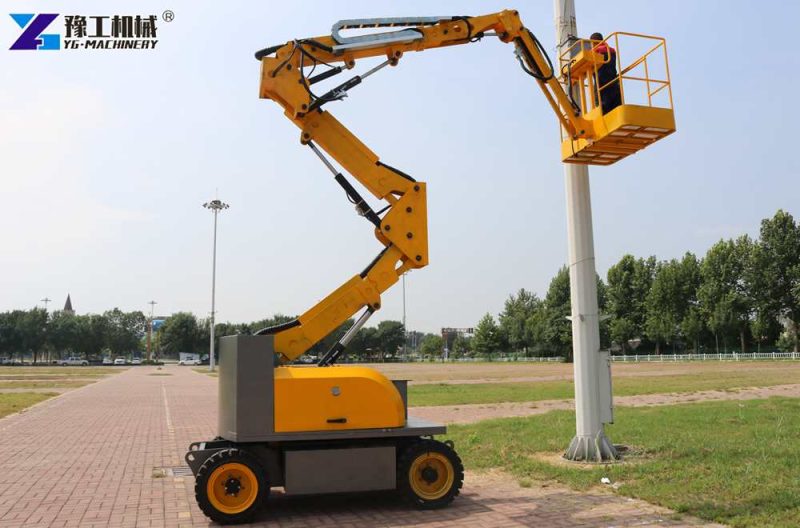
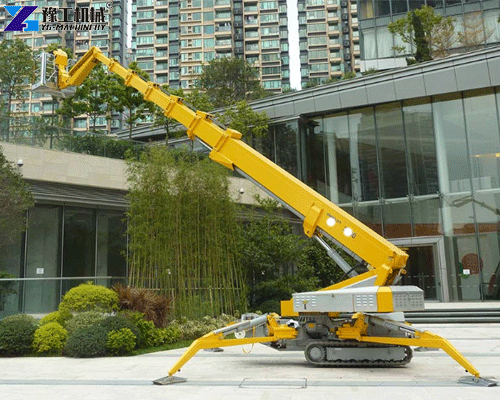
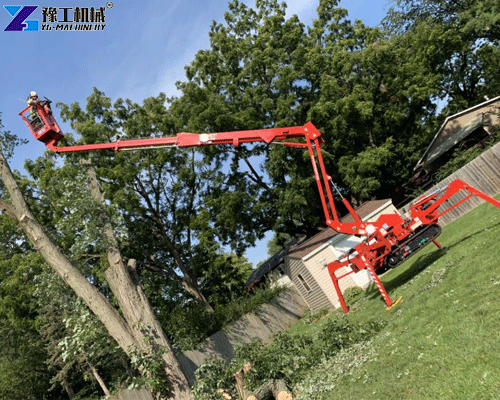
A spider lift for tree care provides a compact and flexible aerial access solution for professional tree pruning, trimming, and maintenance. With a narrow tracked chassis, flexible outriggers, and precise boom positioning, spider aerial platforms can operate in confined spaces, uneven ground, and complex urban environments where conventional aerial lifts have limited access.
This guide explains the main applications and advantages of using a spider lift for tree care, tree pruning, and tree trimming projects.
Spider Lift Parameters
| Model | YG-3 | YG-5 | YG-8 | |
| Specification | 3t | 5t | 8t | |
| Maximum working radius | 8.83m×0.15t | 14m×0.5t | 16.5m | |
| Maximum above-ground head | 9.9m×0.7t | 16.8m | 18m | |
| Winch device | Hook Speed | 0-8m/min(4 rope) | 12m/min(4 rope) | 12m/min(4 rope) |
| Rope diameter | φ8mm×45m | Φ11mm×80m | Φ11mm×80m | |
| Telescopic system | Boom Type | 5-section boom, pentagonal structure | 5-section boom, pentagonal structure | 5-section boom, pentagonal structure |
| Boom Length/Time | 3.1 m-9.2 m/20sec | 12.3m/54sec | 12.3m/54sec | |
| Up and down | Boom Angle/Time | 0°~78°/13sec | 0°~78°/13sec | 0°~78°/13sec |
| Slew system | Slew Angle/Speed | 0-360°continuous/60sec | 0-360°continuous/38sec | 0-360°continuous/38sec |
| Traction system | Walking Way | Hydraulic motor drives | Hydraulic motor drives | Hydraulic motor drives |
| Walking Speed | 0~2.5km/h | 0~2.5km/h | 0~2.5km/h | |
| Grade Ability | (25°)36% | (25°)36% | (25°)36% | |
| Operating system | Operation type (Boom/outrigger) | Manual operation, manual walking(remote control option) | Manual operation, manual walking(remote control option) | Manual operation, manual walking(remote control option) |
| Operating characteristics | Manual operation, remote control | Manual operation, remote control | Manual operation, remote control | |
| Transport parameters | L*W*H(mm) | 2950*980*1560 | 5000*1500*1900 | 5000*1600*2180 |
| Total weight(kg) | 2700 | 6200 | 720 | |
Why Use a Spider Lift for Tree Care?
Professional tree care often requires operators to reach branches safely without damaging surrounding landscapes or disrupting nearby traffic. A compact spider lift provides a practical alternative to manual climbing, ladders, and large truck-mounted aerial lifts.
1.Easy Access to Restricted Areas
The compact tracked chassis allows a spider lift to enter narrow streets, gardens, parks, and other locations with limited access.
2.Safe Working Position
Operators can perform tree pruning and trimming from a stable elevated platform instead of climbing trees manually.
3.Better Performance on Uneven Ground
Independent outriggers help stabilize the machine on uneven or sloped terrain commonly found in parks and landscaped areas.
4.Precise Tree Trimming
Flexible boom movement allows operators to position the platform accurately when working around branches, buildings, fences, and other obstacles.
Spider Aerial Platforms for Professional Tree Maintenance
Professional tree maintenance often involves working in locations where traditional aerial equipment cannot operate efficiently. Narrow access roads, uneven ground, landscaped areas, and trees located close to buildings can make it difficult to use large truck-mounted lifts or conventional boom platforms.
Spider aerial platforms provide a flexible solution for professional tree care, pruning, and trimming. Their compact tracked design allows operators to access restricted areas, while independent outriggers provide stable positioning on uneven terrain. The articulated boom also gives workers greater flexibility when reaching branches around buildings, fences, roads, and other obstacles.
Compared with manual tree climbing or ladder-based work, a spider aerial platform provides a safer and more controlled elevated working position. Operators can move between different branches with precise boom positioning, helping improve efficiency during routine tree maintenance projects.
For municipalities, landscaping contractors, arborists, and property maintenance teams, compact spider aerial platforms are particularly suitable for projects that require safe access, minimal ground disturbance, and efficient operation in difficult working environments.
1. Urban Tree Pruning (City Roads & Streets)
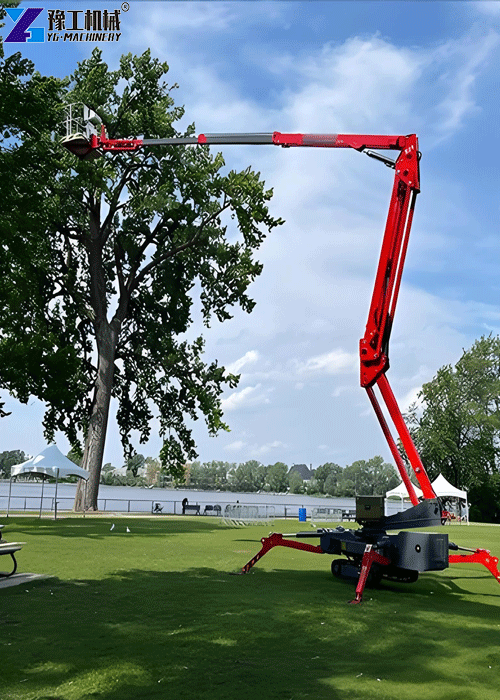
Urban environments are one of the most common applications for spider lifts.
🚧 Main challenges:
- Narrow streets and limited working space
- Heavy pedestrian and vehicle traffic
- Trees growing near power lines or buildings
- Strict safety regulations
🌿 How spider lifts solve these problems:
- Compact body fits into narrow city roads
- Stable outriggers ensure safe operation near traffic
- Quiet electric models reduce disturbance in residential zones
- Precise positioning avoids damage to surrounding structures
👉 This makes spider lifts ideal for road greening and city maintenance projects.
2. Roadside Tree Maintenance (Highways & Boulevards)
Roadside tree pruning requires both reach and safety control, especially along highways and fast-moving traffic zones.
🚧 Key challenges:
- Fast-moving vehicles nearby
- Limited parking or setup space
- Tall roadside trees requiring high reach
🌿 Spider lift advantages:
- Quick deployment reduces road closure time
- Long outreach allows pruning without repositioning
- Stable tracked base works on gravel or roadside soil
- Improves worker safety compared to ladders or manual climbing
👉 This makes spider lifts a key solution for tree pruning equipment used in highway maintenance.
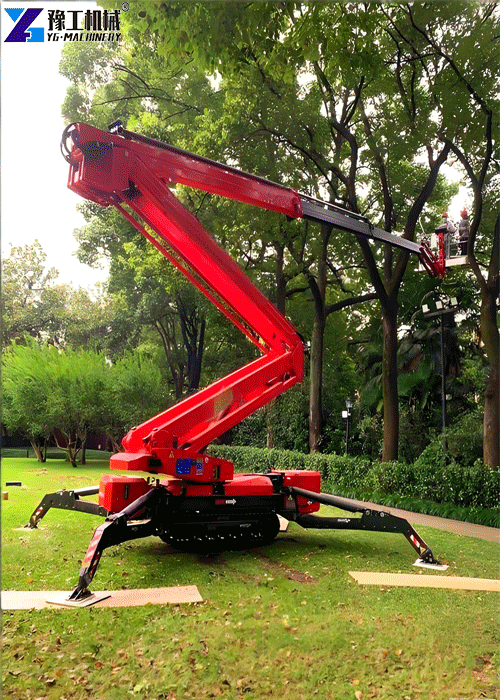
3. Parks & Public Green Spaces
Parks and recreational areas require regular tree maintenance while protecting public safety and landscaping.
🚧 Challenges:
- Soft grass surfaces that cannot support heavy machinery
- Trees located in dense landscaped areas
- Need to avoid damaging lawns and pathways
🌿 Spider lift benefits:
- Rubber tracks minimize ground damage
- Lightweight design protects park infrastructure
- Quiet operation suitable for public environments
- Easy access between trees and garden structures
👉 Ideal for municipalities and park management teams.
4. Residential Tree Trimming and Community Landscaping
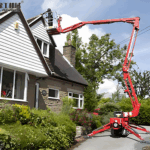
Residential tree trimming often requires compact aerial equipment because trees are frequently located behind narrow gates, between buildings, or close to fences and swimming pools.
🚧 Common challenges:
- Limited backyard or courtyard access
- Strict aesthetic requirements
- Trees close to houses, pools, or fences
🌿 Spider lift solutions:
- Narrow body fits through residential gates
- Precise control avoids property damage
- Electric models reduce noise and emissions
- Safe alternative to climbing or scaffolding
👉 This is a growing application for spider aerial platforms for tree pruning in private estates.
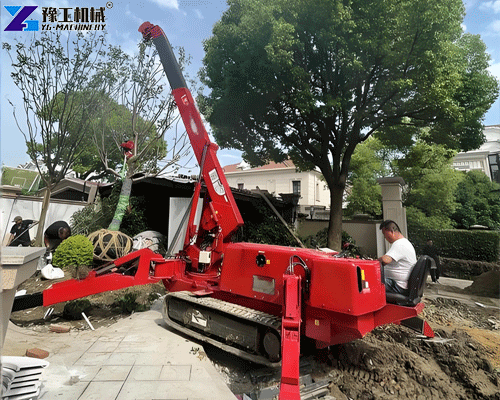
5. Commercial Areas (Hotels, Shopping Centers, Business Parks)
Commercial properties often have decorative trees and landscaped green zones that require professional maintenance.
🚧 Challenges:
- High foot traffic areas
- Need for silent and clean operation
- Strict safety compliance
🌿 Spider lift advantages:
- Compact footprint suitable for courtyards and plazas
- Electric options for indoor atriums or semi-indoor spaces
- Fast setup reduces disruption to business operations
- High precision for decorative tree shaping
👉 Widely used in hotels, resorts, shopping malls, and office parks.
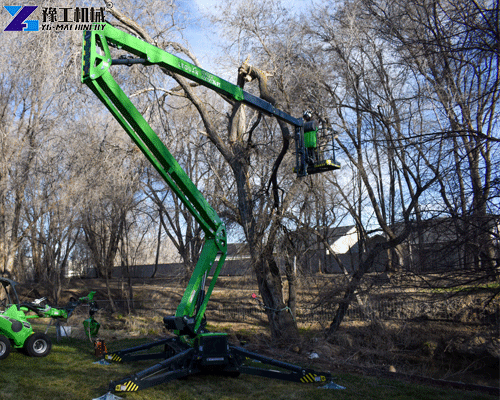
Why Spider Lifts Are Preferred for Tree Pruning Equipment?
Across all these environments, spider lifts consistently solve three major problems:
✔ 1. Safety improvement
Operators work from a stable platform instead of climbing trees manually.
✔ 2. Space limitation solution
Compact design allows access where boom lifts and trucks cannot enter.
✔ 3. Efficiency increase
Faster setup and repositioning reduces total project time.
Spider Lift vs Traditional Tree Pruning Methods
| Climbing | High risk, slow | Safe platform work |
| Ladders | Limited height | Full vertical reach |
| Scaffolding | Time-consuming setup | Quick deployment |
| Truck-mounted lifts | Space restrictions | Compact access |
Spider Lift or Articulating Boom Lift for Tree Work?
Choosing between a spider lift and an articulating boom lift depends largely on site access and working conditions. Spider lifts are well suited to narrow entrances, landscaped areas, uneven ground, and restricted workspaces. An articulating boom lift is often more suitable for open jobsites where operators need flexible horizontal reach and a larger working platform.
Evaluating access width, working height, horizontal outreach, ground conditions, and available setup space can help determine which aerial platform is better suited to the project.