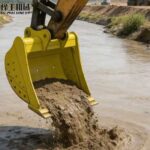
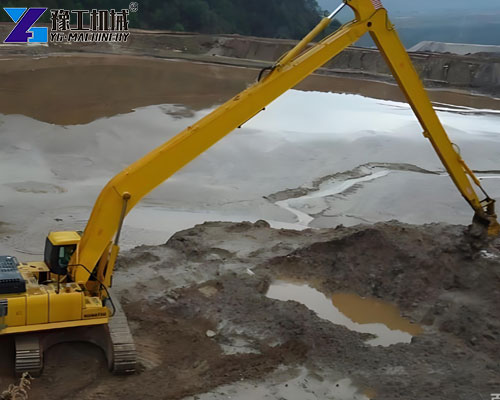
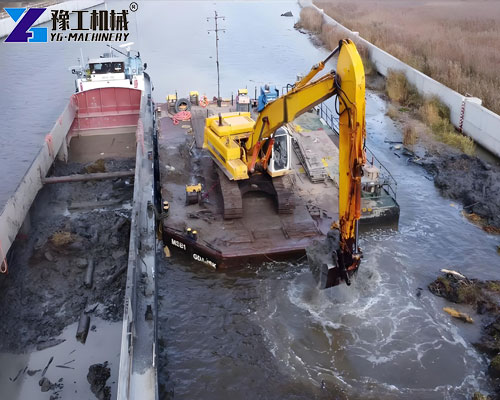
Sediment accumulation is one of the most common challenges in water management and infrastructure maintenance. In many projects, a long reach excavator for dredging is required because rivers become shallower over time, canals lose flow capacity, reservoirs experience reduced storage volume, and wetlands gradually become overgrown with vegetation and silt. These conditions increase flooding risks, restrict navigation, damage ecosystems, and significantly raise long-term maintenance costs.
For contractors and government agencies responsible for waterway maintenance, choosing the right dredging equipment is critical. A standard excavator often lacks the reach needed to access deep channels, wide riverbanks, or soft ground conditions. Frequent machine repositioning not only reduces efficiency but also increases fuel consumption and equipment wear.
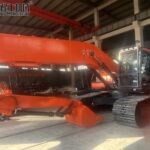
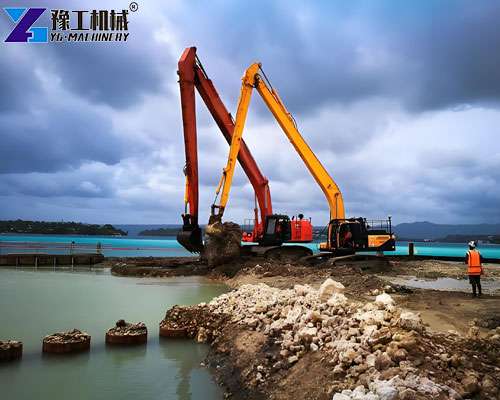
A long reach excavator for dredging is specifically designed to solve these challenges. With an extended boom and arm configuration, it allows operators to remove sediment, mud, vegetation, and debris from greater distances while keeping the machine on stable ground. Whether working on a narrow irrigation canal or a large reservoir restoration project, a professional dredging excavator can significantly improve productivity and project safety.
Why Long Reach Excavators Are Widely Used for Dredging?
Traditional dredging methods often involve floating dredgers, amphibious equipment, or repeated excavator repositioning along riverbanks. While these solutions may be suitable in certain environments, they can be expensive, difficult to mobilize, or inefficient for medium-scale dredging projects.
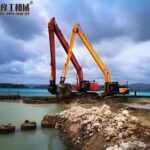
A long arm excavator for dredging offers a practical alternative. By extending the working radius well beyond that of a standard excavator, operators can remove sediment from deeper and wider areas without relocating the machine every few minutes. This reduces cycle times, lowers fuel consumption, and improves overall project efficiency.
For example, in river maintenance projects, a standard excavator may only reach a limited section of the riverbed from one position. A river dredging excavator equipped with a 15–22 meter boom can clean a much larger section of the channel before repositioning becomes necessary. Over the course of a project, this can save hundreds of machine operating hours.
River Dredging Excavator Applications
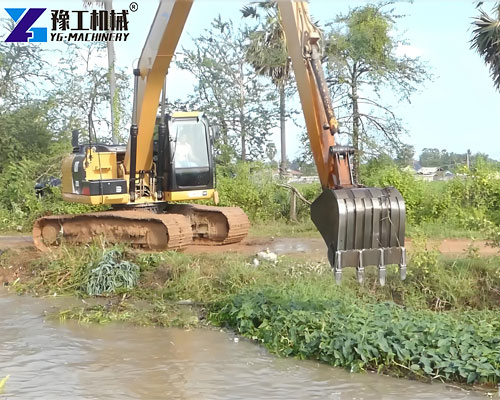
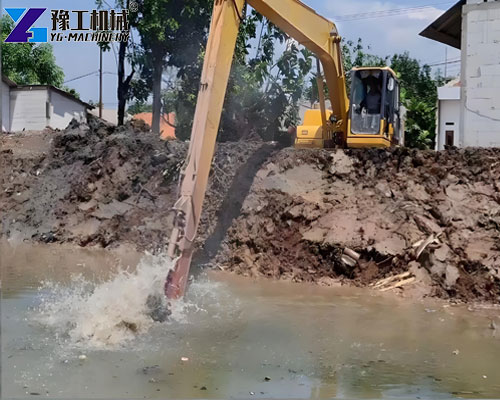
River dredging remains one of the most important applications for a long boom excavator for river cleaning.
Natural sediment deposition gradually reduces channel depth and restricts water flow. During heavy rainfall, these conditions can increase the likelihood of flooding and riverbank erosion. Municipal authorities and contractors regularly use long reach excavators to restore channel capacity and maintain safe water flow.
Typical river dredging tasks include:
- Removing accumulated silt and sand deposits
- Clearing debris and fallen trees
- Restoring designed river depth
- Widening drainage channels
- Strengthening riverbank maintenance programs
One major advantage of a river dredging excavator is its ability to operate from the riverbank rather than inside the water. This reduces environmental disturbance and eliminates the need for temporary access roads in many situations.
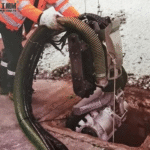
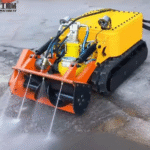
For more efficient dredging operations, contractors may also use specialized equipment such as dredging robot for automated underwater cleaning in complex or narrow environments.
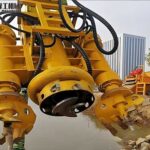
In deep sediment removal projects, an excavator sand pump can be used together with a long reach excavator to improve pumping efficiency and reduce manual bucket cycles.
Lake Dredging Excavator for Reservoir and Waterbody Restoration
Lakes and reservoirs often suffer from gradual sediment accumulation. As the sediment layer thickens, water storage capacity decreases, aquatic vegetation spreads, and water quality may deteriorate.
A lake dredging excavator provides an efficient solution for restoring these water bodies. The extended boom allows operators to remove sediment from nearshore and mid-range areas while maintaining machine stability on the shoreline.
In reservoir rehabilitation projects, contractors frequently use long reach excavators to:
- Increase effective storage capacity
- Remove nutrient-rich sediment
- Improve water circulation
- Restore recreational areas
- Support ecological restoration efforts
Because reservoir environments often include steep embankments and fluctuating water levels, the additional reach provided by a long reach excavator improves both productivity and operator safety.
Canal Dredging Excavator for Irrigation and Drainage Systems
Irrigation canals and drainage channels require regular maintenance to ensure uninterrupted water flow. Even a relatively thin layer of sediment can significantly reduce hydraulic capacity and create bottlenecks within the system.
A canal dredging excavator is particularly effective for maintaining narrow waterways where maneuvering space is limited. Instead of moving the machine repeatedly along the canal edge, operators can clean a larger section of the channel from a single working position.
Common canal maintenance applications include:
- Irrigation canal desilting
- Agricultural drainage channel cleaning
- Urban stormwater channel maintenance
- Flood control channel restoration
- Industrial waterway maintenance
For many contractors, the reduced machine movement provided by a long reach excavator translates directly into lower fuel costs and shorter project durations.
Pond Dredging Machine for Agricultural and Aquaculture Projects
Farm ponds, fish ponds, and industrial retention ponds often accumulate organic sediment over time. Excessive sediment buildup can reduce water volume, affect water quality, and limit operational efficiency.
A pond dredging machine equipped with a long reach boom allows operators to clean pond bottoms without entering the water. This is particularly valuable in aquaculture operations where minimizing disruption to pond structures is important.
Applications include:
- Fish pond desilting
- Aquaculture pond restoration
- Agricultural water storage maintenance
- Industrial sediment pond cleaning
- Landscape pond rehabilitation
The extended reach allows the excavator to access the center of the pond while remaining safely positioned on the shoreline.
Wetland Excavator for Environmental Restoration Projects
Wetland restoration projects often present unique operational challenges. Soft ground conditions make equipment access difficult, while environmental regulations frequently restrict direct disturbance of sensitive habitats.
A wetland excavator with a long reach boom provides an effective solution by allowing operators to work from stable ground outside protected areas.
Typical wetland applications include:
- Invasive vegetation removal
- Sediment management
- Water channel restoration
- Habitat improvement projects
- Ecological rehabilitation programs
The longer working radius reduces ground pressure within sensitive areas and helps preserve existing vegetation and wildlife habitats during restoration work.
Key Features of a Professional Long Reach Excavator for Dredging
Not all long reach excavators are designed for continuous dredging operations. Professional dredging projects place unique demands on machine structure, hydraulic performance, and operational reliability.
YG long reach excavators are engineered specifically for demanding dredging environments and feature:
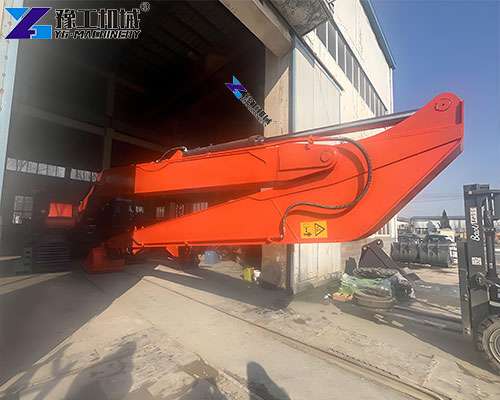
Reinforced Long Reach Boom Structure
Continuous dredging generates high stress loads due to repetitive digging cycles and extended working distances. YG booms utilize high-strength steel construction, reinforced critical stress zones, and advanced welding processes to improve structural durability and service life.
Optimized Hydraulic System
Dredging productivity depends heavily on hydraulic performance. Our machines feature imported hydraulic pumps, precision main control valves, and optimized hydraulic circuits that provide smooth boom movements, faster cycle times, and stable digging performance even under heavy loads.
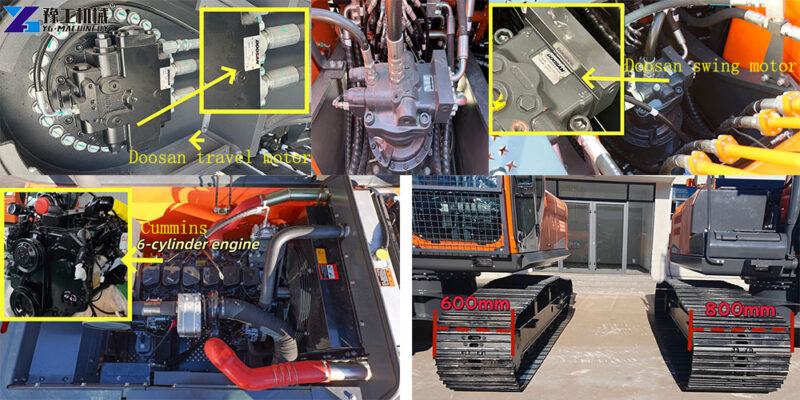
Powerful 6-Cylinder Engine
Each machine is equipped with a high-performance 6-cylinder turbocharged diesel engine that delivers strong power output and excellent fuel efficiency for long working shifts.
Reliable Imported Components
Core components include:
- Kawasaki hydraulic pumps
- Imported main control valves
- Doosan travel motors
- Heavy-duty swing motors
- High-capacity cooling systems
Because these internationally recognized components are widely available worldwide, customers can easily source replacement parts through local distributors, reducing downtime and maintenance costs.
Custom Boom Length Options
Different dredging projects require different reach capacities. YG offers customized boom lengths ranging from approximately 12 meters to over 26 meters depending on excavator size and project requirements.
How to Choose the Right Dredging Excavator?
Selecting the correct long reach excavator for dredging depends on several factors.
The first consideration is dredging depth. The machine must be capable of reaching the required excavation depth while maintaining sufficient bucket breakout force.
The second factor is working radius. Wider rivers and larger reservoirs generally require longer boom configurations to maximize productivity.
Ground conditions should also be evaluated carefully. Soft banks, wetlands, and unstable shorelines may require wider tracks or additional stability measures.
Finally, contractors should consider future project requirements. A customized long reach excavator capable of serving multiple applications can improve equipment utilization and return on investment over the long term.
Why Contractors Choose YG Long Reach Excavators?
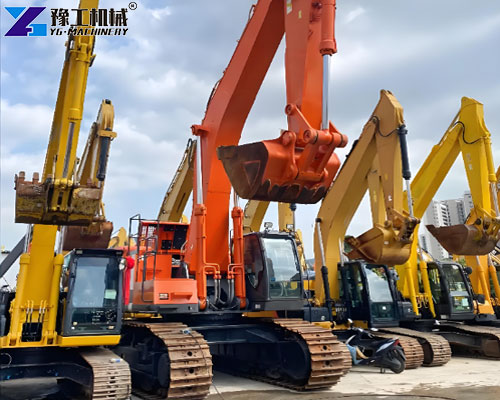
YG Machinery supplies customized long reach excavators for dredging to contractors, municipalities, and infrastructure developers worldwide.
Our advantages include:
- Custom boom lengths up to 26 meters
- Reinforced dredging boom design
- Imported hydraulic components
- Powerful and fuel-efficient 6-cylinder engines
- Easy access to replacement parts worldwide
- OEM compatibility with CAT, Komatsu, Hitachi, Volvo, SANY and other major brands
- Global shipping and technical support
Our equipment has been successfully used in river dredging, lake restoration, canal maintenance, reservoir rehabilitation, wetland management, and environmental engineering projects across Africa, Southeast Asia, the Middle East, and South America.
FAQ about Long Reach Excavator
1.What is the best excavator for river dredging?
A long reach excavator for dredging is often the most efficient solution for river maintenance because it can reach deeper and farther sections of the channel while operating safely from the riverbank.
2.Can a long reach excavator be used for lake dredging?
Yes. A lake dredging excavator is widely used for sediment removal, shoreline restoration, and reservoir maintenance projects.
3.How deep can a long reach excavator dredge?
The maximum dredging depth depends on boom length and excavator size. Customized configurations can achieve significantly greater digging depths than standard excavators.
4.What is the difference between a dredging excavator and a standard excavator?
A dredging excavator features an extended boom and arm configuration, allowing greater reach and digging depth while reducing the need for frequent machine repositioning.
5.How much does a long reach excavator for dredging cost?
Pricing depends on boom length, excavator size, hydraulic configuration, and project requirements. Contact YG Machinery for a customized quotation and equipment recommendation.