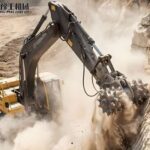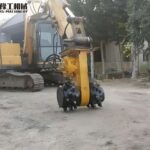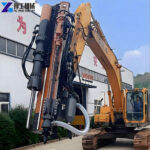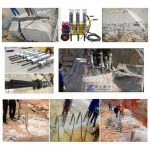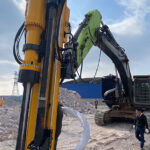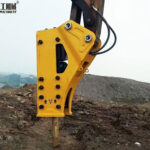
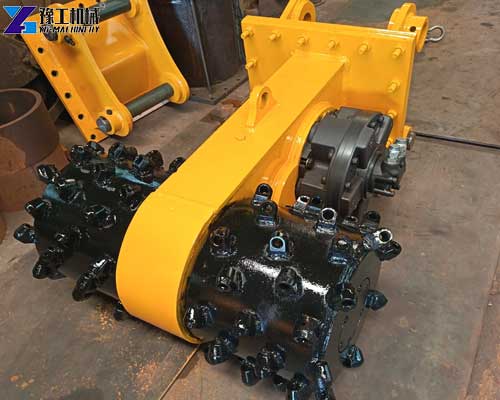
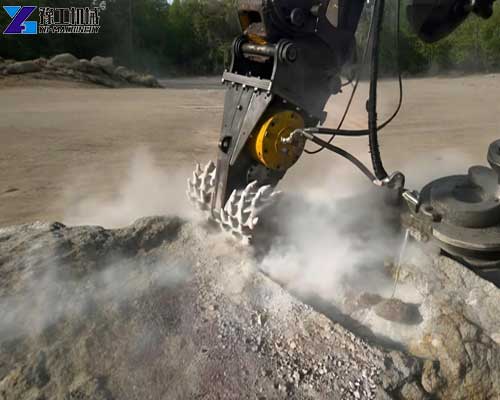
A milling head for excavator is a hydraulic attachment for controlled cutting and profiling of rock, concrete, hard soil, asphalt, and other difficult materials. Instead of using repeated impact like a hydraulic breaker, it uses one or two rotating drums fitted with cutting picks to progressively remove material.
Choosing the right milling head requires more than matching excavator tonnage. Hydraulic flow, hydraulic pressure, torque, cutting width, material hardness, working depth, and application all affect the final configuration.
YG offers milling heads for approximately 5–24 ton excavators, with different drum configurations and hydraulic specifications for trenching, tunnel excavation, rock cutting, concrete milling, profiling, and other controlled excavation work.
What Is a Milling Head for Excavator?
A milling head is mounted on an excavator boom and powered by the carrier’s auxiliary hydraulic system.
The hydraulic motor drives one or two cutting drums through a reduction gearbox. Carbide-tipped picks mounted around the drums progressively cut the working material as the excavator moves the attachment.
Unlike a hydraulic breaker, which relies on impact, a milling head uses continuous rotary cutting. This makes it suitable for projects requiring controlled material removal and profiling.
- Rock excavation
- Trenching
- Tunnel profiling
- Concrete milling
- Surface preparation
- Restricted-access excavation
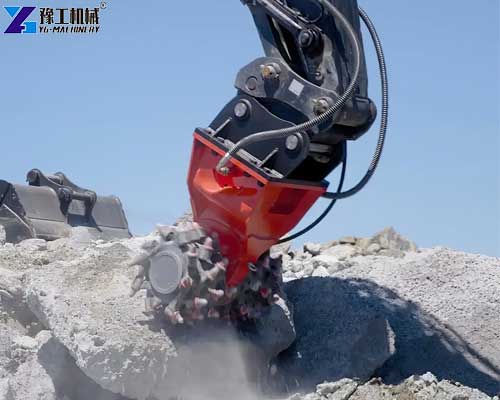
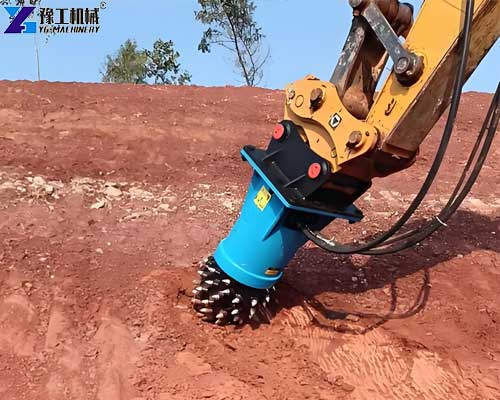
How Does an Excavator Milling Head Work?
- Progressive material removal – Material is removed gradually according to the required profile.
- Hydraulic power input – The excavator supplies hydraulic flow and pressure to the attachment.
- Motor and gearbox – Hydraulic power is converted into rotary torque.
- Rotary cutting – Carbide picks on the drums penetrate and cut the material.
- Controlled movement – The operator controls cutting depth and direction through the boom and arm.
The key difference is that a milling head continuously cuts material instead of relying on repeated impact.
Milling Head for Excavator Parameters
The following models cover different excavator weight classes and hydraulic power requirements.
| Height | 650 mm | 820 mm | 830 mm | 1,395 mm |
| Width | 410 mm | 650 mm | 780 mm | 960 mm |
| Depth | 390 mm | 460 mm | 480 mm | 620 mm |
| Excavator Weight | 5–10 T | 10–15 T | 15–21 T | 20–24 T |
| Max. Power | 22 kW | 45 kW | 55 kW | 65 kW |
| Speed | 0–120 rpm | 0–100 rpm | 0–80 rpm | 0–90 rpm |
| Hydraulic Flow | 40 L/min | 100–110 L/min | 130–180 L/min* | 200–250 L/min* |
| Max. Torque | 3,200 N·m | 5,400 N·m | 5,600 N·m | 12,800 N·m |
*Final hydraulic specifications should be confirmed according to the excavator hydraulic system and selected motor configuration.
Transverse and Longitudinal Milling Heads
Milling heads can be configured according to the required cutting direction and application.
Transverse Milling Head
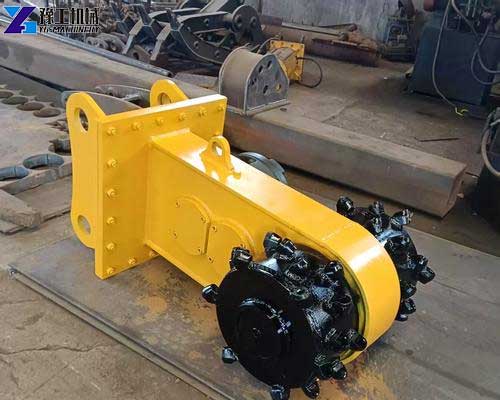
A transverse configuration uses drums positioned across the attachment and is widely used for:
- Rock excavation
- Trenching
- Tunnel construction
- Concrete removal
- Surface profiling
- Foundation excavation
- Building demolition
- Mixing and loosening certain materials
The cutting width and working orientation make this configuration useful when the operator needs to remove material across the face of a working area.
It can also be configured for underwater operations when the attachment and hydraulic system are suitable for the working conditions.
Longitudinal Milling Head
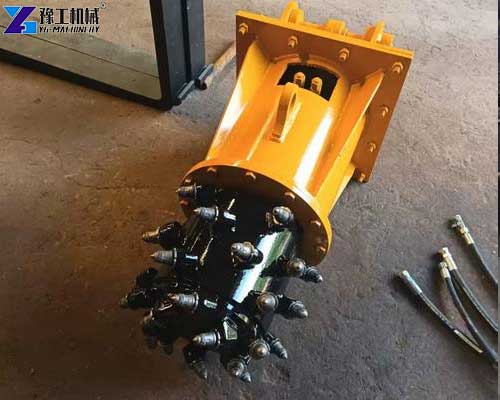
A longitudinal configuration is designed for applications where the cutting direction requires a narrower or more directional working profile.
Typical applications include:
- Narrow trench excavation
- Pipeline construction
- Contour finishing
- Tunnel profiling
- Pile removal
- Slag removal
- Material mixing
- Restricted-space excavation
The attachment can be customized with different dimensions and connection configurations according to the excavator and working environment.
| Cutting direction | Across the attachment | Along the attachment |
| Typical use | General excavation & profiling | Narrow / directional cutting |
| Access | Standard working areas | Narrow or restricted areas |
| Selection factor | Required cutting width | Required cutting direction |
How to Choose the Right Milling Head for Your Excavator?
1. Excavator Operating Weight
YG models cover approximately 5–24 ton excavators.
2. Hydraulic Flow
Check the excavator’s actual auxiliary hydraulic flow against the attachment requirement.
3. Hydraulic Pressure
Pressure must be compatible with the hydraulic motor and selected configuration.
4. Material Hardness
Provide:
- Rock type
- Hardness
- Abrasiveness
- Concrete strength
- Material thickness
5. Required Cutting Width
Wider drums can cover more material per pass, while narrower configurations can provide better access in restricted areas.
6. Working Depth and Access
Consider the attachment dimensions together with boom reach, trench depth, tunnel geometry, and access limitations.
7. Cutting Direction
Choose between transverse and longitudinal configurations according to the required cutting direction and working profile.
Not sure which model fits your excavator? Send us your excavator model, hydraulic flow and pressure, material type, and application.
Why Use a Milling Head?
1.Controlled Material Removal
Continuous rotary cutting allows the operator to progressively remove material and shape the required profile.
2.Lower Impact Vibration
Compared with impact breaking, rotary cutting generally produces lower impact vibration, which can be useful near existing structures or sensitive work areas.
3.Precise Profiling
The operator can control the cutting path and depth for tunnel contours, trench walls, concrete surfaces, and selective excavation.
4.Restricted-Site Capability
An excavator-mounted milling head can work in areas where larger dedicated milling equipment cannot easily access.
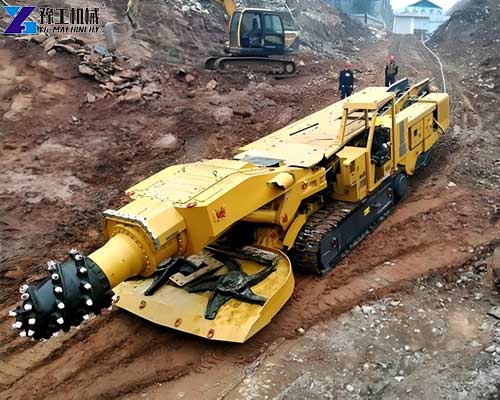
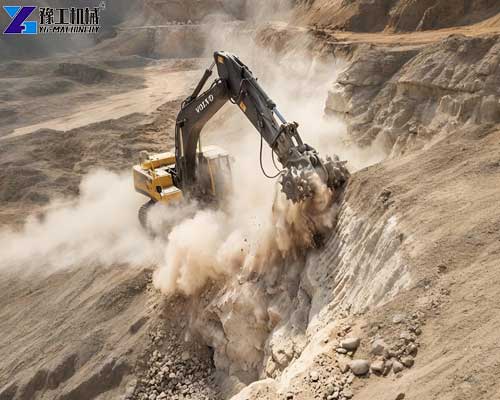
Milling Head for Excavator Applications
1.Rock Excavation
For relatively soft to medium-hard rock and weathered formations, subject to material hardness and cutter configuration.
2.Tunnel Excavation
For controlled excavation, tunnel profiling, and contour correction.
3.Trenching
For utility, drainage, and pipeline trenches where controlled cutting is required.
4.Concrete Milling
For controlled removal of concrete surfaces, walls, foundations, and other suitable structures.
5.Restricted-Space Excavation
For urban construction, underground work, narrow access areas, and other locations where controlled attachment-based excavation is required.
Milling Head vs Hydraulic Breaker
| Working method | Continuous rotary cutting | Repeated impact |
| Material removal | Controlled milling | Fracturing |
| Vibration | Generally lower impact vibration | Generally higher impact vibration |
| Profile control | High | More limited |
| Best suited for | Profiling, trenching, controlled excavation | Heavy rock and concrete breaking |
A milling head is generally more suitable when controlled excavation and profiling are important. A breaker may be preferable when the primary objective is high-impact fracture of thick or highly resistant material.
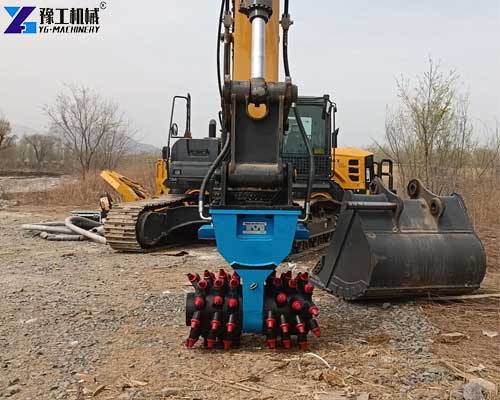
Carbide Cutting Picks and Drum Configuration
The cutting picks are one of the most important wear components on a rotary drum cutter.
Their performance depends on:
- Material hardness
- Rock abrasiveness
- Cutting depth
- Rotation speed
- Operating angle
- Cutting pattern
- Operator technique
For highly abrasive rock, pick wear can become a significant operating cost.
For this reason, selecting the correct pick configuration is not simply a matter of choosing the most powerful attachment. The cutting system should be matched to the actual geological conditions.
Regular inspection and timely replacement of worn picks can also help maintain consistent cutting performance and protect the drum.
Why Choose YG Milling Heads?
- Technical support before ordering
- 5–24 ton excavator range
- Multiple drum configurations
- Hydraulic and mounting compatibility support
- Model selection based on excavator and application
Milling Head for Excavator for Sale
Looking for a milling head for rock excavation, concrete milling, trenching, or tunnel profiling?
Send us your:
- Excavator model
- Operating weight
- Hydraulic flow and pressure
- Material to be cut
- Required cutting width
- Working depth
YG can recommend a suitable milling head configuration and provide technical specifications and a quotation.
FAQ about Milling Head for Excavator
1.What is a milling head for excavator used for?
It is mainly used for controlled excavation and cutting of rock, concrete, frozen soil, and other hard materials. Typical applications include trenching, tunnel construction, surface profiling, concrete removal, mining, and selected underwater projects.
2.What is the difference between a drum cutter and a hydraulic breaker?
A drum cutter uses continuous rotary cutting, while a hydraulic breaker uses repeated impact. Drum cutters are generally better suited to controlled excavation, profiling, and applications where impact vibration needs to be minimized.
3.How do I choose the correct model?
Provide your excavator brand and model, operating weight, auxiliary hydraulic flow and pressure, material type, working depth, and required cutting width. These parameters allow the attachment to be matched more accurately to your machine and project.
4.Can the attachment be customized?
Yes. The mounting bracket and hydraulic configuration can be customized to match different excavator brands and models, subject to technical compatibility.