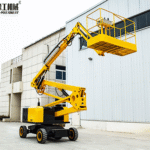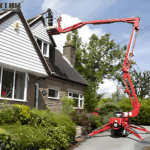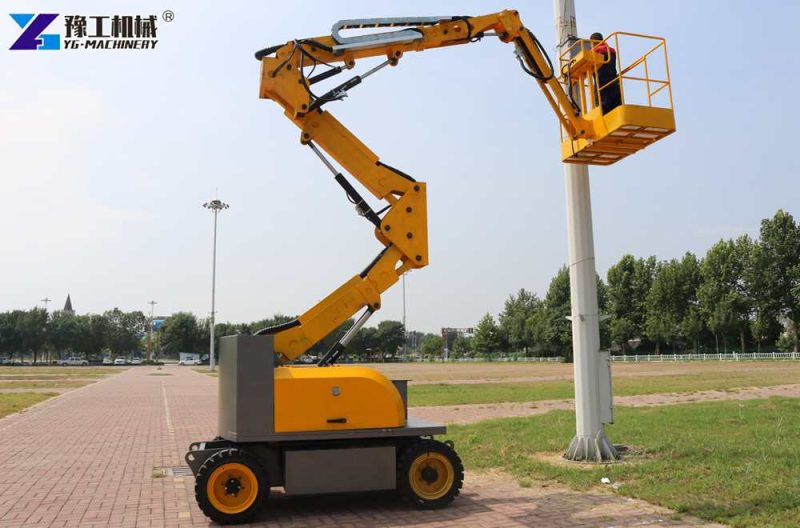
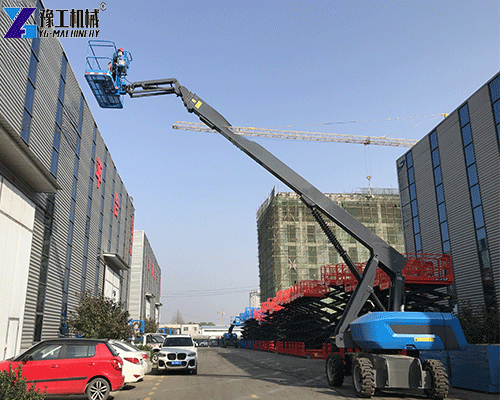
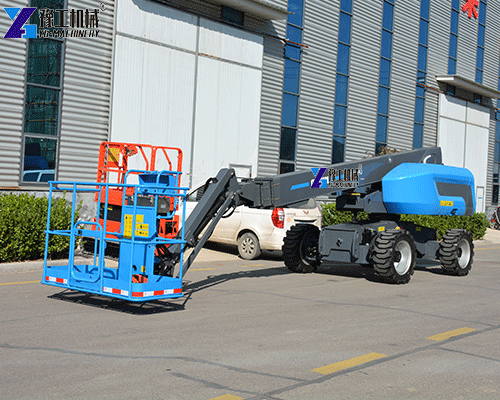
Looking for a reliable telescopic boom lift for sale for construction, industrial maintenance, or outdoor installation projects? A telescopic boom lift provides elevated access with a straight, extendable boom, helping workers reach high and distant work areas without repeatedly repositioning the machine.
Compared with traditional access equipment that mainly lifts workers vertically, a telescopic boom lift combines height and horizontal reach. It is particularly useful for projects where workers need to access elevated structures across open spaces, such as steel frameworks, industrial facilities, and building exteriors.
YG Machinery offers self-propelled boom lift solutions for different jobsite requirements. Whether you need equipment for routine maintenance or demanding construction work, choosing the right machine can improve access efficiency, reduce unnecessary repositioning, and help workers complete tasks more conveniently.
Telescopic Boom Lift Specifications
YG Machinery offers three telescopic boom lift configurations for different working-height and reach requirements. Compare the specifications below to identify a suitable option for your project.
| Specification | YG-19C | YG-22 | YG-26C |
|---|---|---|---|
| Maximum working height | 21 m | 23.8 m | 27.8 m |
| Maximum platform height | 19 m | 21.8 m | 25.8 m |
| Maximum working radius | 15.2 m | 15.8 m | 20.7 m |
| Rated platform capacity | 250 kg | 300 kg | 250–480 kg |
| Platform dimensions (L × W × H) | 1.83 × 0.76 × 1.10 m | 2.44 × 0.91 m* | 2.44 × 0.91 × 1.10 m |
| Overall length, stowed | 9.45 m | 10.80 m | 11.54 m |
| Overall width | 2.28 m | 2.49 m | 2.49 m |
| Overall height, stowed | 2.54 m | 2.70 m | 2.88 m |
| Wheelbase | 2.44 m | 2.50 m | 3.00 m |
| Ground clearance | 0.43 m | 0.45 m | 0.43 m |
| Inner turning radius | 4.30 m | 2.40 m | 2.44 m |
| Outer turning radius | 6.20 m | 5.60 m | 5.85 m |
| Travel speed, stowed | 6.3 km/h | 5.2 km/h | 5.2 km/h |
| Travel speed, raised | 1.1 km/h | 1.1 km/h | 1.1 km/h |
| Gradeability | 45% | 45% | 30% |
| Tire specification | 355/55-24 solid | 36 × 14-20 solid | 385/55-24 solid |
| Turntable rotation | 360° | Continuous 360° | 360° |
| Platform leveling | Automatic | Automatic | Automatic |
| Platform rotation | ±80° | 160° | ±80° |
| Fuel tank capacity | 110 L | 150 L | 150 L |
| Drive and steering configuration | 4 × 4 × 2 | 4 × 4 × 2 | 4 × 4 × 2 |
| Control voltage | Not provided | Not provided | 12 V / 24 V |
| Machine weight | 10,237 kg | 11,800 kg | 16,535 kg |
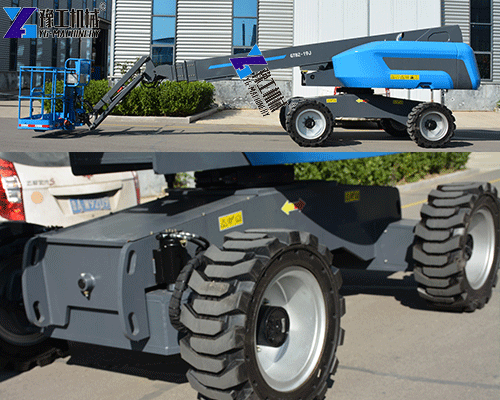
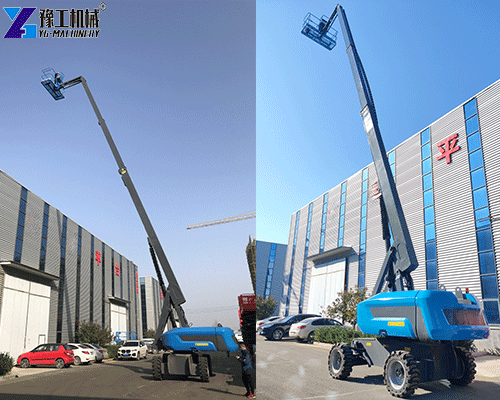
Why Choose a Telescopic Boom Lift?
1. Extended Reach for Hard-to-Access Work Areas
Working at height is not always as simple as lifting a platform straight up. Workers may need to reach across open ground, access elevated structures behind equipment, or position themselves at a distance from the machine’s base.
A telescopic boom lift uses a straight, extendable boom to reach elevated work areas. This design is suitable for applications where direct horizontal reach is important, helping operators position the platform closer to the work area without moving the entire machine as frequently.
2. Self-Propelled Mobility for Greater Jobsite Flexibility
Moving access equipment between work areas can take time, especially on large construction sites or industrial facilities. A self-propelled telescopic boom lift allows the operator to drive the machine between suitable work positions, subject to the manufacturer’s operating requirements.
This mobility is useful when work involves multiple elevated locations, such as installing steel components, inspecting structures, or maintaining outdoor facilities. Before selecting a machine, consider the ground surface, available turning space, access routes, and transport requirements.
3. A Practical Platform for Workers, Tools, and Materials
Working at height often requires more than simply lifting one person. Installation and maintenance tasks may involve hand tools, fasteners, inspection equipment, and other materials.
A suitable telescopic boom lift provides a working platform for carrying workers and permitted equipment to the job location. The platform capacity must be sufficient for the combined load of all occupants, tools, and materials. Always follow the rated load and operating instructions for the selected machine.
4. Designed for Demanding Outdoor Applications
Construction and infrastructure projects can involve uneven ground, changing site layouts, and long distances between work areas. Depending on the model and approved operating conditions, features such as four-wheel drive, solid tires, and suitable ground clearance can help a boom lift move around a jobsite.
However, not every model is suitable for every terrain. Ground firmness, slope, weather, tire configuration, and the manufacturer’s operating limits should all be considered before use.
5. More Flexible Access for Installation and Maintenance
A telescopic boom lift can support work that requires workers to reach elevated positions while keeping the machine positioned at a suitable distance from the structure.
Its applications include installation, inspection, repair, and maintenance. The straight boom design is especially relevant when the target work area requires direct reach. If workers must navigate around complex obstacles, an articulating boom lift may be a more suitable alternative.
Applications of Telescopic Boom Lifts
Construction and Building Projects
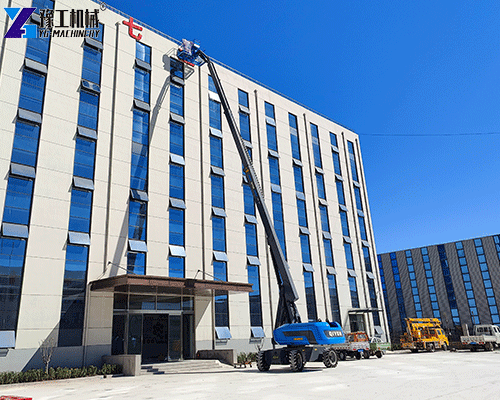
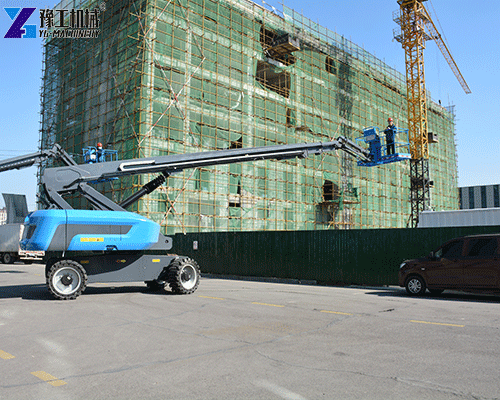
Construction sites frequently require access to elevated structural components, building exteriors, and installation points. A telescopic boom lift can provide a mobile working platform for selected tasks where direct reach and working height are important.
Typical applications include structural installation, exterior inspection, and elevated finishing work. The machine should be selected according to the work area, ground conditions, and required working envelope.
Steel Structure Installation
Steel structure projects often involve working around beams, columns, roof frames, and elevated connections. Workers may need to access different points across a large structure while carrying tools and installation equipment.
A telescopic boom lift can help position the platform near the required work area, making it useful for suitable steel installation, inspection, and maintenance tasks. Confirm that the machine’s working envelope and platform capacity meet the project’s requirements.
Industrial Plant Maintenance
Factories, processing facilities, and industrial sites may require access to elevated pipes, equipment, lighting systems, and structural components. A telescopic boom lift can support maintenance teams working at different heights and positions.
Before use inside an industrial facility, check floor loading limits, overhead clearance, aisle width, ventilation requirements, and any site-specific operating restrictions.
Warehouses and Large Facilities
Some large facilities require elevated access for structural inspections, lighting maintenance, or selected repair work. A self-propelled boom lift may be appropriate where the available floor space, access routes, and working height meet the machine’s requirements.
For narrow aisles or confined indoor spaces, compare the machine’s stowed dimensions and turning radius with the site’s actual layout before purchasing.
Infrastructure and Outdoor Maintenance
Infrastructure projects may involve elevated inspection and maintenance work on suitable structures and facilities. A telescopic boom lift can provide access where the work requires both height and horizontal reach.
The correct machine depends on the worksite layout, ground conditions, required reach, and applicable safety requirements.
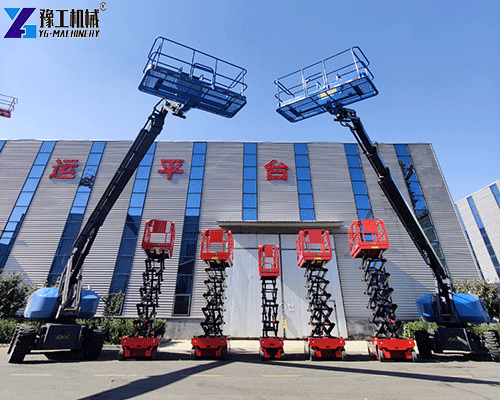
How to Choose the Right Telescopic Boom Lift?
Consider the Actual Work Area
Start by identifying where the work needs to be performed, how high the platform must reach, and how far it needs to extend horizontally. A machine with sufficient maximum height may still be unsuitable if the target position falls outside its working envelope.
Where possible, provide a site layout or photographs so the required access position can be evaluated before selecting equipment.
Check Platform Capacity
Calculate the combined weight of workers, tools, and materials that will be carried on the platform. Do not choose a machine based on the maximum load figure alone; confirm the permitted capacity for the intended boom position and configuration.
Evaluate Ground and Access Conditions
Check whether the machine can enter the site, turn within the available space, and travel over the intended ground surface. Consider access width, stowed dimensions, ground firmness, slopes, and transport arrangements.
Match the Boom Type to the Task
A telescopic boom lift is generally suited to applications that need direct reach across an open work area. An articulating boom lift may be more suitable when the platform needs to move around or over obstacles.
Choosing the correct boom structure can help avoid purchasing equipment that reaches the required height but cannot access the actual work position.
Confirm Operating and Maintenance Requirements
Before purchasing, review the machine’s power system, inspection schedule, operator training requirements, spare-parts availability, and service support. For outdoor projects, confirm the manufacturer’s limits for wind, slope, and ground conditions.
Telescopic Boom Lift vs. Articulating Boom Lift
Both types of boom lifts provide elevated access, but they are designed for different positioning needs.
| Feature | Telescopic Boom Lift | Articulating Boom Lift |
|---|---|---|
| Boom structure | Straight, extendable boom | Jointed boom sections |
| Main advantage | Direct horizontal reach | Flexible positioning around certain obstacles |
| Typical work requirement | Reaching elevated locations across open space | Accessing work areas with obstacles in the approach path |
| Selection priority | Working envelope and reach | Articulation and platform positioning |
| Key checks | Height, reach, load capacity, ground conditions | Height, articulation, reach, load capacity |
The best choice depends on the work area rather than working height alone. Compare the actual working-envelope diagrams and site conditions before making a purchasing decision.
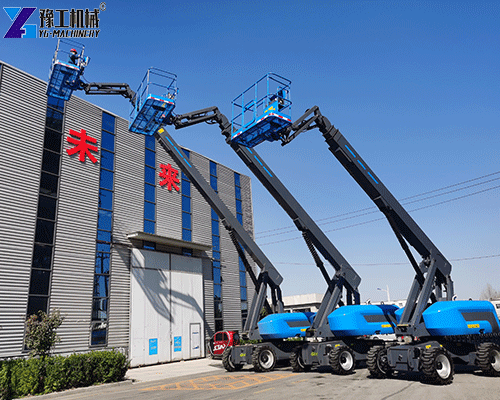
FAQ about Telescopic Boom Lift
What is a telescopic boom lift used for?
A telescopic boom lift provides elevated access for construction, steel structure installation, industrial maintenance, and selected infrastructure projects. It is useful when workers need to reach elevated work areas across an open space.
What is the difference between a telescopic boom lift and a scissor lift?
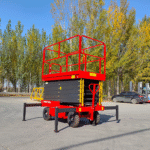
A telescopic boom lift provides both vertical elevation and horizontal reach through an extendable boom. A scissor lift primarily raises the platform vertically. The suitable option depends on the work position, required reach, site layout, and load requirements.
Is a telescopic boom lift suitable for outdoor use?
Some models are designed for suitable outdoor jobsites, but operating suitability depends on the machine configuration, ground conditions, slope, weather, and manufacturer’s instructions. Confirm these requirements before using the equipment.
How do I choose the correct boom lift capacity?
Consider the combined weight of workers, tools, and materials, then confirm the rated platform capacity and applicable working limits. Never exceed the manufacturer’s load rating.
What information should I provide when requesting a quote?
Provide the required working height, horizontal reach, platform load, intended application, ground conditions, site access dimensions, and preferred power configuration. Site photographs or a layout can help clarify the requirements.
Request a Quote for a Telescopic Boom Lift
Need a telescopic boom lift for construction, industrial maintenance, or elevated installation work? Contact YG Machinery to discuss your working conditions and equipment requirements.
Tell us about your application, required reach, platform load, and jobsite conditions. Our team can help you compare suitable configurations and confirm the specifications before you make a purchasing decision.
Request a quote today to find a telescopic boom lift for your project.