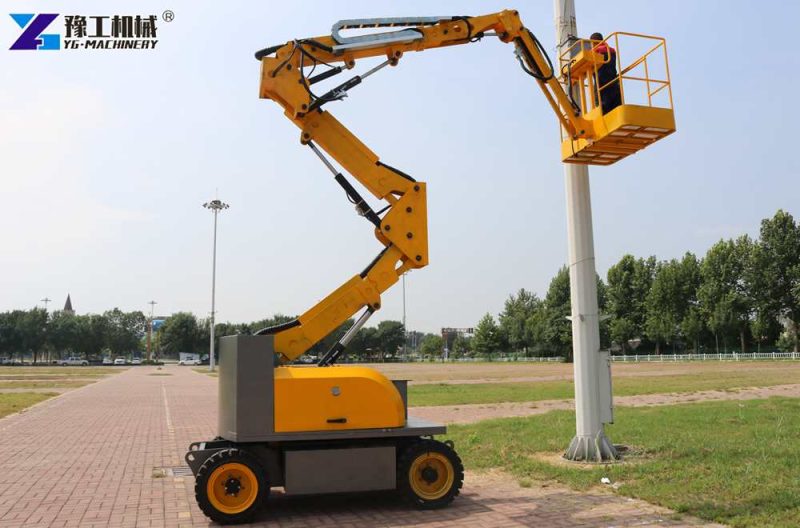

If you are comparing spider lifts for an upcoming project, price is probably one of the first questions you ask. However, there is no single standard spider lift price.
Two machines may look similar but have very different costs depending on working height, horizontal outreach, platform capacity, chassis design, power system, control configuration, and optional features.
More importantly, the cheapest machine is not always the lowest-cost solution. A spider lift that cannot pass through your access entrance, reach over an obstacle, or safely operate on your jobsite may create additional costs long after the initial purchase.
This guide explains the main factors that affect spider lift price, typical differences between small and high-reach models, and what buyers should evaluate before requesting a quotation.
How Much Does a Spider Lift Cost?
The price of a spider lift depends primarily on its working configuration and technical specifications.
In general, the following factors have the greatest impact on the final cost:
- Working height
- Horizontal outreach
- Platform capacity
- Machine dimensions and transport width
- Tracked chassis configuration
- Boom design
- Power source
- Control system
- Outrigger configuration
- Optional equipment
- Customization requirements
- Shipping destination
Because of these variables, comparing two spider lifts based only on maximum working height can be misleading.
For example, two machines with a similar working height may have different prices because one provides greater horizontal outreach, a larger platform capacity, more compact transport dimensions, or a different power configuration.
For this reason, the best way to evaluate spider lift cost is to first define the actual job requirements.
A useful starting point is: What does the machine need to reach, where does it need to travel, and what conditions will it operate in?

What Affects Spider Lift Price?
Understanding the main cost factors can help buyers avoid paying for unnecessary features while ensuring the machine is suitable for the job.
1. Working Height
Working height is one of the most important factors affecting spider lift price.
Generally, a higher working height requires:
- A longer boom structure
- More complex hydraulic systems
- Greater machine stability
- Stronger structural components
- Larger counterweight or support systems
As working height increases, the engineering requirements of the machine usually become more demanding.
However, buyers should avoid choosing a model simply because it offers the highest available working height.
A larger machine may also mean:
- Higher purchase cost
- Greater transport weight
- Larger overall dimensions
- More demanding site access requirements
The most economical choice is often the smallest machine that can safely meet the required working height and outreach.

2. Horizontal Outreach
Working height alone does not determine whether a spider lift can reach the actual work area.
Horizontal outreach is particularly important when operators need to work:
- Over fences
- Around buildings
- Across landscaped areas
- Over equipment
- Around trees
- Beyond roof edges
A machine with greater outreach may require a more complex boom system and additional stability engineering.
This means two spider lifts with similar working heights can have significantly different prices.
Before requesting a quotation, buyers should identify both:
Maximum working height + required horizontal outreach
This information helps suppliers recommend a more accurate model instead of simply quoting based on height.
3. Platform Capacity
Platform capacity affects how much weight the elevated work platform can safely carry.
The required capacity should include:
- Operators
- Power tools
- Hand tools
- Installation materials
- Safety equipment
Higher platform capacity may require changes to the boom structure, hydraulic system, and stability design.
For routine inspection or maintenance, a standard capacity may be sufficient.
For installation, construction, or projects involving heavier tools and materials, a larger capacity may be required.
Choosing excessive capacity can unnecessarily increase equipment cost, while insufficient capacity can limit the machine’s practical use.

4. Tracked Chassis Design
One of the defining characteristics of a spider lift is its compact tracked chassis.
The crawler system allows the machine to move into locations where conventional truck-mounted aerial platforms may have difficulty accessing.
Chassis design can affect price through factors such as:
- Track material
- Drive system
- Hydraulic motors
- Ground clearance
- Gradeability
- Overall machine weight
- Compact transport dimensions
A highly compact chassis that can pass through narrow entrances may require more specialized engineering than a larger machine designed for open jobsites.
For buyers working in gardens, courtyards, indoor facilities, or restricted construction sites, transport width can be just as important as working height.
5. Outrigger System
Spider lifts rely on outriggers to create a stable working base during elevated operation.
The outrigger system can vary depending on machine size and design.
Important considerations include:
- Independent outrigger adjustment
- Available setup footprint
- Operation on uneven ground
- Automatic or manual leveling functions
- Ground condition requirements
More advanced stabilization systems may increase the overall price, but they can provide greater flexibility when working in complex environments.
Before purchasing, buyers should consider not only whether the machine can enter the site, but also whether there is enough space to safely deploy the outriggers.
This is an important detail that is sometimes overlooked during initial equipment selection.

6. Boom Configuration
The boom system is one of the most technically important parts of a spider aerial platform.
Depending on the model, the machine may use a combination of:
- Telescopic boom sections
- Articulating boom sections
- Jib systems
- Rotating upper structures
More complex boom configurations can provide greater flexibility around obstacles.
For example, a boom that can reach over a structure or position the platform around an obstacle may be more valuable for maintenance projects than a simple vertical lifting system.
However, additional articulation and reach generally increase mechanical complexity and manufacturing cost.
The best configuration depends on the actual working environment.
7. Power Source
The power system can also influence spider lift price.
Depending on the application, buyers may consider different power configurations, such as:
- Diesel power
- Electric power
- Hybrid systems
- Battery-assisted operation
The best choice depends on where the machine will operate.
For example:
Outdoor construction sites
May prioritize operating autonomy and power availability.
Indoor facilities
May prioritize lower noise and reduced emissions.
Mixed indoor and outdoor projects
May benefit from a more flexible power configuration.
Instead of selecting a power system based only on the initial purchase price, buyers should consider the long-term operating environment.
Before purchasing, it is also worth comparing different types of aerial access equipment. A spider lift is particularly valuable for narrow entrances, uneven terrain, and restricted-access jobsites, while an articulating boom lift may be a more cost-effective choice for open sites that require greater horizontal outreach and flexible positioning around obstacles.
8. Control System and Remote Operation
Control features can also affect the final price.
Depending on the machine configuration, options may include:
- Ground controls
- Platform controls
- Remote travel control
- Remote outrigger control
- Automatic positioning functions
Remote operation can be particularly useful when moving the machine through restricted access areas or positioning it in complex environments.
However, additional control systems and automation features can increase the equipment cost.
The key question is whether the feature provides a practical benefit for the intended application.

9. Optional Equipment and Customization
Standard machines may not always meet every project requirement.
Buyers may request additional features related to:
- Platform configuration
- Power systems
- Transport requirements
- Special working environments
- Additional safety features
- Control options
Customization can improve suitability for a specific application, but it may also affect production time and final price.
For most buyers, it is better to define essential requirements before requesting a quote rather than adding multiple options after the model has been selected.
10. Shipping Destination and Import Costs
The machine price is only one part of the total purchase cost.
International buyers should also consider:
- Ocean freight
- Inland transportation
- Export packaging
- Insurance
- Import duties
- Customs clearance
- Local taxes
Shipping cost can vary significantly depending on:
- Destination country
- Port
- Machine dimensions
- Machine weight
- Container requirements
A larger high-reach spider lift may have a higher freight cost because of its transport dimensions and weight.
For this reason, international buyers should compare the total delivered cost, not only the factory price.

Small Spider Lift Price: What Should Buyers Expect?
A small spider lift is often attractive to contractors who need elevated access but have limited entrance width or restricted working space.
Small models are commonly considered for:
- Residential maintenance
- Tree care
- Property maintenance
- Indoor facilities
- Hotels and resorts
- Commercial buildings
- Landscaped areas
Compared with larger machines, a compact spider lift may offer advantages such as:
- Easier transport
- Narrower access
- Lower machine weight
- Smaller setup requirements
- Reduced storage space
However, smaller does not always mean inexpensive.
A highly compact machine designed to pass through very narrow entrances may require specialized engineering.
Therefore, buyers should not evaluate a small spider lift based only on physical size.
The most important specifications to compare include:
- Minimum transport width
- Working height
- Horizontal outreach
- Platform capacity
- Machine weight
- Outrigger footprint
For restricted-access applications, the entrance width should be measured before selecting a model.
A difference of only a few centimeters can determine whether the machine can enter the work area.
How Much Does a 90 Ft Spider Lift Cost?
A 90 ft spider lift typically falls into a higher-reach equipment category.
At this height range, buyers should evaluate more than just the maximum working height.
Important specifications include:
Horizontal Outreach
A 90 ft working height does not necessarily mean the machine can reach horizontally across an obstacle.
Always check the working envelope and outreach diagram.
Platform Capacity
Higher-reach projects may involve specialized tools or installation work.
Make sure the platform capacity is sufficient for the intended operation.
Transport Dimensions
A high-reach machine may be significantly larger during transport than a compact model.
Check:
- Overall width
- Overall height
- Transport length
- Machine weight
This is particularly important if the equipment needs to pass through gates or be transported between multiple projects.
Outrigger Setup Area
Higher working heights generally require careful stabilization.
Before selecting a high-reach spider lift, confirm that the jobsite provides sufficient space for proper outrigger deployment.
Frequency of Use
If high-reach work is only occasional, purchasing the largest model may not always be the most cost-effective option.
Buyers should evaluate their typical projects rather than selecting a machine based on rare maximum-height requirements.
The right model should match the majority of expected applications while still providing sufficient operating flexibility.

Spider Lift Price by Working Height
Rather than focusing on a single fixed price, buyers can think about spider lifts in several general categories.
| Compact / Small Spider Lift | Narrow access and lower-height work | Width, weight, compact design |
| Medium-Reach Spider Lift | Maintenance and commercial projects | Height, outreach, platform capacity |
| High-Reach Spider Lift | Construction and specialized elevated work | Boom design, stability, outreach |
| Specialized Configuration | Difficult or unique jobsites | Customization and optional equipment |
As the required working height and outreach increase, the machine structure and hydraulic system generally become more complex.
However, buyers should avoid assuming that every higher machine is automatically better.
The correct choice depends on the specific project requirements.
What Is Included in a Spider Lift Quotation?
When comparing quotations from different suppliers, buyers should confirm what is actually included.
A quotation may include:
- Spider lift machine
- Standard work platform
- Standard control system
- Basic accessories
- Operation manual
- Spare parts package
Other costs may be quoted separately.
These can include:
- Optional equipment
- Customization
- Export packaging
- Shipping
- Insurance
- Spare parts
- On-site service
A lower quotation is not necessarily the better offer if important components or services are excluded.
For an accurate comparison, request a clear itemized quotation.
How to Get an Accurate Spider Lift Price?
The fastest way to receive a suitable quotation is to provide the supplier with basic project information.
Before requesting a quote, prepare the following details:
1. Required Working Height
What is the maximum height you need to reach?
2. Required Horizontal Outreach
Do you need to reach over obstacles, walls, trees, or equipment?
3. Minimum Access Width
What is the narrowest entrance the machine must pass through?
4. Ground Conditions
Will the machine operate on:
- Concrete
- Asphalt
- Gravel
- Grass
- Uneven terrain
- Sloping ground
5. Application
For example:
- Building maintenance
- Tree work
- Construction
- Glass installation
- Industrial maintenance
- Facility maintenance
6. Destination Country
This helps calculate suitable shipping options and estimated transportation costs.
Providing this information at the beginning can reduce unnecessary back-and-forth communication and help suppliers recommend a more suitable model.
How to Avoid Overpaying for a Spider Lift?
The most common purchasing mistake is selecting a machine based only on maximum specifications.
For example, buying the tallest available machine may seem like a safe decision, but it can result in:
- Higher purchase cost
- Higher transport cost
- Larger storage requirements
- More difficult site access
- Features that are rarely used
Instead, buyers should evaluate the machine based on their regular projects.
A practical selection process is:
Step 1: Identify the most common working height.
Step 2: Measure the narrowest access point.
Step 3: Determine the required horizontal outreach.
Step 4: Check platform capacity requirements.
Step 5: Evaluate ground conditions.
Step 6: Compare the total delivered cost, not just the machine price.
This approach can help buyers select equipment that provides the best balance between capability and investment.
Spider Lift Price vs Long-Term Operating Value
Purchase price is important, but it should not be the only factor in equipment selection.
A spider lift that can access more jobsites may create additional business opportunities.
For contractors, compact access can be a competitive advantage.
A machine capable of entering narrow spaces may allow the operator to work on projects where larger aerial equipment cannot be used.
When evaluating value, consider:
- Number of potential applications
- Expected utilization
- Transport requirements
- Maintenance requirements
- Availability of spare parts
- Technical support
- Equipment lifespan
The best purchase is not necessarily the cheapest machine.
It is the machine that provides the required access and performance at a reasonable total cost over its working life.

How to Choose the Right Spider Lift Before Requesting a Price?
Before comparing quotations, define the following five specifications:
Working Height
Choose a model that safely covers your normal working requirements.
Horizontal Outreach
Check whether the machine needs to reach around or over obstacles.
Access Width
Measure gates, doors, corridors, and other restricted entrances.
Ground Conditions
Confirm whether the site is flat, uneven, soft, or sloped.
Application Requirements
Consider the type of work, tools, materials, and expected operating environment.
For a more detailed equipment selection guide, see our article on Best Spider Lift for Tree Work.
You can also explore our Spider Aerial Platform guide to understand how tracked aerial platforms are used in restricted-access jobsites.
Request a Spider Lift Price Based on Your Project
A spider lift should be selected based on the actual working environment, not simply on the highest specification or lowest advertised price.
Working height, horizontal outreach, platform capacity, access width, chassis configuration, power system, and shipping destination can all affect the final cost.
The more accurately you define your project requirements, the easier it is to select a machine that provides the right balance between performance and investment.
If you are looking for a spider lift for sale, send us your required working height, horizontal outreach, minimum access width, application, and destination country.
YG can recommend a suitable model and provide a quotation based on your specific project requirements.
FAQ About Spider Lift Price
1.How much does a spider lift cost?
Spider lift prices vary depending on working height, horizontal outreach, platform capacity, chassis design, power source, optional features, and shipping destination. The most accurate price can be determined after confirming the required specifications and application.
2.What is the biggest factor affecting spider lift price?
Working height and horizontal outreach are usually two of the most important technical factors. Machine configuration, platform capacity, power system, and optional features can also affect the final cost.
3.Are small spider lifts cheaper?
Not always. Smaller machines may have lower material and transport requirements, but highly compact models designed for narrow-access areas can require specialized engineering and components.
4.How much does a 90 ft spider lift cost?
The cost of a 90 ft spider lift depends on its outreach, platform capacity, boom configuration, machine dimensions, power system, and optional equipment. Buyers should compare complete specifications rather than evaluating the machine based only on working height.
5.Does shipping affect the total spider lift price?
Yes. International buyers should consider ocean freight, inland transportation, export packaging, insurance, import duties, and local taxes when calculating the total purchase cost.
6.What information should I provide to get an accurate quotation?
Provide the required working height, horizontal outreach, minimum access width, ground conditions, application, and destination country. This allows the supplier to recommend a suitable model and calculate a more accurate quotation.