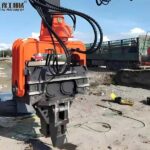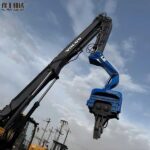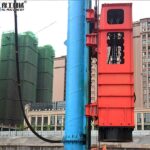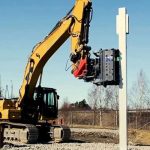
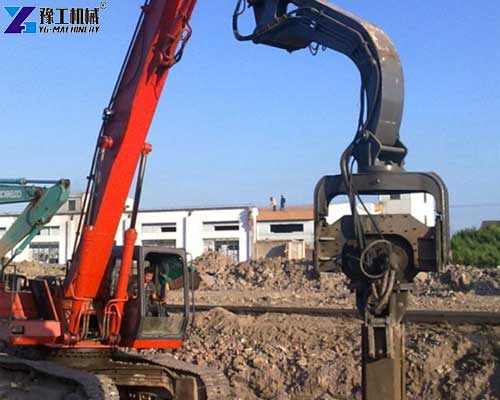
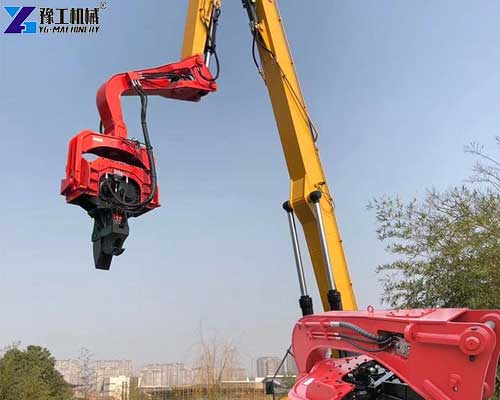
A vibratory hammer for excavator is a hydraulic attachment designed to drive compatible piles into the ground and extract them when required. Mounted on a suitable excavator, it uses hydraulic power to generate vibration and transfer force to the pile through a clamping mechanism.
YG offers three models—YG-45, YG-80, and YG-125—for excavators in the 12–40 ton range. These models differ in vibration force, attachment weight, hydraulic flow requirements, and maximum pile extraction force.
Choosing the right excavator-mounted vibratory hammer requires checking the excavator’s hydraulic system, lifting capacity, pile dimensions, and ground conditions. This guide covers the main specifications and selection factors to help you identify a suitable model.
Excavator Vibratory Hammer Parameters
Compare the specifications of the YG-45, YG-80, and YG-125 to identify a suitable starting point for your piling project.
| Specification | YG-45 | YG-80 | YG-125 |
|---|---|---|---|
| Suitable Excavator | 12–18 T | 20–27 T | 30–40 T |
| Working Flow Rate | 113 L/min* | 200 L/min* | 260 L/min* |
| Maximum Working Pressure | 35 MPa | 35 MPa | 35 MPa |
| Maximum Vibration Force | 343 kN | 450 kN | 695 kN |
| Listed Frequency Rating | 2,500 rpm* | 2,500 rpm* | 2,080 rpm* |
| Maximum Pile Extraction Force | 120 kN | 120 kN | 168 kN |
| Maximum Outer Diameter of Pipe Piles | ≤ 300 mm | ≤ 300 mm | ≤ 300 mm |
| Attachment Weight | 1,350 kg | 2,300 kg | 2,800 kg |
| Dimensions (L × W × H) | 2,306 × 1,268 × 680 mm | 2,306 × 1,268 × 680 mm | 2,610 × 1,616 × 746 mm |
Confirm the working flow-rate units, frequency definition, pipe-pile compatibility, and clamp configuration against the manufacturer’s technical documentation before publication.
These ratings are useful for comparing models, but they do not guarantee the same installation or extraction performance in every project. Soil conditions, pile dimensions, excavator stability, and hydraulic compatibility also affect results.
Need help choosing a model? Send YG your excavator specifications and pile details.
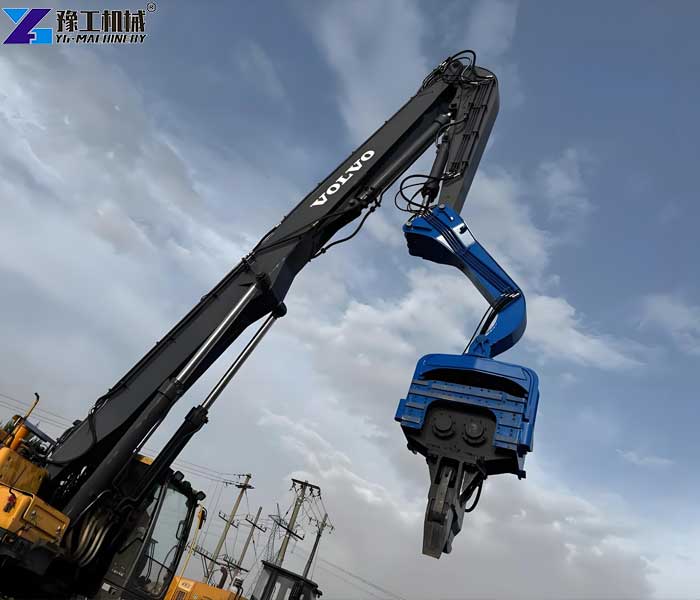
How Does an Excavator-Mounted Vibratory Hammer Work?
An excavator-mounted vibratory hammer converts hydraulic energy into mechanical vibration. The attachment grips the pile and transfers vibration to it, helping reduce resistance between the pile surface and the surrounding soil.
1. Hydraulic Power Drives the Vibration Mechanism
The excavator supplies hydraulic oil through a compatible auxiliary circuit. The hydraulic drive powers the hammer’s vibration mechanism.
The excavator must supply the required flow and pressure within the manufacturer’s approved operating range. Incorrect hydraulic settings or incompatible connections can reduce performance and may damage equipment.
2. Vibration Helps the Pile Penetrate the Ground
The vibration mechanism generates oscillating force that is transferred to the pile through the clamp. Under suitable ground conditions, this helps reduce soil resistance and allows the pile to penetrate more readily.
Performance varies with soil composition, groundwater, pile geometry, embedment depth, and the available hydraulic power. Dense or cemented ground and underground obstructions may limit the effectiveness of vibratory installation.
3. The Hammer Can Drive or Extract Compatible Piles
For pile driving, the hammer grips the pile while the excavator positions and supports the attachment. Vibration helps the pile advance into the ground.
For pile extraction, the attachment grips the installed pile and applies vibration while the excavator lifts it. The maximum extraction-force rating is one selection factor; actual results also depend on embedment depth, soil resistance, pile condition, and the clamping arrangement.
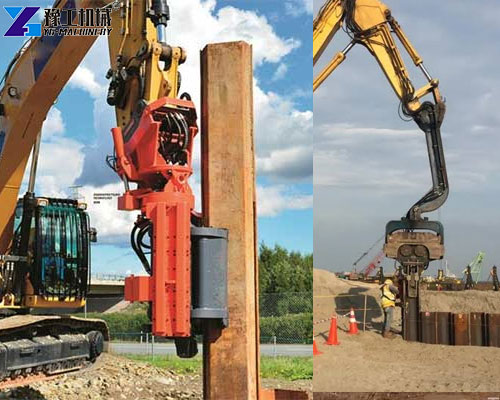
Vibration Force and Pile Extraction Force
Vibration force and pile extraction force describe different aspects of a vibratory hammer’s performance.
| Model | Maximum Vibration Force | Maximum Pile Extraction Force |
|---|---|---|
| YG-45 | 343 kN | 120 kN |
| YG-80 | 450 kN | 120 kN |
| YG-125 | 695 kN | 168 kN |
- Maximum vibration force indicates the rated force generated by the vibration mechanism.
- Maximum pile extraction force indicates the listed force available for pile removal under the specified rating conditions.
- Frequency rating describes a separate operating characteristic and should be interpreted according to the manufacturer’s definition.
YG-125 has the highest listed vibration and extraction-force ratings of these three models. However, it is also heavier and is intended for a larger excavator class. A higher rating does not automatically mean faster piling in every soil condition.
Choose a model based on the pile type, installation depth, ground conditions, excavator capacity, and whether the job requires driving, extraction, or both.on force alone.efficiently, making it suitable for temporary construction projects where piles need to be reused.
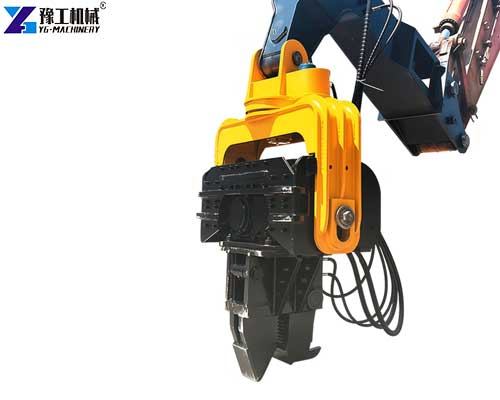
Hydraulic Compatibility Requirements
Before purchasing a vibratory hammer for an excavator, verify that the attachment matches the excavator’s hydraulic system and operating capacity.
1. Hydraulic Flow Rate
The listed working flow rates are 113 L/min for YG-45, 200 L/min for YG-80, and 260 L/min for YG-125, subject to manufacturer confirmation.
The excavator must deliver the required flow within the attachment’s approved operating range. Excessive flow is not necessarily beneficial and can cause operating problems if it exceeds the manufacturer’s limits.
2. Working Pressure
All three models list a maximum working pressure of 35 MPa. This is a maximum rating, not a recommendation to operate continuously at that pressure.
Confirm the approved pressure range, relief-valve settings, auxiliary circuit requirements, and hydraulic return-line limits before connecting the attachment.
3. Excavator Weight and Lifting Capacity
The recommended excavator weight ranges are:
- YG-45: 12–18 ton excavators
- YG-80: 20–27 ton excavators
- YG-125: 30–40 ton excavators
Excavator tonnage alone does not confirm compatibility. The attachment weight, working reach, boom and arm configuration, lifting capacity, and machine stability must also be checked.
4. Hydraulic Connections and Mounting Interface
Verify the hydraulic hose connections, auxiliary circuit, return-line configuration, and mounting adapter requirements. Correct installation and operation within the excavator manufacturer’s limits are essential for safe performance.
For a model recommendation, provide the excavator make and model, hydraulic flow and pressure, attachment interface, and pile specifications.
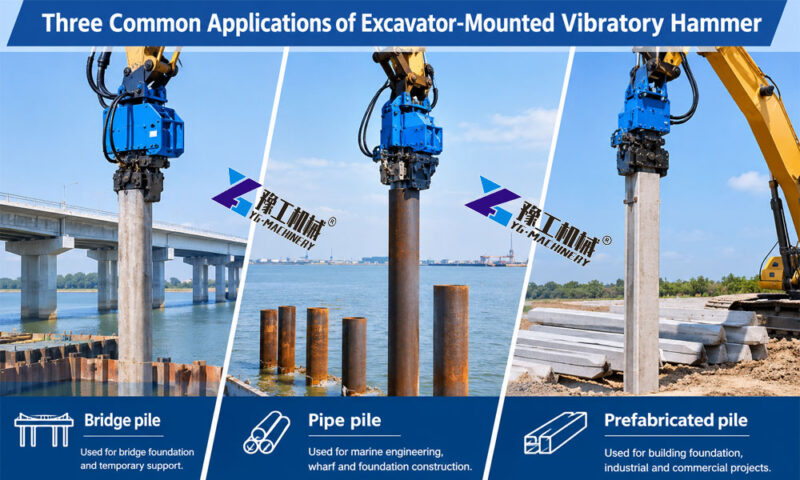
Pile Driving and Extraction Applications
An excavator-mounted vibratory hammer can be used for compatible piling tasks where vibratory installation or extraction is appropriate.
- Steel Sheet Piles: Sheet piles are commonly used for excavation support, retaining structures, cofferdams, and riverbank works. The correct clamping arrangement and pile profile must be confirmed for the selected attachment. For projects specifically focused on sheet pile installation, see our sheet pile vibratory hammer.
- Steel Pipe Piles: The listed maximum outer diameter of pipe piles for the YG models is 300 mm. Check the pile’s actual outer diameter, wall thickness, length, weight, and required installation depth before selecting the attachment.
- H-Beams and Other Steel Piles: Compatible steel profiles may be suitable when the attachment has the appropriate clamp and configuration. Confirm the profile dimensions and clamping requirements before ordering.
- Temporary Pile Extraction: Vibratory hammers can also be used to remove suitable temporary piles for reuse or site clearance. The feasibility of extraction depends on embedment, soil conditions, pile condition, and the model’s rated extraction force. For specialized sheet-pile gripping requirements, explore our side-grip vibro hammer.
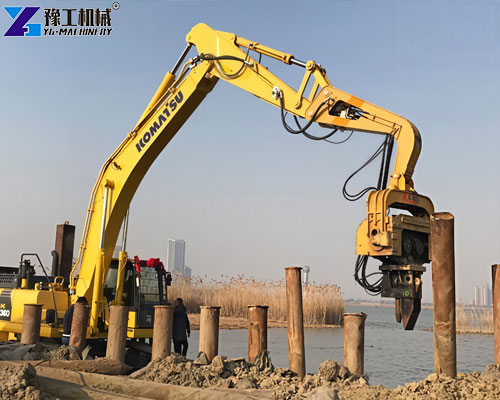
How to Choose the Right Vibratory Hammer for Your Excavator
A reliable selection process starts with the excavator and the pile, then evaluates the working environment.
- Step 1: Identify your excavator. Provide its make, model, operating weight, lifting capacity, and attachment interface.
- Step 2: Confirm hydraulic specifications. Check available oil flow, working pressure, auxiliary circuit configuration, and return-line requirements against the selected attachment.
- Step 3: Define the pile. Specify whether you are installing or extracting piles, along with the pile material, profile, outer diameter, length, and required depth.
- Step 4: Assess the ground conditions. Soil type, groundwater, obstructions, and embedment depth influence whether vibratory piling is suitable.
- Step 5: Compare the model ratings. Evaluate vibration force, extraction force, attachment weight, and excavator compatibility together. Do not select a model based on a single rating.
YG can assess these details to help identify a suitable configuration for your project.ble piling solution, an excavator-mounted vibratory hammer provides an efficient balance between performance, cost, and versatility.
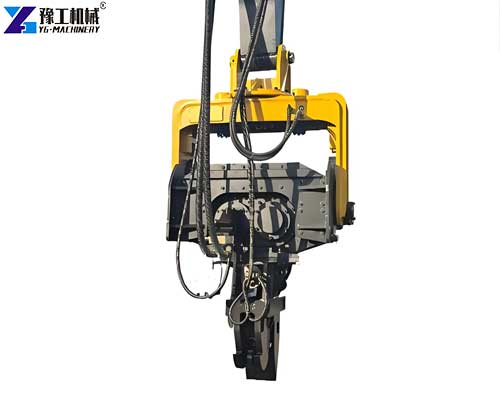
Vibratory Hammer for Excavator Price
The price of an excavator-mounted vibratory hammer depends on the selected model and the configuration required for the excavator and pile.
The main factors affecting the quotation include:
- Model: YG-45, YG-80, and YG-125 have different performance ratings and attachment weights.
- Hydraulic compatibility: The excavator’s hydraulic system must meet the attachment’s requirements.
- Mounting adapter: The required interface depends on the excavator and attachment configuration.
- Piling requirements: Pile dimensions, installation depth, extraction needs, and ground conditions help determine suitability.
- Delivery destination: Shipping costs and applicable import charges vary by country.
To receive a quotation, send YG your excavator specifications, pile details, project location, and required quantity.tomized recommendations based on actual project needs.
Frequently Asked Questions
1. What is a vibratory hammer for an excavator?
It is a hydraulic attachment that uses vibration to drive compatible piles into the ground or extract them. It is powered by a compatible excavator hydraulic system.
2. What is the maximum vibration force of the YG models?
The listed maximum vibration forces are 343 kN for YG-45, 450 kN for YG-80, and 695 kN for YG-125. Actual piling results depend on the soil, pile, hydraulic supply, and operating configuration.
3. What hydraulic flow rate does the attachment require?
The listed working flow rates are 113, 200, and 260 L/min for YG-45, YG-80, and YG-125, respectively, pending confirmation of the manufacturer’s units. Check the approved hydraulic requirements before connecting the attachment.
4. Can a vibratory hammer extract piles?
Yes, suitable configurations can extract compatible piles using vibration and the excavator’s lifting force. The listed maximum extraction forces are 120 kN for YG-45 and YG-80, and 168 kN for YG-125. Actual performance depends on the pile and ground conditions.
5. What is the maximum pipe-pile diameter?
The listed maximum outer diameter is 300 mm. Confirm suitability for the actual pile dimensions and clamping configuration before ordering.
6. How do I choose between YG-45, YG-80, and YG-125?
Start with the excavator’s hydraulic specifications and lifting capacity, then consider pile dimensions, ground conditions, vibration force, extraction requirements, and attachment weight. YG can assess your project details and recommend a suitable model.
Request a Vibratory Hammer Recommendation
Choosing the right vibratory hammer requires matching its hydraulic requirements and rated performance to the excavator, pile, and ground conditions.
Contact YG with your excavator model, available hydraulic flow and pressure, pile specifications, and project location to request a model recommendation and quotation.
You can also explore our broader pile driver machine range for other piling equipment.