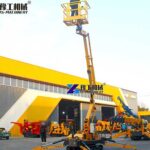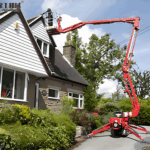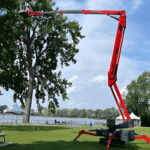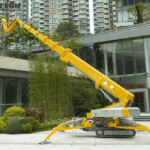
Reaching 90 feet is not difficult when a large aerial lift has plenty of room to operate. The challenge comes when the same height is required in a narrow street, landscaped property, construction site, industrial facility, or other restricted-access location.
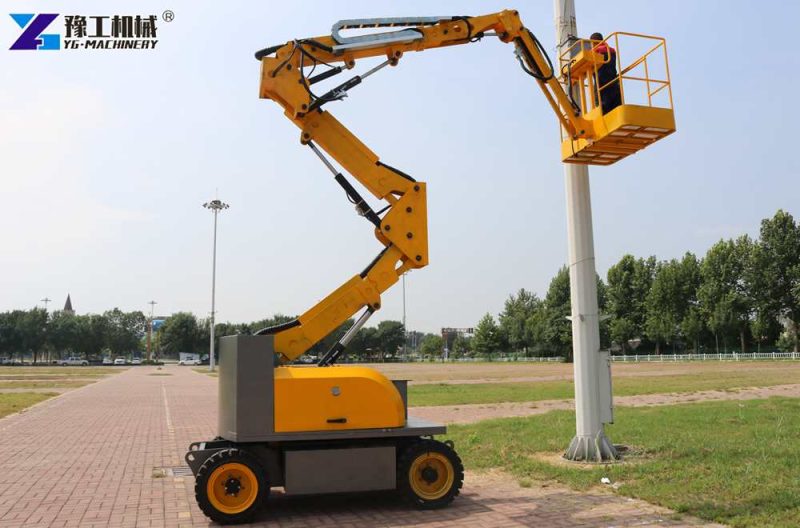
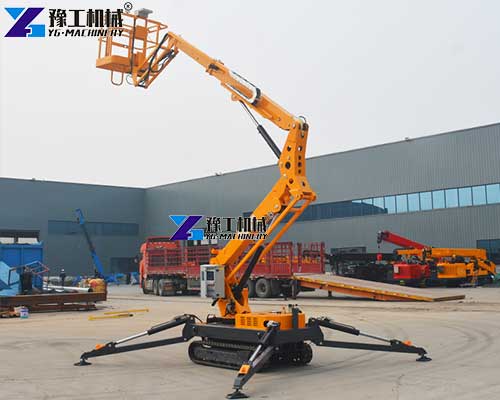
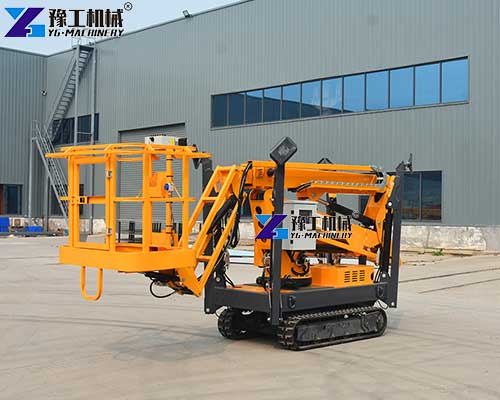
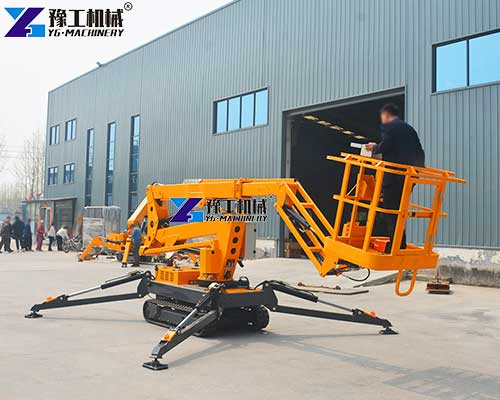
A 90 ft spider lift combines high working height with the compact configuration that makes spider lifts useful in difficult jobsites. Its tracked chassis allows the machine to move through restricted areas, while adjustable outriggers provide a stable working base and the boom system delivers flexible elevated access.
For contractors who need to work at significant height without bringing a large truck-mounted platform into the site, a 90 ft spider lift can provide a practical balance between reach, access, stability, and jobsite flexibility.
YG supplies spider aerial platforms in different configurations to meet varying working heights, outreach requirements, access limitations, and application needs.
Need a high-reach spider lift for a restricted-access project? Contact YG with your required working height and site conditions for a suitable configuration.
What Is a 90 Ft Spider Lift?
A 90 ft spider lift is a high-reach tracked aerial work platform designed to provide elevated access at approximately 90 feet, depending on the specific machine configuration and working envelope.
The name describes two important characteristics:
- 90 ft refers to the target working-height class.
- Spider lift refers to the compact tracked chassis, adjustable outriggers, and boom-based aerial access design.
Unlike a conventional truck-mounted aerial lift, a tracked spider lift can be driven into the working area rather than relying on a large road vehicle to position the platform.
Once the machine reaches the required location, its outriggers are deployed and the boom is positioned to provide access to the elevated work area.
This design makes a high-reach spider lift particularly valuable when a project requires substantial working height but the site does not provide enough space for conventional large aerial equipment.

Why Choose a 90 Ft Spider Lift?
Choosing a 90 ft machine is usually driven by a specific access challenge rather than height alone.
A contractor may need to reach:
- High building façades
- Roof structures
- Large trees
- Industrial installations
- Warehouse or facility structures
- Lighting and signage
- Elevated mechanical systems
- Construction and installation areas
The challenge is often reaching these areas without sacrificing access to the jobsite.
A 90 ft spider lift addresses this requirement by combining high reach with a compact tracked platform.
High Working Height
The most obvious advantage is elevated access.
A machine in the 90 ft working-height class can handle projects where lower spider lifts may not provide sufficient vertical reach.
This makes it suitable for contractors whose projects extend beyond routine low- and medium-height maintenance work.
However, working height should never be evaluated by itself. The actual working envelope also depends on boom configuration, horizontal outreach, platform load, and jobsite conditions.

Compact Access
High working height does not necessarily mean the machine needs the footprint of a large conventional aerial lift.
This is one of the key reasons customers consider a spider lift.
A compact tracked chassis can help the machine access locations such as:
- Narrow entrances
- Courtyards
- Backyards
- Landscaped properties
- Construction areas with limited access
- Industrial facilities
- Urban work zones
For projects where the entrance is the first major equipment constraint, transport width should be checked before selecting a model.
Stable Outrigger Support
A high-reach aerial platform needs an appropriate support system.
Spider lifts use adjustable outriggers to establish a stable working base before the boom is raised.
The outrigger configuration is particularly useful when the available setup area is irregular or when the machine needs to be positioned carefully within a restricted working zone.
For every project, operators should follow the manufacturer’s requirements for ground conditions, leveling, outrigger deployment, and safe operation.
Flexible Boom Positioning
Height is only half of the access problem.
A worker may need to reach over a wall, around a building structure, above equipment, or toward the far side of a work area.
The boom system provides the flexibility needed to position the platform within the machine’s rated working envelope.
This makes a high-reach spider lift more versatile than equipment designed only for straightforward vertical lifting.
Tracked Mobility
The crawler-type chassis is another important advantage.
A tracked spider lift can move around the jobsite without requiring the entire machine to be mounted on a truck.
Depending on the specific configuration and ground conditions, tracked mobility can be useful on surfaces and locations where conventional road-based aerial equipment is difficult to position.
This is particularly valuable for contractors who frequently work across different types of sites.
90 Ft Spider Lift vs Standard Spider Lift
Not every elevated-access project requires a 90 ft machine.
A smaller spider lift may be more economical when the required working height is relatively low. A 90 ft model becomes more attractive when the project requires additional vertical reach or a larger working envelope.
| Lower-height maintenance | Suitable | More capacity than may be required |
| High building access | May be limited | Better suited |
| Large tree work | Depends on height | Suitable for higher access requirements |
| Restricted entrances | Excellent for compact models | Depends on transport dimensions |
| High working areas | Limited by model | Designed for high-reach applications |
| Transport considerations | Generally easier | Requires careful planning |
| Project flexibility | Low-to-medium reach | High-reach applications |
The important point is that higher is not automatically better.
If a project only requires a modest working height, purchasing a high-reach machine may increase acquisition and transportation costs without providing meaningful additional value.
A 90 ft spider lift makes the most sense when its additional reach will be used regularly.
Where Is a 90 Ft Spider Lift Used?
A high-reach spider lift can serve many applications where workers need access to elevated structures while dealing with restricted site conditions.
Building Maintenance
High façades, windows, signs, lighting systems, and architectural features can require elevated access.
A compact tracked platform can be positioned close to a building where a truck-mounted lift may not have suitable access.
Construction and Installation
Construction projects often involve temporary access to elevated structural components.
A high-reach spider lift can support selected installation, finishing, inspection, and maintenance tasks where the machine can be safely positioned.
Industrial Maintenance
Factories and industrial facilities may have elevated pipes, ventilation systems, equipment, structural components, and other installations that require periodic inspection or maintenance.
The compact configuration can be useful where a larger mobile aerial lift cannot easily enter the facility.
Commercial Facility Maintenance
Hotels, shopping centers, public buildings, and other commercial properties may need regular work at height.
A high-reach spider lift can support maintenance activities while reducing the need to install temporary access systems for suitable applications.
Tree Care
Large trees can require significant working height and horizontal positioning.
A spider lift can provide an elevated work platform for qualified tree-care professionals, particularly where trees are located near buildings, landscaped areas, walls, or narrow access routes.
For more detailed information about spider lifts for pruning and tree maintenance, see our guide to spider lift for tree care.
Glass and Façade Work
Glass installation and façade maintenance often require operators to work close to vertical building surfaces.
The boom provides positioning flexibility while the tracked chassis can help access the work zone where site conditions permit.

What Should You Check Before Buying a 90 Ft Spider Lift?
The 90 ft specification is important, but it should not be the only specification in your purchasing decision.
1. Working Height
First determine the actual maximum height required.
Do not select a machine based only on an approximate building height. Consider the platform’s working height definition and the actual position where the operator needs to work.
2. Horizontal Outreach
Ask an important question:
How far away from the machine does the operator need to work?
If the platform must reach over a wall, roof edge, tree canopy, or other obstacle, horizontal outreach can be just as important as vertical height.
3. Platform Capacity
Calculate the total load required on the platform, including:
- Operators
- Tools
- Materials
- Installation components
- Safety equipment
Choose a configuration that meets the required platform capacity within its rated operating envelope.
4. Transport Width
A high-reach machine still needs to get to the work area.
Measure the narrowest:
- Gate
- Door
- Passage
- Entrance
- Access road
before choosing the equipment.
A machine that cannot enter the site is not useful, regardless of how high it can reach.
5. Machine Weight
Ground bearing conditions should also be considered.
Check whether the machine is suitable for the intended surface and whether additional ground protection is required.
This is especially important when operating on landscaped areas, finished floors, or other surfaces with load limitations.
6. Outrigger Footprint
The machine may have a compact transport configuration but require additional space once the outriggers are deployed.
Always check the required setup area.
This is particularly important for urban and restricted-access projects.
7. Working Envelope
Ask for the manufacturer’s working-envelope chart before purchasing.
It should help you understand the relationship between:
- Working height
- Horizontal outreach
- Platform capacity
- Boom position
- Outrigger configuration
This provides a much more accurate picture of what the machine can actually do on the jobsite.

Is a 90 Ft Spider Lift Better Than a Truck-Mounted Aerial Lift?
Not necessarily. The better machine depends on the jobsite.
A truck-mounted aerial lift can be highly effective when the site has wide vehicle access, suitable roads, and enough space for positioning.
A 90 ft spider lift becomes particularly attractive when the project requires high access but has restrictions such as:
- Narrow entrances
- Limited turning space
- Landscaped surfaces
- Buildings close to the work area
- Uneven terrain
- Restricted setup areas
In other words, the decision should not be based simply on which machine reaches higher.
It should be based on whether the machine can reach the work area in the first place.
For open jobsites requiring flexible horizontal outreach, an articulating boom lift may also be worth considering. The right choice depends on access width, working height, outreach, terrain, and available setup space.
How Much Does a 90 Ft Spider Lift Cost?
There is no universal price for a 90 ft spider lift.
The final cost depends on the actual machine configuration and purchasing conditions.
Important price factors include:
- Working height
- Horizontal outreach
- Platform capacity
- Boom configuration
- Tracked chassis
- Power system
- Control configuration
- Outrigger system
- Optional equipment
- Customization
- Shipping destination
For international buyers, transportation and import-related costs can also affect the total investment.
This is why comparing two machines solely by their advertised purchase price can produce misleading results.
A better approach is to compare the complete specification and total delivered cost.
For a detailed discussion of spider lift pricing and the factors that affect equipment cost, see our Spider Lift Price Guide.

Why Do Contractors Choose a High-Reach Spider Lift?
For contractors, the value of a 90 ft spider lift comes from solving access problems that other machines may not handle efficiently.
Reach More Work Areas
The higher working envelope allows contractors to take on elevated projects beyond the capability of smaller machines.
Work in Restricted Locations
The compact tracked configuration can provide access to jobsites where large truck-mounted equipment may not fit.
Position Around Obstacles
The boom system provides flexible positioning for work around structures and other obstacles.
Reduce Temporary Access Requirements
For suitable applications, a mobile aerial platform can reduce dependence on fixed scaffolding or other temporary access systems.
One Machine, Multiple Applications
A high-reach spider lift can support construction, maintenance, installation, inspection, tree care, industrial work, and facility maintenance.
This versatility can improve equipment utilization for contractors working across multiple industries.
90 Ft Spider Lift: Who Should Buy One?
A 90 ft spider lift may be a strong choice for companies that regularly encounter a combination of high working heights and restricted access.
It can be particularly relevant to:
- Aerial access contractors
- Building maintenance companies
- Construction contractors
- Glass installation companies
- Industrial maintenance contractors
- Facility management companies
- Arborists and tree-care contractors
- Rental companies
Before investing, consider how frequently your projects require this working-height class.
If most jobs are below this range, a smaller spider lift may provide a better return on investment.
If high-reach work is a regular part of your business, the additional capability can open up projects that smaller equipment cannot efficiently handle.

90 Ft Spider Lift Buying Checklist
Before requesting a quotation, prepare these specifications:
Required working height:
How high does the platform need to reach?
Required horizontal outreach:
How far must the platform extend from the machine?
Minimum access width:
What is the narrowest entrance?
Platform capacity:
How many operators and how much equipment will be carried?
Ground conditions:
Will the machine work on concrete, asphalt, gravel, grass, or uneven terrain?
Setup space:
How much room is available for the outriggers?
Application:
What type of elevated work will the machine perform?
Destination:
Where will the equipment be delivered?
Providing these details allows the manufacturer to recommend a configuration based on the actual project instead of simply quoting the highest-reach model.
Get a 90 Ft Spider Lift for Your Project
A 90 ft spider lift is not simply a machine with a higher boom. Its value comes from combining high working height, tracked mobility, compact access, stable outrigger support, and flexible boom positioning.
For contractors working on high structures in difficult-access environments, this combination can make elevated work more practical and expand the range of projects they can handle.
However, the right machine should always be selected according to the complete working envelope—not working height alone.
Tell YG your required working height, horizontal outreach, minimum access width, platform capacity, application, and destination, and we can recommend a suitable spider aerial platform configuration for your project.