Chemical plants, coal processing factories, crude oil storage facilities, wastewater treatment plants, and mining operations all face a common problem: sludge and sediment accumulation.
Over time, sediment builds up in tanks, reservoirs, and treatment systems, reducing storage capacity, affecting production efficiency, and increasing maintenance costs.
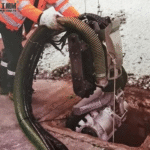
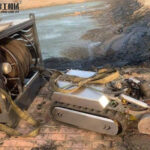
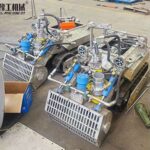
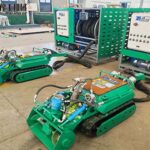
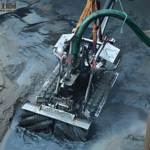
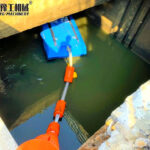
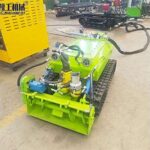
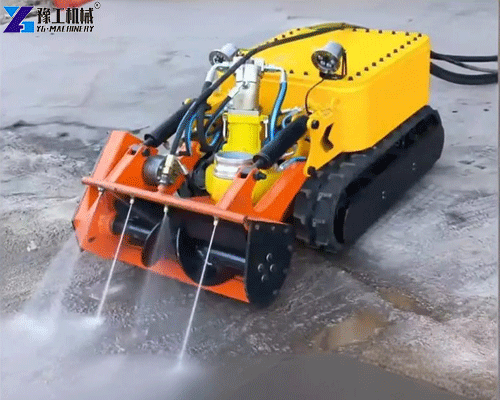
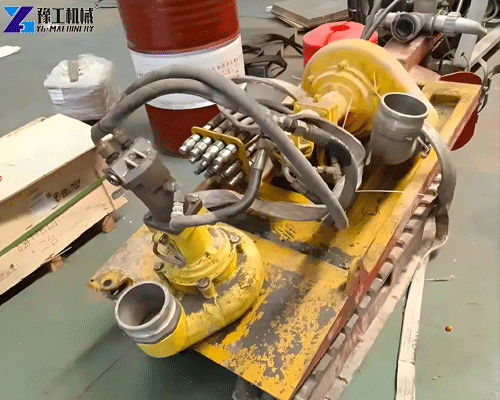
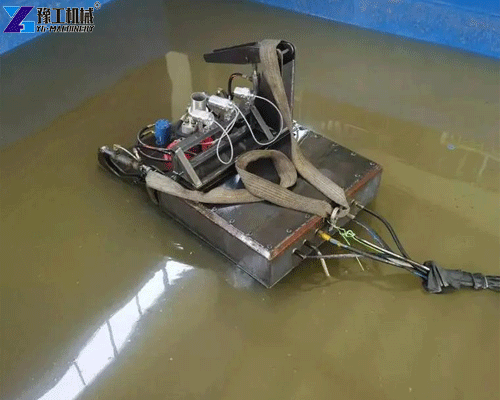
To solve these problems safely and efficiently, many industries are now using an industrial dredging robot. These robots are designed to remove sludge, sediment, and industrial waste from tanks without requiring manual entry.
Whether it is used as a sediment dredging robot in wastewater plants, a sewage tank cleaning robot in municipal facilities, or an oil tank cleaning robot in petroleum storage systems, robotic dredging technology provides a safer and more efficient cleaning solution.
Industrial Dredging Robot Parameters
| Parameter | YG500 | YG600 | YG700 | YG800 | YG900 | YG1200 |
| Robot Dimensions (mm) | 1500*500*650 | 1500*600*650 | 1600*700*650 | 1600*850*700 | 1650*960*750 | 1900*1200*750 |
| Dredging Width (mm) | 500 | 600 | 700 | 800 | 900 | Suitable for large culverts |
| Travel Speed (m/s) | 3–15 | 3–15 | 3–15 | 3–15 | 3–15 | 0–17 m/min |
| Pump Diameter (inch) | 3 | 3 | 4 | 4 | 4 | 4or6 |
| Pump Flow (m³/h) | 100 | 100 | 160 | 160 | 200 | 250 |
| Pump Head (m) | 0–30 | 0–30 | 0–25 | 0–25 | 0–25 | 0–30 (Horizontal: 100–150m) |
| Hydraulic Station Dimensions (mm) | 2200*1200*1700 | 2200*1200*1700 | 2200*1200*1700 | 2200*1200*1700 | 2200*1200*1700 | 2120*1240*1200 |
| Main Motor Power (kW) | 18 | 18 | 22 | 22 | 22 | 45KW (50KW) or Diesel 76KW (123KW) |
| Hydraulic System Pressure (Mpa) | 0–16 | 0–16 | 0–16 | 0–16 | 0–16 | Not specified |
| Particle Size (mm) | 15 | 15 | 40 | 40 | 50 | 0–40 (customizable) |
| Winch Speed (r/min) | 0–10 | 0–10 | 0–10 | 0–10 | 0–10 | 0–10 |
| Pipe Length (m) | 30–50 Optional | 30–50 Optional | 30–50 Optional | 30–50 Optional | 30–50 Optional | 30m/pack, 20kg pressure resistant, optional |
| Control System | Wireless Remote | Wireless Remote | Wireless Remote | Wireless Remote | Wireless Remote | Wireless Remote |
| Lighting System | Underwater LED*2 | Underwater LED*2 | Underwater LED*2 | Underwater LED*2 | Underwater LED*2 | Underwater LED*2 |
Why Industrial Tanks Need an Industrial Dredging Robot?
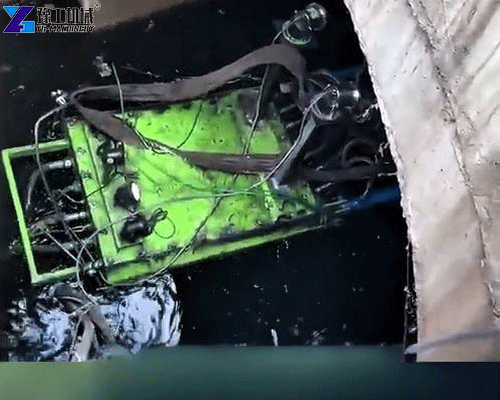
Industrial tanks often contain sludge, chemical residue, or sediment that must be removed regularly.
Traditional cleaning methods involve:
- manual tank entry
- high labor costs
- dangerous confined-space operations
- long production shutdowns
Using an industrial dredging robot eliminates many of these challenges.
Key advantages include:
- safer operation in hazardous environments
- faster sludge removal
- reduced downtime
- lower labor costs
- more precise cleaning
For industries such as oil, chemical processing, mining, and wastewater treatment, robotic dredging has become a preferred maintenance solution.
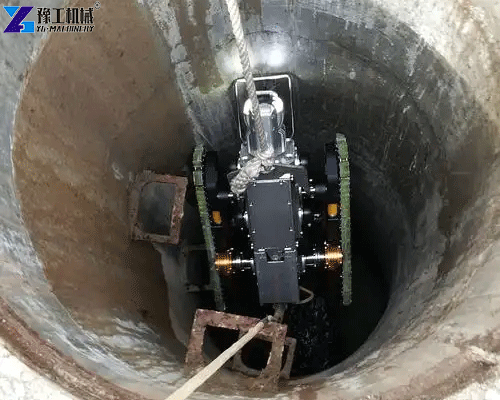
Key Features of the Industrial Dredging Robot
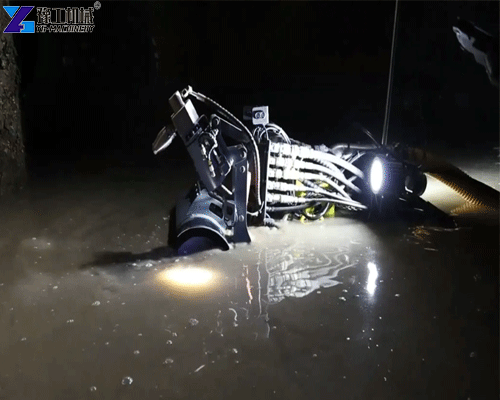
Modern industrial dredging robots combine automation, remote control, and powerful pumping technology.
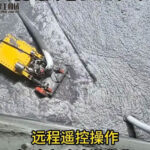
1.Remote Control Operation
The robot is equipped with a remote control system and real-time display screen, allowing operators to monitor cleaning operations from a safe distance.
This feature is particularly important for hazardous industrial environments.
2.Explosion-Proof Design
Many industrial environments contain flammable gases or chemicals.
The oil tank cleaning robot uses an explosion-proof design to ensure safe operation in:
- oil storage tanks
- chemical processing facilities
- fuel depots
- refinery systems
3.360° Rotating Spray Head
The robot uses a 360-degree rotating spray nozzle to clean sludge and sediment from every angle inside the tank.
This ensures complete cleaning coverage.
4.High-Pressure Pump System
A powerful high-pressure pump breaks down compact sludge and sediment, allowing the robot to remove material quickly and efficiently.
5.Integrated Lighting System
Industrial tanks often have poor visibility.
Built-in LED lighting systems allow the robot to operate effectively even in dark environments.
6.Compact Entry Design
Many tanks have limited access points.
The compact entry design allows the robot to pass through narrow manholes and operate in confined tank spaces.
Typical Applications of Industrial Dredging Robots
The industrial dredging robot is widely used across many industries.
- Oil and Energy Industry: Used as an oil tank cleaning robot for crude oil storage tanks and refinery tanks.
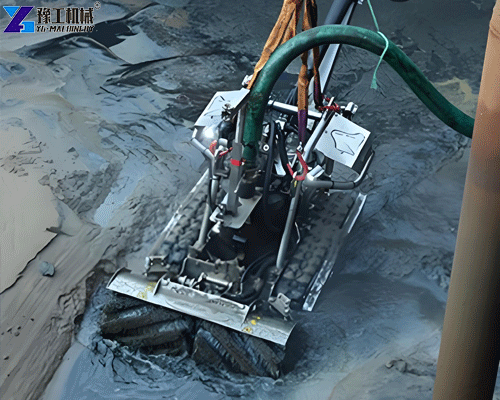
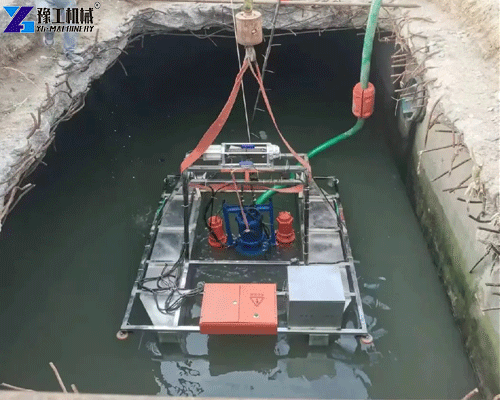
- Wastewater Treatment Plants: A sediment dredging robot removes sludge from sedimentation tanks and treatment reservoirs.
- Municipal Sewage Systems: A sewage tank cleaning robot helps clean sludge tanks and wastewater treatment systems.
- Mining and Coal Processing Plants: Removes sediment from slurry tanks and settling ponds.
- Chemical Factories: Cleans storage tanks containing chemical residue and industrial sludge.
Customization Options for Industrial Customers
Different factories have different tank structures and sludge conditions.
Therefore, industrial dredging robots can be customized.
Common customization options include:
- different robot sizes for tank openings
- higher pump capacity
- explosion-proof certification upgrades
- long-distance remote control systems
- camera monitoring systems
- customized dredging heads
- extended hoses and cables
These customized options allow the robot to perform efficiently in various industrial environments.
Investment ROI for Industrial Dredging Robots
Many industrial companies consider the return on investment (ROI) when purchasing new equipment.
In most cases, an industrial dredging robot can deliver strong economic benefits.
- Reduced Labor Costs: Robotic cleaning requires fewer workers and reduces labor expenses.
- Faster Cleaning Time: A sediment dredging robot can remove sludge faster than manual cleaning.
- Lower Maintenance Costs: Regular cleaning prevents corrosion, blockages, and mechanical damage.
- Improved Operational Safety: Remote control operation reduces the need for workers to enter hazardous environments.
Because of these advantages, many factories recover their equipment investment within a short time.
FAQ – Industrial Dredging Robot
What industries use industrial dredging robots?
Industrial dredging robots are commonly used in chemical factories, oil storage facilities, wastewater treatment plants, mining operations, and municipal sewage systems.
Can the robot work in hazardous environments?
Yes. Many industrial dredging robots feature explosion-proof systems designed for oil tanks and chemical facilities.
How is the robot controlled?
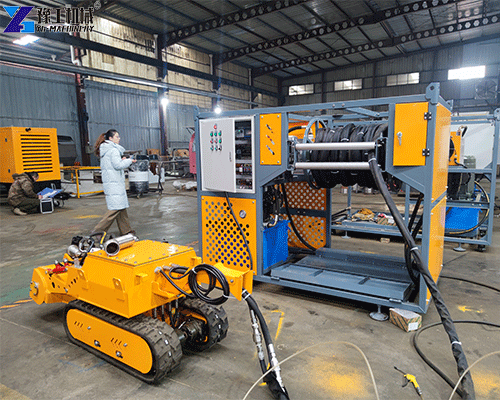
The robot is operated through a remote control system with a display screen, allowing operators to monitor the cleaning process in real time.
Can the robot enter small tanks?
Yes. The compact entry design allows the robot to pass through narrow manholes and confined tank openings.
Can the robot be customized?
Yes. Manufacturers can customize pump power, robot size, explosion-proof level, and control systems based on project requirements.
Industrial Dredging Robot in YG Machinery
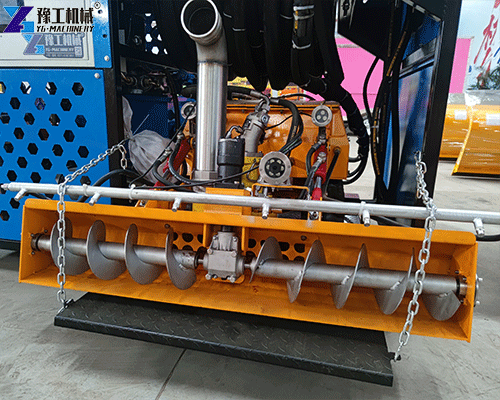
The industrial dredging robot is transforming the way industries clean tanks and remove sludge.
With features such as remote control operation, explosion-proof design, high-pressure pumping systems, integrated lighting, and 360° spray cleaning, these robots provide a safe, efficient, and cost-effective solution for modern industrial maintenance.
Whether used as a sediment dredging robot, sewage tank cleaning robot, or oil tank cleaning robot, robotic dredging technology helps industrial facilities improve safety, efficiency, and long-term operational performance.