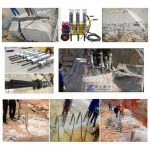
Breaking hard rock safely and efficiently is a common challenge in mining, quarrying, tunnel excavation, and construction projects. Traditional blasting methods often create excessive vibration, noise, dust, and safety risks. For projects located near residential areas, roads, tunnels, or sensitive structures, blasting may not even be permitted.
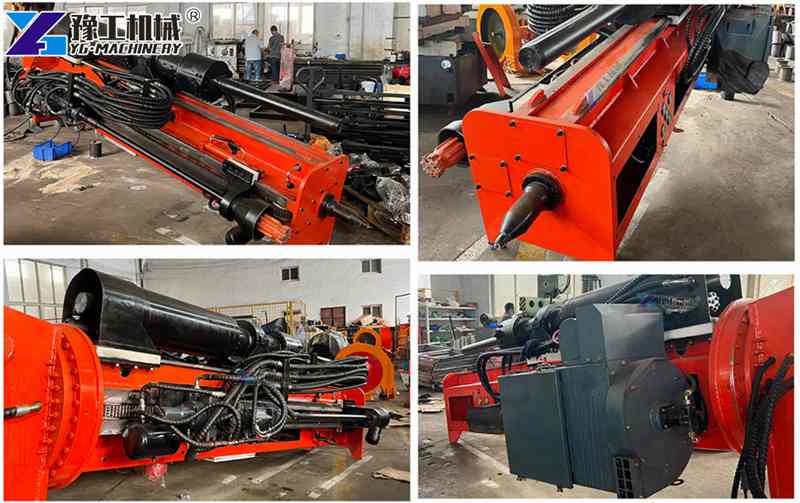
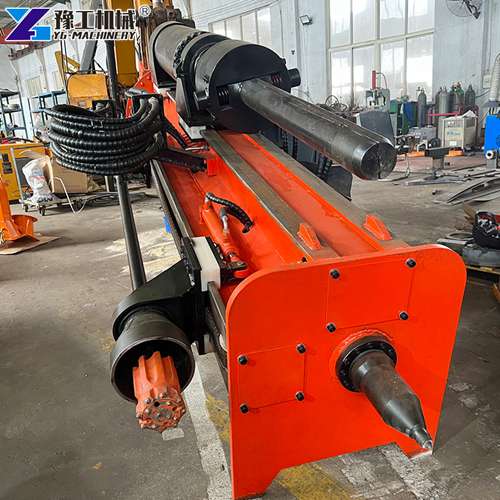
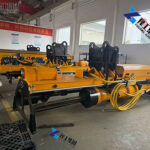
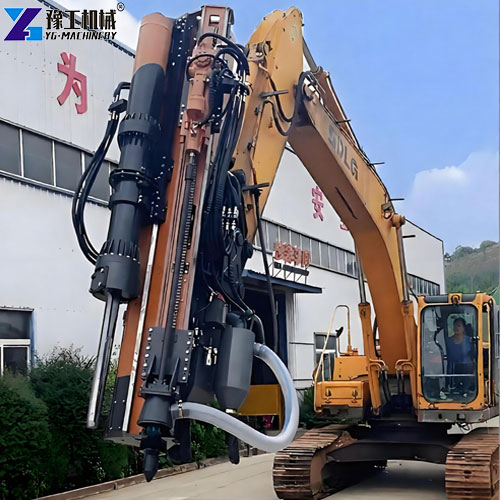
To solve these challenges, YG Machinery offers a powerful Hydraulic Rock Drill & Splitter Machine, an all-in-one rock breaking solution that combines drilling and hydraulic splitting in a single system. It delivers precise rock breaking, lower operating costs, and higher safety compared with conventional methods.
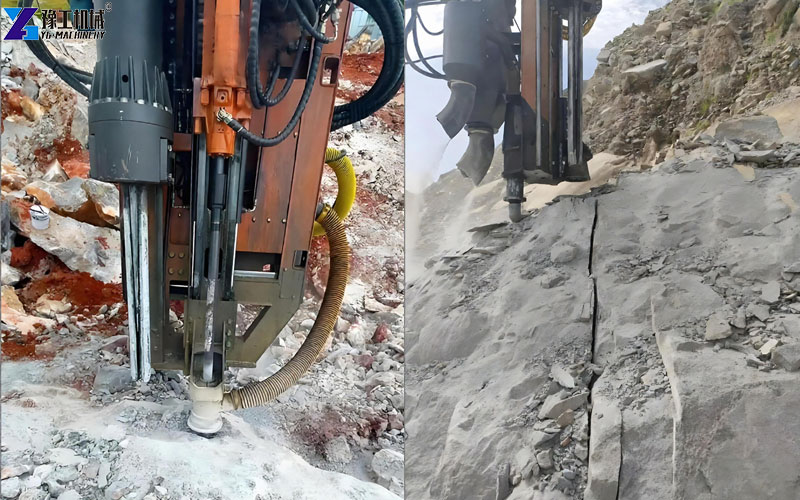
Recently, a customer from Chile purchased our YG-1500 Hydraulic Rock Drill & Splitter Machine for a mining project requiring efficient granite excavation.

YG-1500 Hydrualic Rock Drill & Splitter Machine
Drill depth: 1500mm
Borehole diameter: 125mm
Drill-split per borehole: 5 minutes
What Is An Integrated Hydraulic Rock Drilling Splitting Machine?
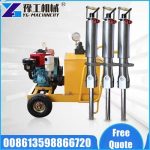
Integrated hydraulic rock drilling splitting machine, also known as a hydraulic rock splitter or rock drilling splitter, is a specialized tool used in construction, mining, and demolition activities. It is designed to split or break apart hard rocks and concrete structures using hydraulic pressure.
This method provides:
- Precise rock splitting
- Minimal vibration
- Low noise levels
- Reduced dust generation
- Safer operation
- Lower environmental impact
Because of these advantages, hydraulic rock splitters have become increasingly popular in mining, tunneling, quarrying, and urban demolition projects.
24-hour hotline: +8613837115193
Check How Hydraulic Rock Drill & Splitter Works – Just 4 Steps
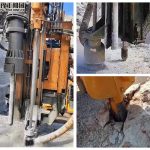
Step 1. Drill the Hole: Position the machine near the target area and drill a hole in the rock or concrete.
Step 2. Insert the Hydraulic Splitter: Insert wedges or counter wedges into the drilled hole.
Step 3. Apply Hydraulic Pressure: Activate the hydraulic power unit and apply pressure to the splitting cylinder, causing the wedges to move apart and exert force on the material.
Step 4. Controlled Rock Fracture: The rock or concrete fractures along the hole, resulting in a clean split.
Compared with blasting, the entire process is safer, cleaner, and easier to control.
Why Choose a Hydraulic Rock Drill Splitter Instead of Blasting?
Many contractors are looking for alternatives to explosives due to increasingly strict safety and environmental regulations.
Higher Safety
Traditional blasting creates flying rock fragments, shockwaves, and safety hazards for nearby workers.
The hydraulic rock splitter generates controlled splitting force without explosions, making it significantly safer.
Lower Noise and Vibration
Projects near:
- Residential areas
- Schools
- Hospitals
- Highways
- Tunnels
often cannot tolerate excessive vibration or noise.
Hydraulic splitting technology minimizes disturbance to surrounding structures and communities.
Greater Precision
Operators can precisely control the location and direction of splitting.
This is especially important for:
- Tunnel excavation
- Foundation excavation
- Controlled demolition
- Quarry block extraction
Reduced Environmental Impact
Hydraulic splitting produces:
- Less dust
- Lower noise pollution
- No blasting residue
- Reduced ground vibration
making it an environmentally friendly rock-breaking solution.
Lower Long-Term Cost
Although the initial equipment investment may be higher than manual tools, contractors often save money through:
- Faster production
- Reduced labor costs
- Lower maintenance expenses
- Improved safety compliance
- Less material waste
Applications of Hydraulic Rock Drill & Splitter Machines

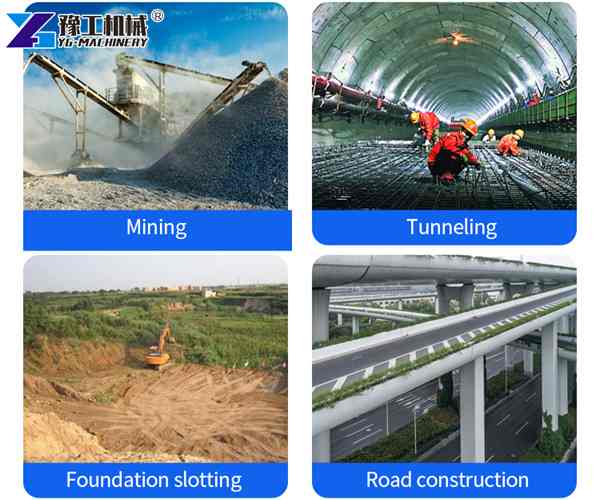
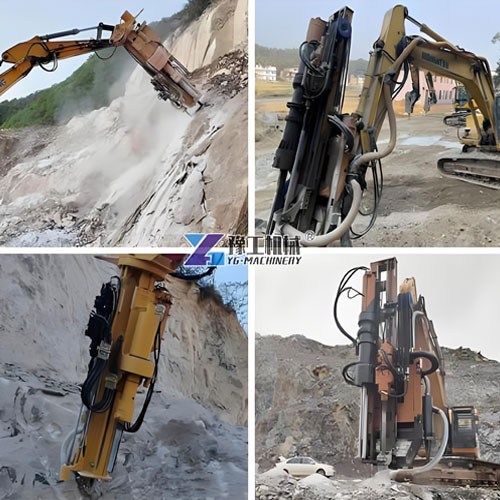
This Hydraulic rock drill splitter machine finds application in mining operations for the extraction of minerals and ores, as well as in the quarrying industry for extracting stone blocks or splitting large rocks into smaller pieces.
It is also employed in civil engineering projects for tasks like rock excavation, tunneling, and foundation work where the removal or separation of hard rock formations is necessary.
Mining Operations
The machine is widely used for breaking hard rock formations during mineral extraction.
Suitable materials include:
- Granite
- Basalt
- Quartzite
- Limestone
- Iron ore formations
Quarrying Industry
Quarry operators use hydraulic rock splitters to extract large stone blocks while minimizing material damage.
Common applications include:
- Marble quarries
- Granite quarries
- Sandstone extraction
- Decorative stone production
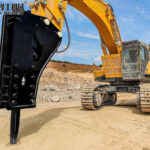
When mounted on a heavy duty excavator, the system delivers higher stability and productivity for large-scale quarry operations.
Tunnel Construction
Tunnel excavation often requires precise rock removal in confined spaces where blasting may be restricted.
The hydraulic splitter enables safe and controlled excavation while protecting surrounding rock structures.
Foundation Excavation
Large infrastructure projects frequently encounter hard rock during foundation construction.
The machine efficiently removes rock obstacles without damaging nearby structures.
Reinforced Concrete Demolition
The splitter can also break:
- Concrete foundations
- Bridge structures
- Industrial buildings
- Retaining walls
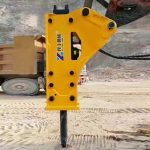
while producing significantly less vibration than hydraulic breakers.

Customer Case: Hydraulic Rock Splitter Delivered to Chile
In early 2024, a mining contractor in Chile contacted YG Machinery regarding difficulties encountered during granite excavation.
Customer Challenges
The customer faced several problems:
- Extremely hard granite formations
- High labor costs
- Slow excavation progress
- Excessive noise generated by traditional breaking methods
- Restrictions on blasting operations due to nearby infrastructure
The project schedule was being delayed, and the contractor needed a safer and more productive solution.
YG Solution
After analyzing the project requirements, YG recommended the YG-1500 Hydraulic Rock Drill & Splitter Machine. The system can be integrated with a 30-ton excavator for quarrying and tunnel excavation projects requiring high stability and power output.
The equipment offered:
- 1500 mm drilling depth
- Large borehole diameter
- Powerful hydraulic splitting force
- Remote-control operation
- Low-noise rock breaking technology
Results Achieved
After deployment, the customer reported:
- Faster rock removal efficiency
- Significant labor savings
- Reduced equipment downtime
- Improved jobsite safety
- Successful completion of excavation tasks without blasting
The customer particularly praised the machine’s ability to split granite quickly while maintaining excellent control over the excavation process.
FAQ about Hydraulic Rock Drill & Splitter
What types of rock can the machine split?
The machine can effectively split granite, basalt, limestone, sandstone, marble, and other hard rock formations.
Is blasting required?
No. The machine uses hydraulic pressure instead of explosives, providing a safer and environmentally friendly solution.
How long does one splitting cycle take?
Typically about 5 minutes per borehole, depending on rock hardness and operating conditions.
Can it be used in urban areas?
Yes. Because it produces low vibration and low noise, it is ideal for urban construction and sensitive environments.
Is operator training required?
The machine is designed for user-friendly operation, and YG provides complete technical guidance and support.
Maintenance Tips for Longer Service Life
To maximize machine performance, operators should:
- Inspect hydraulic hoses regularly
- Check hydraulic oil quality
- Keep drilling tools clean
- Replace worn drill bits promptly
- Lubricate moving parts according to the maintenance schedule
- Monitor system pressure during operation
Proper maintenance helps ensure stable performance and lower operating costs over the long term.
Why Buying An Integrated Hydraulic Rock Drilling Splitting Machine?
It can save time and labor compared to manual or traditional methods of breaking apart hard materials.
Wide range of applications: construction, mining, quarrying, landscaping, and more.
It reduces the risks associated with manual drilling, hammering, or blasting methods, which can be physically demanding and potentially dangerous.
Reduce noise pollution, vibration, and dust generation.
With the machine, operators have greater control over the splitting process.
While the initial investment in the machine may seem significant, its long-term cost savings can be substantial.