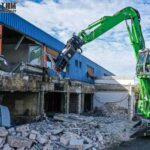


When concrete demolition leaves behind tons of reinforced concrete, reducing the debris to a manageable size can become one of the most time-consuming parts of the project. Transporting oversized concrete, separating rebar, and processing demolition waste can increase labor, equipment, and disposal costs.
An excavator pulverizer provides a practical solution by turning an excavator into a powerful concrete processing machine. Designed for crushing and pulverizing concrete structures, this attachment can reduce large demolition debris into smaller fragments while helping separate reinforcing steel from concrete.
For demolition contractors, recycling companies, and construction businesses, an excavator-mounted pulverizer can improve on-site material processing without requiring a separate crushing machine for every job.
What Is an Excavator Pulverizer?
An excavator pulverizer is a hydraulic attachment mounted directly on an excavator. It uses the excavator’s hydraulic power to operate strong jaws that crush and break concrete structures.
Unlike an excavator bucket, which is mainly designed for digging and material handling, a concrete pulverizer is specifically engineered for processing hard demolition materials.
It is commonly used to:
- Crush reinforced concrete
- Pulverize concrete structures
- Break demolition debris into smaller pieces
- Separate concrete from reinforcing steel
- Prepare construction waste for recycling
- Reduce the volume of demolition materials
The attachment is particularly useful after the initial demolition stage, when large concrete sections need to be processed before transportation or recycling.

Why Use a Pulverizer on an Excavator?
Demolition contractors often face the same problem: removing a structure is only the first step. The resulting concrete waste still needs to be processed, sorted, transported, or recycled.
Using an excavator pulverizer can simplify this process.
Reduce Concrete Debris Size On Site
Large concrete blocks are difficult and expensive to transport. Pulverizing the material directly at the demolition site reduces its size and makes handling easier.
This can help contractors reduce the number of truck trips required to move demolition waste.
Separate Rebar from Concrete
Reinforced concrete contains steel bars that can interfere with recycling and material handling.
The crushing jaws help break concrete away from reinforcing steel, making it easier to recover and sort the metal.
This improves the quality of recyclable materials and reduces manual separation work.
Reduce Dependence on Additional Equipment
A suitable excavator can perform demolition and concrete processing by changing attachments according to the project stage.
Instead of moving a separate concrete processing machine to every site, contractors can use the excavator’s existing hydraulic system to operate the pulverizer.
Improve Jobsite Productivity
Fast concrete processing is particularly important when demolition schedules are tight.
A properly matched pulverizer allows operators to process demolition debris directly from the excavator, reducing unnecessary material handling.
Key Features of the YG Excavator Pulverizer
YG excavator pulverizers are designed for demanding demolition and recycling applications where crushing performance, durability, and maintenance efficiency are important.
Powerful Hydraulic Crushing Force
The pulverizer uses hydraulic pressure from the excavator to generate strong jaw force for processing concrete.
It can handle:
- Reinforced concrete
- Concrete slabs
- Foundations
- Building structures
- Demolition rubble
- Concrete blocks
The hydraulic system provides controlled crushing rather than relying only on impact force, allowing operators to process concrete accurately.
Heavy-Duty Construction
Demolition environments can expose attachments to severe impact, abrasion, and continuous loading.
The pulverizer uses heavy-duty steel construction and wear-resistant components to withstand demanding working conditions.
A robust structure helps extend service life and reduces the frequency of major repairs.
Replaceable Teeth and Blades
Wear parts eventually become damaged or worn during concrete processing.
Replaceable teeth and blades make maintenance more convenient and allow contractors to restore crushing performance without replacing the complete attachment.
This can reduce long-term operating costs.
Optional 360° Hydraulic Rotation
For projects requiring precise positioning, an optional hydraulic rotation system allows the pulverizer to rotate around the attachment axis.
This gives operators greater flexibility when approaching concrete structures from different angles.
Multiple Excavator Sizes
Different demolition projects require different attachment sizes.
YG offers pulverizer models designed for excavators ranging from approximately 6 to 80 tons.
This allows contractors to select a configuration based on excavator capacity, hydraulic specifications, material size, and project requirements.

Excavator Pulverizer Specifications
The following models cover different excavator classes and working requirements.
| YG400 | 6–9 ton | 670 kg | 280 bar | 380 kN |
| YG600 | 10–15 ton | 1,350 kg | 320 bar | 650 kN |
| YG800 | 18–26 ton | 1,750 kg | 320 bar | 1,650 kN |
| YG1000 | 26–30 ton | 2,750 kg | 320 bar | 2,250 kN |
| YG1700 | 50–80 ton | 4,709 kg | 320 bar | 2,503 kN |
Actual attachment selection should be based on the excavator’s hydraulic flow, pressure, lifting capacity, and manufacturer specifications rather than excavator weight alone.
What Can an Excavator Pulverizer Be Used For?
The main application of a pulverizer is concrete processing, but its value extends across several demolition and recycling operations.
Building Demolition
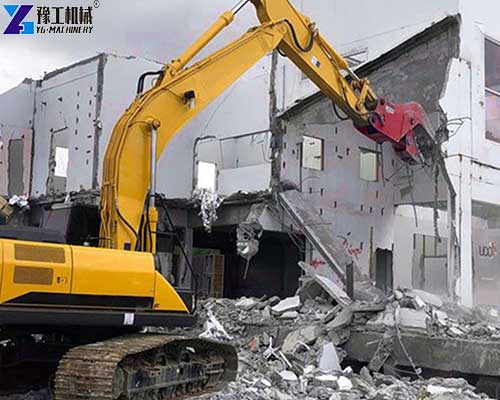
After buildings are demolished, large reinforced concrete sections often remain on site.
A pulverizer can reduce these sections into smaller fragments, making subsequent loading, sorting, and transportation easier.
Bridge and Infrastructure Demolition
Bridges, retaining structures, concrete barriers, and other infrastructure can contain significant amounts of reinforced concrete.
A properly sized pulverizer can help process concrete after structural demolition.
Concrete Recycling
Concrete waste can often be processed for reuse as recycled aggregate or other construction materials, depending on local recycling requirements.
Pulverizing concrete on site can make the material easier to sort and prepare for further processing.
Road and Pavement Removal
Concrete roads, sidewalks, slabs, and foundations can generate large amounts of demolition debris.
The pulverizer can reduce the size of removed concrete and simplify material handling.
Construction and Demolition Waste Processing
For contractors handling mixed demolition waste, concrete pulverizing can be an important step before sorting and recycling.
The attachment helps reduce oversized material and makes the remaining steel easier to identify and recover.
Excavator Pulverizer vs Hydraulic Breaker
A common question among demolition contractors is whether they should choose a pulverizer or hydraulic breaker.
The two attachments perform different jobs.
| Main function | Crushing and pulverizing concrete | Impact breaking |
| Concrete processing | Excellent | Good |
| Rebar separation | Excellent | Limited |
| Material size reduction | Yes | Yes |
| Concrete recycling preparation | Excellent | Moderate |
| Primary application | Demolition processing and recycling | Breaking hard materials |
A hydraulic breaker is generally better suited to initial impact demolition and breaking very hard materials.
A pulverizer is particularly valuable when the goal is to crush concrete, reduce debris size, and separate reinforcement steel after or during demolition.
For larger demolition projects, contractors may use both attachments at different stages of the same project.
How Does a Concrete Pulverizer Improve Recycling?
Concrete recycling becomes more efficient when demolition material can be processed close to where it is generated.
An excavator pulverizer helps by reducing large concrete pieces into smaller fragments and exposing reinforcing steel.
This can provide several benefits:
- Smaller material size makes concrete easier to handle and transport.
- Rebar separation helps recover valuable steel from reinforced concrete.
- Reduced waste volume can lower transportation requirements.
- Better material preparation makes subsequent crushing and screening more efficient.
- On-site processing can reduce unnecessary movement of oversized concrete.
For recycling companies, these benefits can translate into better material recovery and more efficient site operations.
How to Choose the Right Excavator Pulverizer?
Choosing a pulverizer based only on attachment size or price can result in poor performance. The attachment must be matched to the excavator and the actual demolition conditions.
1. Check Excavator Weight
The pulverizer must be compatible with the excavator’s operating weight.
For example, the YG400 is designed for approximately 6–9 ton excavators, while the YG1700 is designed for approximately 50–80 ton excavators.
2. Check Hydraulic Pressure and Flow
Hydraulic compatibility is just as important as excavator weight.
Before purchasing, confirm:
- Hydraulic working pressure
- Required hydraulic flow
- Hydraulic connection
- Excavator pump capacity
- Auxiliary hydraulic circuit specifications
Correct matching helps the pulverizer achieve its designed performance.
3. Consider the Concrete Thickness
Thicker and heavily reinforced concrete generally requires a larger attachment with greater crushing force and jaw capacity.
If the pulverizer is too small for the material, productivity may be reduced.
4. Consider Jaw Opening
A larger jaw opening allows the attachment to capture larger concrete sections.
However, a larger attachment also requires a suitable excavator.
The ideal combination should balance jaw capacity, crushing force, excavator stability, and working efficiency.
5. Consider Project Frequency
For contractors using a pulverizer regularly, durability and replaceable wear parts may be more important than the lowest purchase price.
For occasional demolition work, a more compact model may provide a better balance between investment and performance.
Pulverizer Maintenance for Long Service Life
Proper maintenance helps keep crushing performance stable and reduces unexpected downtime.
Operators should regularly:
- Inspect hydraulic hoses and connections for leaks.
- Check teeth, blades, and other wear components.
- Lubricate moving parts according to the manufacturer’s recommendations.
- Inspect bolts and structural components.
- Remove concrete debris after operation.
- Replace worn teeth or blades when necessary.
Regular inspection is especially important when the attachment is used in heavy-duty demolition conditions.
Why Choose YG Excavator Pulverizers?
For contractors purchasing demolition equipment, reliability and compatibility are just as important as crushing force.
YG provides different pulverizer sizes for excavators across a wide range of operating classes.
Key advantages include:
- Heavy-duty construction for demanding demolition work
- Strong hydraulic crushing performance
- Replaceable teeth and blades
- Optional hydraulic rotation
- Multiple sizes for different excavators
- Support for concrete demolition and recycling applications
- Technical assistance for attachment selection
YG can recommend a suitable pulverizer according to your excavator model, hydraulic specifications, concrete type, and project requirements.
Get the Right Excavator Pulverizer for Your Project
A demolition excavator becomes significantly more versatile when equipped with the right attachment.
If your project involves reinforced concrete, building demolition, concrete recycling, or large volumes of demolition debris, an excavator pulverizer can help reduce material size, separate rebar, and simplify on-site processing.
Instead of choosing an attachment based only on price, consider the complete working conditions: excavator size, hydraulic capacity, concrete thickness, jaw opening, crushing force, and expected workload.
Contact YG today with your excavator model and hydraulic specifications to get a suitable pulverizer recommendation and quotation.
FAQ about Excavator Pulverizer
1.What is an excavator pulverizer used for?
An excavator pulverizer is primarily used to crush and pulverize concrete during demolition and recycling. It can also help separate reinforcing steel from concrete.
2.Can a pulverizer crush reinforced concrete?
Yes. A properly sized concrete pulverizer is designed to process reinforced concrete and help separate rebar from the crushed concrete.
3.What size excavator do I need for a pulverizer?
The required excavator depends on the pulverizer model. YG models in this range are designed for excavators from approximately 6–9 tons up to 50–80 tons.
4.Is a pulverizer better than a hydraulic breaker for concrete?
They serve different purposes. A hydraulic breaker is mainly designed for impact breaking, while a pulverizer is better suited to crushing, processing, and separating reinforced concrete for recycling.
5.Can a pulverizer be used for concrete recycling?
Yes. Pulverizers are commonly used to reduce concrete demolition waste and separate reinforcing steel, making the material easier to process for recycling.
6.How do I choose an excavator pulverizer?
Start by checking your excavator’s operating weight, hydraulic pressure, hydraulic flow, and auxiliary circuit. Then consider concrete thickness, required jaw opening, crushing force, and project workload.