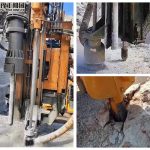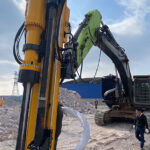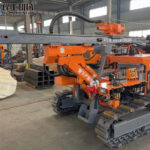
Choosing a rock drilling and splitting machine is not simply a matter of selecting the largest model or the highest splitting force. The right configuration depends on the rock or concrete you need to break, required drilling depth, borehole diameter, excavator size, working space, and the size of the material to be fractured.
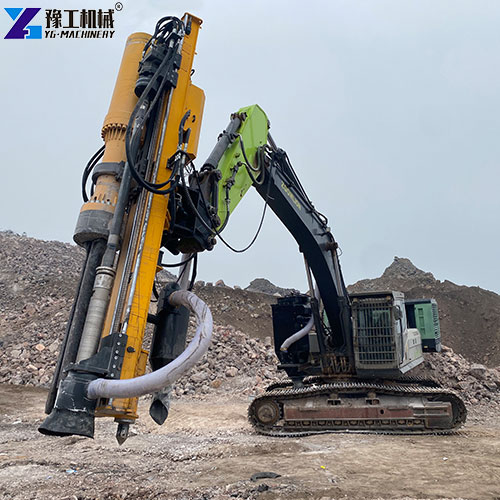
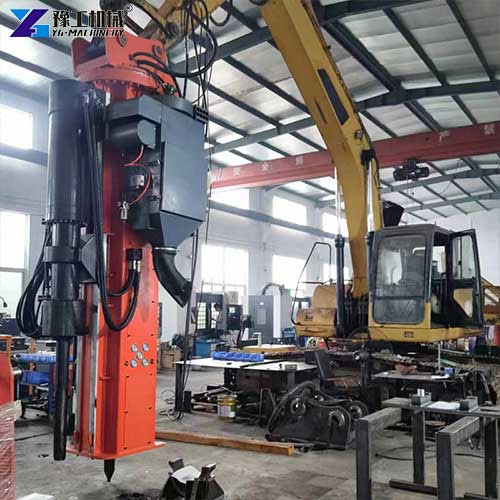
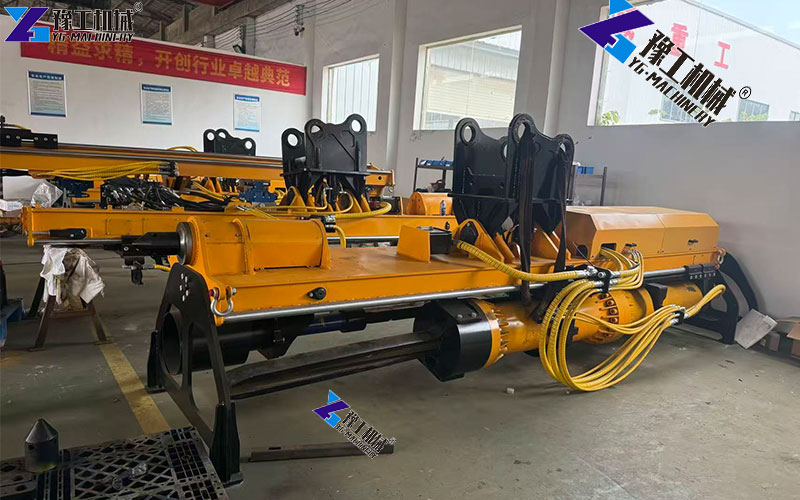
An integrated rock drilling and splitting machine combines drilling and hydraulic rock splitting in one excavator-mounted system. Instead of using separate equipment for drilling holes and then moving another machine into position for splitting, the operator can drill and split from the same working platform.
For projects involving hard rock, large rock blocks, foundations, tunnels, quarries, or reinforced concrete, choosing the correct configuration can directly affect drilling efficiency, positioning accuracy, machine stability, and overall project cost.
This guide explains the main factors to consider when selecting a rock drill and splitter machine, including drilling performance, splitting depth, excavator compatibility, and working conditions.
1. Compare the Main Models Before Choosing
The following table provides a quick starting point for model selection.
| Specification | YG1000 | YG1500 | YG2000 |
| Recommended Excavator | 20–36 T | 36–48 T | 48–65 T |
| Rock Drill Power | 22 kW | 30 kW | 33 kW |
| Borehole Diameter | 115 mm | 135 mm | 152 mm |
| Borehole Depth | 1,600 mm | 1,900 mm | 2,100 mm |
| Drilling Speed | 1 m/min | 0.8 m/min | 0.7 m/min |
| Splitting Depth | 1,000 mm | 1,250 mm | 1,500 mm |
| Splitting Force | 12,000 T | 15,000 T | 30,000 T |
| Rotation Angle | 120° | 120° | 120° |
| Air Compressor Displacement | 4.5 m³/min | 7.5 m³/min | 10 m³/min |
| Air Compressor Pressure | 5–8 bar | 5–8 bar | 5–8 bar |
| Total Weight | 4 T | 6 T | 6.5 T |
| Overall Dimensions (L × W × H) | 4,140 × 1,500 × 1,570 mm | 4,950 × 1,520 × 1,860 mm | 5,570 × 1,520 × 1,860 mm |
Note: Actual machine configuration should be confirmed according to the excavator and project conditions.
2. Start With the Rock or Concrete You Need to Break
The first step is to identify the material that needs to be drilled and split.
An integrated rock drilling and splitting machine can be considered for applications involving:
- Granite
- Basalt
- Limestone
- Marble
- Large natural rock blocks
- Foundation rock
- Reinforced concrete
- Other hard materials suitable for hydraulic splitting
Different materials can have significantly different drilling characteristics. Hard and dense rock may require more powerful drilling performance, while the required splitting configuration depends on the size and structure of the material.
For example, a project involving large granite blocks may require a larger borehole and deeper drilling than a smaller rock excavation project.
Therefore, rock type, rock size, and the required fracture direction should be considered together rather than selecting a machine based only on excavator size.
Why does rock type matter?
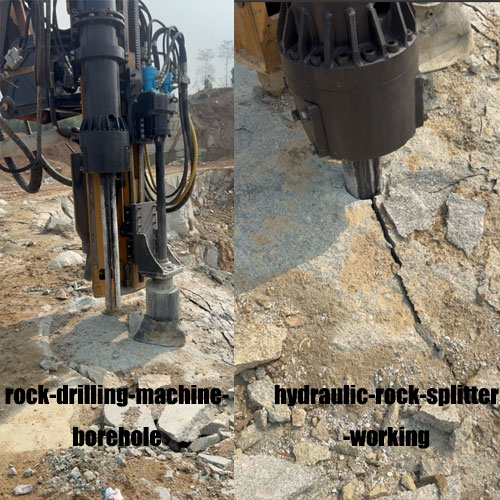
The drilling system creates the holes required for the splitting process. These holes determine where hydraulic splitting force is applied.
A suitable configuration should therefore provide enough drilling performance to create the required holes efficiently while providing sufficient splitting capacity for the target material.
For difficult rock excavation projects, it is useful to provide the manufacturer with:
- Rock type
- Approximate rock size
- Required breaking or splitting depth
- Project photos
- Required production capacity
This information allows the machine configuration to be evaluated according to the actual working conditions.
3. Check the Required Drilling Depth
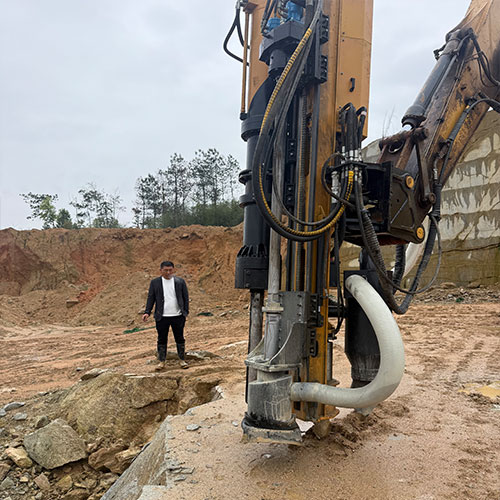
Borehole depth is one of the most important specifications when selecting a rock drilling splitting machine.
The required depth depends on the size of the rock or concrete section and the splitting pattern needed for the project.
For example, a shallow rock-breaking application may not require the same drilling capability as a large granite excavation project.
YG Machinery currently offers integrated configurations with different drilling depths:
| YG1000 | 1600 mm |
| YG1500 | 1900 mm |
| YG2000 | 2100 mm |
If your project requires approximately 1.2 m, 1.5 m, or 2 m of drilling depth, the machine should be selected based on the actual hole depth required rather than simply choosing the largest available model.
The drilling depth should also be considered together with the splitting depth. A suitable drilling and splitting configuration needs to provide enough working depth for the planned fracture.
Borehole depth vs. splitting depth
These two specifications are related but not identical.
- Borehole depth refers to how deep the drilling system can create the hole.
- Splitting depth refers to the working depth of the splitting system.
For the current YG configurations:
| YG1000 | 1600 mm | 1000 mm |
| YG1500 | 1900 mm | 1250 mm |
| YG2000 | 2100 mm | 1500 mm |
This distinction is important when evaluating a hydraulic rock drill splitter for a specific project.
4. Choose the Right Borehole Diameter
Borehole diameter is another important factor because the drilling hole needs to accommodate the selected splitting system.
The current YG integrated rock drilling and splitting machine configurations provide different borehole diameters:
| YG1000 | Φ115 mm |
| YG1500 | Φ135 mm |
| YG2000 | Φ152 mm |
A larger rock section does not automatically mean that the largest borehole diameter is required. The appropriate diameter depends on the splitting system, material characteristics, required fracture pattern, and machine configuration.
Therefore, borehole diameter should be selected together with splitting requirements, rather than treated as an independent specification.
If you already have a specific splitting tool or hole diameter requirement, provide this information when requesting a quotation.
5. Match the Rock Drilling & Splitting Machine to Your Excavator
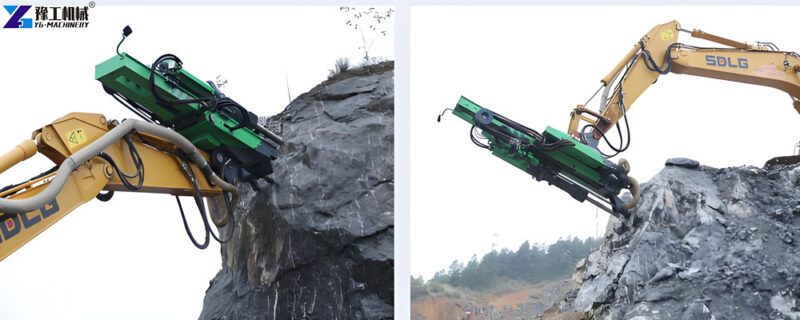
Excavator compatibility is one of the most important purchasing considerations.
An integrated rock splitter for excavator must be matched not only to the excavator’s operating weight, but also to its hydraulic system, lifting capacity, stability, and available working space.
In general, YG integrated drilling and splitting machines can be configured for excavators in approximately the 20T–65T class, depending on the model and project requirements.
The current model recommendations are:
| YG1000 | 24–36 T |
| YG1500 | 36–48 T |
| YG2000 | 48–65 T |
For example, a customer operating a 30-ton excavator may be able to consider a YG1000 configuration, while larger excavators may be matched with YG1500 or YG2000 configurations depending on the project.
However, excavator operating weight is not the only factor.
Check these excavator specifications before ordering:
- Excavator operating weight
- Hydraulic flow
- Hydraulic pressure
- Attachment weight
- Boom and arm lifting capacity
- Available installation space
- Machine stability during drilling and splitting
A machine that is too large or heavy for the excavator can negatively affect stability and handling. Conversely, an undersized configuration may not provide the required drilling and splitting performance.
Send us your excavator model and hydraulic specifications before selecting the machine.
6. Consider the Required Splitting Capacity
The drilling system creates the holes, but the splitting system determines how the prepared material is fractured.
Therefore, customers should consider:
- Rock size
- Material hardness
- Required splitting depth
- Desired fracture direction
- Number and spacing of boreholes
- Required production rate
The current YG configurations include different splitting depths and splitting capacities:
| YG1000 | 1000 mm | 12000 T |
| YG1500 | 1250 mm | 15000 T |
| YG2000 | 1500 mm | 30000 T |
*Splitting force shown according to the current product specification.
A larger model is generally considered when the project involves larger rock sections, deeper splitting requirements, or a larger excavator.
However, higher capacity is not automatically better. The machine should be selected according to the actual rock dimensions and project requirements.
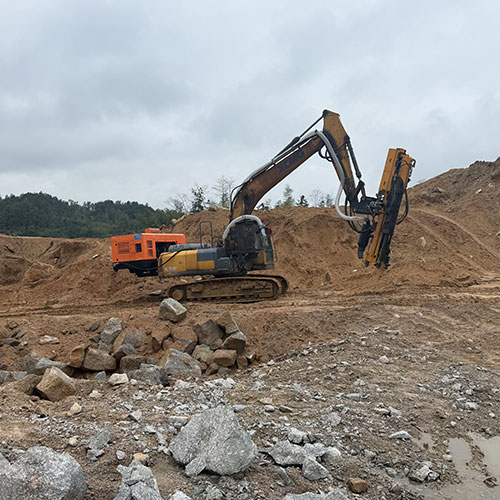
7. Consider the Working Environment
The working environment can be just as important as rock hardness.
A rock drilling and splitting machine may be used in:
- Quarrying
- Tunnel construction
- Foundation excavation
- Urban rock excavation
- Road construction
- Large rock removal
- Reinforced concrete breaking
- Restricted construction areas
For confined or sensitive sites, controlled hydraulic splitting can be useful because the operator can create a planned fracture instead of relying on uncontrolled impact or blasting.
Confined Construction Areas
If the machine needs to work between buildings, near existing structures, or in restricted construction areas, consider:
- Excavator size
- Overall machine dimensions
- Access width
- Boom positioning
- Required drilling direction
- Available operating space
The objective is not simply to select the most powerful rock splitting machine, but to select a configuration that can physically access and operate within the project area.
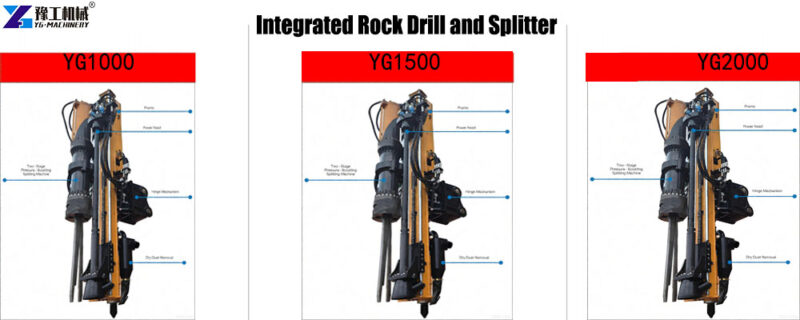
8. Which Model Should You Choose?
Instead of selecting a model based on one specification, consider the complete working requirement.
YG1000
The YG1000 is the more compact configuration of the three models.
It provides:
- 22 kW drilling power
- Φ115 mm borehole diameter
- 1600 mm borehole depth
- 1000 mm splitting depth
- 4-ton total weight
- 24–36-ton excavator requirement
It can be considered for projects where a relatively compact integrated drilling and splitting system is required.
YF1500
The YG1500 provides increased drilling and splitting capability compared with the YG1000.
Its key specifications include:
- 30 kW drilling power
- Φ135 mm borehole diameter
- 1900 mm borehole depth
- 1250 mm splitting depth
- 6-ton total weight
- 36–48-ton excavator requirement
It is suitable for projects requiring deeper drilling and greater splitting capacity.
YG2000
The YG2000 is the largest configuration in this range.
It provides:
- 33 kW drilling power
- Φ152 mm borehole diameter
- 2100 mm borehole depth
- 1500 mm splitting depth
- 6.5-ton total weight
- 48–65-ton excavator requirement
This configuration can be considered for larger rock sections and projects requiring greater drilling and splitting depth.
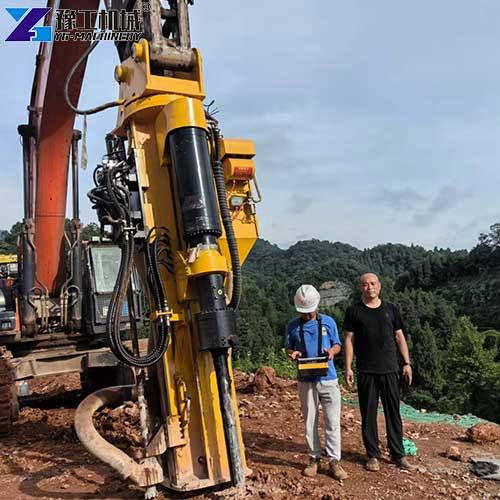
9. Quick Selection Guide by Project Requirement
The following guide can help narrow down the configuration before contacting the manufacturer.
| Hard granite | Drilling power, borehole diameter and splitting capacity |
| Large rock blocks | Deeper drilling and larger splitting configuration |
| Tunnel excavation | Machine dimensions, working space and controlled splitting |
| Foundation rock excavation | Required drilling depth and fracture pattern |
| Reinforced concrete | Material thickness, drilling depth and splitting configuration |
| Confined construction area | Excavator size, machine dimensions and positioning |
| 20–30T excavator | Compact configuration should be evaluated |
| 30–40T excavator | YG1000 or YG1500 may be considered depending on requirements |
| 40–50T excavator | YG1500 or larger configuration should be evaluated |
| 50–65T excavator | YG2000 or project-specific heavy-duty configuration |
Important: The table is a preliminary selection guide. Final model selection should be based on the excavator’s hydraulic specifications and the actual material and working conditions.
10. Integrated Drilling and Splitting vs. Separate Equipment
One of the main advantages of an integrated system is that drilling and splitting are combined into one working unit.
With separate equipment, a conventional workflow may require:
Drilling machine → move equipment → position splitting equipment → split rock
This can require additional equipment movement and positioning.
An integrated rock drilling and splitting machine combines the two operations:
Position → Drill → Split
The operator can complete the drilling and splitting process from the same excavator-mounted system.
This can be particularly useful when working with large rocks or in areas where moving separate machines is inconvenient.
The benefit is therefore not simply the drilling power or splitting force. It is also the integration of the two processes into a single working system.
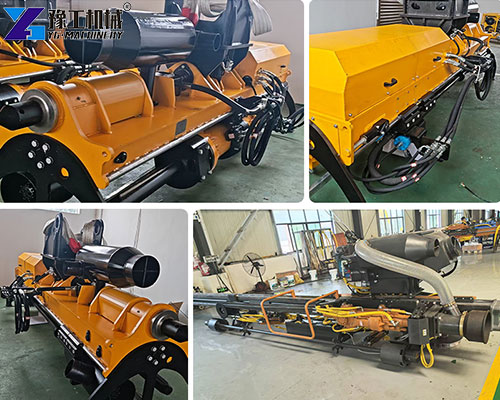
11. What Information Should You Provide When Requesting a Quote?
Choosing the correct rock drill and splitter machine is much easier when the manufacturer has enough information about the project.
Before requesting a quotation, prepare:
- Excavator model and operating weight
- Hydraulic flow and pressure
- Rock or concrete type
- Approximate rock size or thickness
- Required drilling depth
- Required borehole diameter, if known
- Required splitting depth
- Working environment and access conditions
- Expected production capacity
- Project photos or videos
For example, instead of simply asking:
“How much is your rock splitting machine?”
a more useful inquiry would be:
“We have a 30-ton excavator and need to split granite blocks approximately 1.5 m deep. Please recommend a suitable drilling and splitting configuration.”
This gives the manufacturer enough information to evaluate the appropriate model.
12. Get the Right Rock Drilling & Splitting Machine for Your Project
The right integrated rock drilling and splitting machine should be selected according to the complete project requirement—not simply by choosing the largest model.
The key factors include:
- Rock or concrete type
- Required borehole diameter
- Required drilling depth
- Splitting depth
- Required splitting capacity
- Excavator operating weight
- Hydraulic flow and pressure
- Working space
- Required production rate
YG Machinery provides integrated drilling and splitting configurations for excavators in approximately the 20T–65T class, with different drilling depths, borehole diameters, splitting depths, and overall machine sizes.
Send us your excavator model, rock type, required drilling depth, material size, and project photos. YG Machinery can recommend a suitable rock drilling and splitting machine configuration for your application.