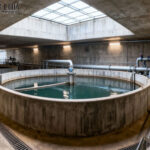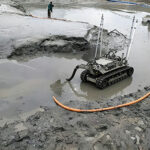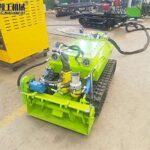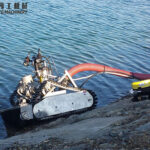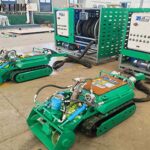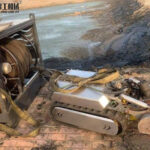
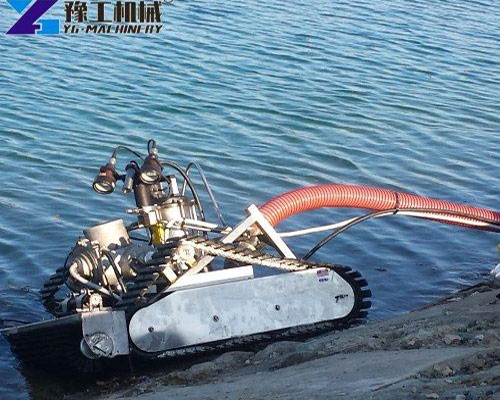
Looking for a reliable lake dredging robot to remove accumulated sediment from lakes, ponds, reservoirs, and artificial water bodies? YG Machinery offers remote-controlled dredging robots designed to collect and pump sediment from underwater areas, helping contractors and water management teams maintain water depth and reduce manual cleaning work.
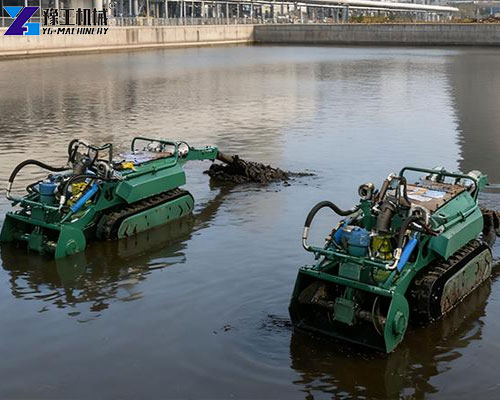
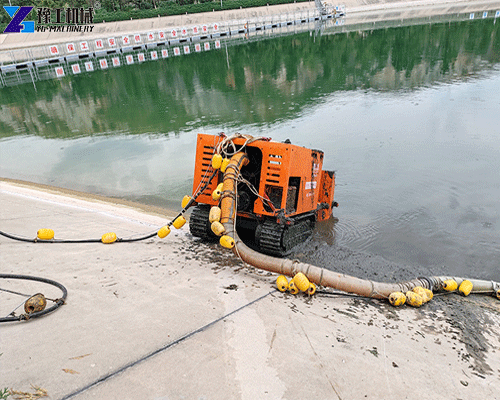
Unlike a conventional dredging boat, a lake dredging robot uses a compact tracked platform to move across suitable submerged surfaces. The robot can be operated remotely, while a pumping system transfers collected sediment through a discharge pipeline to a designated location.
YG offers multiple models with different working widths and pumping capacities. The right model depends on sediment conditions, site access, required removal capacity, and the distance between the dredging area and the discharge point.
Lake Dredging Robot parameters
YG provides lake dredging robots in several sizes to accommodate different sediment removal requirements. Compare the main specifications below to identify a suitable starting point for your project.
| Parameter | YG500 | YG600 | YG700 | YG800 | YG900 | YG1200 |
| Robot Dimensions (mm) | 1500*500*650 | 1500*600*650 | 1600*700*650 | 1600*850*700 | 1650*960*750 | 1900*1200*750 |
| Dredging Width (mm) | 500 | 600 | 700 | 800 | 900 | Suitable for large culverts |
| Travel Speed (m/min) | 3–15 | 3–15 | 3–15 | 3–15 | 3–15 | 3–17 |
| Pump Diameter (inch) | 3 | 3 | 4 | 4 | 4 | 4or6 |
| Pump Flow (m³/h) | 100 | 100 | 160 | 160 | 200 | 250 |
| Pump Head (m) | 0–30 | 0–30 | 0–25 | 0–25 | 0–25 | 0–30 (Horizontal: 100–150m) |
| Hydraulic Station Dimensions (mm) | 2200*1200*1700 | 2200*1200*1700 | 2200*1200*1700 | 2200*1200*1700 | 2200*1200*1700 | 2120*1240*1200 |
| Main Motor Power (kW) | 18 | 18 | 22 | 22 | 22 | 45KW (50KW) or Diesel 76KW (123KW) |
| Hydraulic System Pressure (Mpa) | 0–16 | 0–16 | 0–16 | 0–16 | 0–16 | Not specified |
| Particle Size (mm) | 15 | 15 | 40 | 40 | 50 | 0–40 (customizable) |
| Winch Speed (r/min) | 0–10 | 0–10 | 0–10 | 0–10 | 0–10 | 0–10 |
| Pipe Length (m) | 30–50 Optional | 30–50 Optional | 30–50 Optional | 30–50 Optional | 30–50 Optional | 30m/pack, 20kg pressure resistant, optional |
| Control System | Wireless Remote | Wireless Remote | Wireless Remote | Wireless Remote | Wireless Remote | Wireless Remote |
| Lighting System | Underwater LED*2 | Underwater LED*2 | Underwater LED*2 | Underwater LED*2 | Underwater LED*2 | Underwater LED*2 |
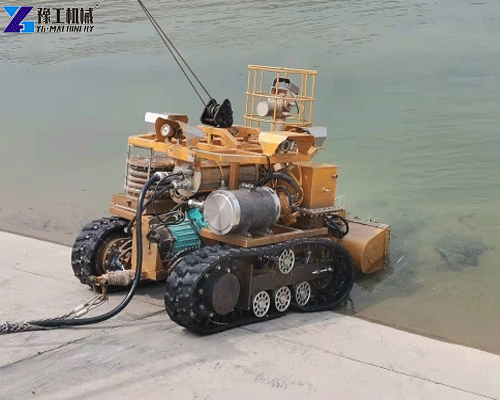
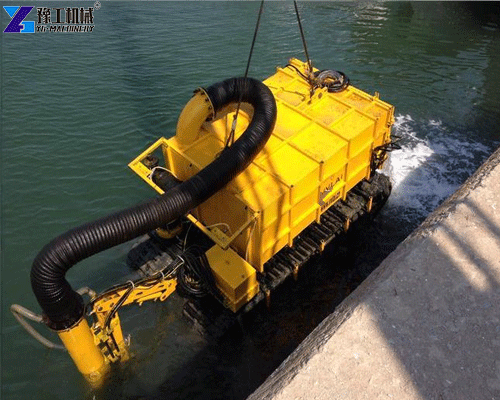
What Is a Lake Dredging Robot?
A lake dredging robot is a remotely operated machine designed to remove accumulated silt, sludge, and other pumpable sediment from underwater surfaces. It combines a mobile platform with a sediment collection system and a pump connected to a discharge pipeline.
The robot can be used for suitable lake and pond maintenance projects where sediment has reduced water depth, restricted water flow, or increased maintenance requirements.
Key functions include:
- Remote operation: Operators control the robot without entering the water to operate the machine directly.
- Tracked movement: The crawler platform helps the robot move across suitable lakebed surfaces.
- Sediment collection and pumping: The collection mechanism and pump transfer sediment through a pipeline.
- Multiple model options: Different working widths and pumping capacities accommodate different project requirements.
- Underwater lighting: Two underwater LED lights are available on the listed models to improve visibility in low-light conditions.
Actual performance depends on sediment composition, water depth, site conditions, pipeline configuration, and the selected model.
How to Choose the Right Model?
YG500 and YG600: Compact lake dredging robots
These models are potential options for smaller working areas or projects where access and equipment dimensions are important. Their listed working widths are 500 mm and 600 mm, respectively, with a nominal pump flow of 100 m³/h.
YG700 and YG800: Medium-capacity sediment removal
These models provide wider working widths and listed pump flows of 160 m³/h. They may be suitable for projects requiring greater sediment handling capacity, subject to sediment and discharge conditions.
YG900: Larger working width
The YG900 has a listed working width of 900 mm and a nominal pump flow of 200 m³/h. It can be evaluated for projects that require a wider collection area and higher pumping capacity.
YG1200: Higher-capacity applications
The YG1200 has a listed pump flow of 250 m³/h and a larger platform. It may be considered for larger sediment removal projects where access dimensions, pump configuration, and site conditions are compatible.
These model descriptions are intended as an initial guide rather than a guaranteed production ranking. Request a configuration recommendation based on the actual material and project requirements.
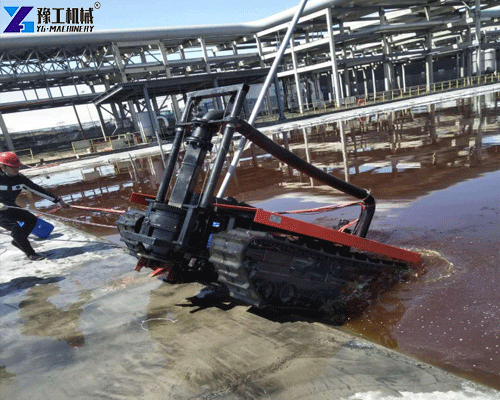
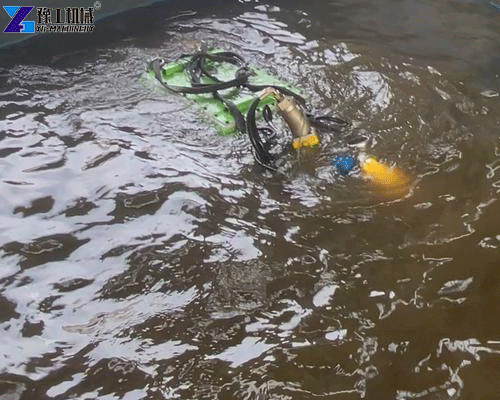
Key Features of YG Lake Dredging Robots
1. Remote-Controlled Operation
The wireless remote-control system allows operators to control the robot from a suitable operating position. This can reduce the need for personnel to enter the water to operate the dredging equipment directly.
The operating arrangement should still include appropriate site supervision, water safety measures, and equipment-specific operating procedures.
2. Tracked Platform for Underwater Movement
The crawler design helps the robot travel across suitable submerged surfaces while carrying out sediment removal. The appropriate configuration depends on the lakebed slope, sediment consistency, obstacles, and available water depth.
Before selecting a model, provide details about soft mud, compacted silt, sand, vegetation, and any large debris present at the site.
3. Pumping and Pipeline Discharge
The robot collects sediment and transfers it through a connected discharge pipeline. This arrangement can reduce the need to transport dredged material manually from the lakebed.
The required pump capacity and pipeline configuration depend on the solids content, discharge distance, elevation difference, and resistance within the pipeline. A nominal pump flow rate should not be treated as a guaranteed sediment removal rate.
4. Underwater LED Lighting
Two underwater LED lights are listed for the standard models. They help illuminate the working area in low-light conditions.
Visibility also depends on water turbidity, suspended solids, lighting position, and whether an optional camera or monitoring system is included in the selected configuration.
5. Model and Configuration Options
Different lake dredging projects have different access, pumping, and sediment handling requirements. YG can assess the project conditions to determine a suitable robot size and pumping arrangement.
When requesting a quotation, specify the required working width, water depth, sediment characteristics, discharge distance, and available power supply. Any customized feature should be confirmed in the final technical proposal.
Applications of Lake Dredging Robots
Lake and Artificial Lake Sediment Removal
Sediment gradually accumulates on lakebeds through soil erosion, organic matter deposition, and runoff. A lake dredging robot can help remove suitable pumpable deposits and support routine lake maintenance.
The required model depends on the lake’s size, water depth, sediment thickness, and discharge arrangements.
Pond Cleaning and Maintenance
Farm ponds, landscape ponds, and private estate ponds may accumulate silt and organic sludge over time. A remotely operated dredging robot can be evaluated where the sediment can be collected and pumped through the selected system.
Reservoir Sediment Management
Reservoir projects may require sediment removal to support water storage, flow management, or maintenance objectives. Large projects require a site-specific assessment of sediment volume, discharge arrangements, water depth, and environmental restrictions before equipment selection.
Resort and Urban Waterway Maintenance
Artificial lakes and landscape waterways often need regular maintenance to manage accumulated deposits and maintain the intended water depth and appearance. A compact dredging robot may be suitable for locations where its dimensions, operating depth, and pumping capacity meet the site’s requirements.
Lake Dredging Robot Project Experience
Urban Lake Sediment Removal in Warsaw, Poland
An urban lake maintenance project in Warsaw covered an area of approximately 5 hectares. The project required equipment to remove accumulated lakebed sediment and improve maintenance efficiency.
The YG500 lake dredging robot was selected for the project. According to the reported project feedback, the robot improved dredging efficiency by approximately 60%, and water-quality improvement was reported within one week of operation. The customer subsequently ordered two additional robots.
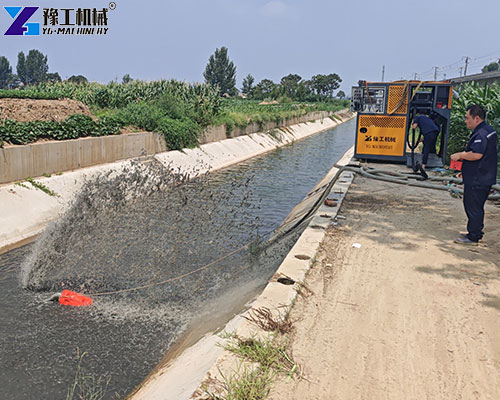
The results were specific to this project and its operating conditions. Actual efficiency and water-quality outcomes depend on sediment characteristics, equipment configuration, operating time, and the lake’s environmental conditions.
Need a similar solution? Share your lake area, sediment thickness, water depth, and discharge requirements with YG to discuss a suitable configuration.
How to Choose a Lake Dredging Robot?
Selecting a lake dredging robot based only on the lake’s surface area or the machine’s nominal pump flow can lead to an unsuitable configuration. Evaluate the following factors before purchasing.
1. Sediment Type and Thickness
Identify whether the material consists mainly of soft sludge, loose silt, sand, compacted sediment, or a mixture containing debris. Particle size and solids concentration affect the collection mechanism, pump selection, and achievable removal rate.
2. Water Depth and Working Conditions
Provide the normal operating water depth, expected variations, lakebed slope, and any obstacles. Confirm the permitted operating depth and underwater configuration for the selected model rather than assuming all models have the same working limits.
3. Required Pumping Capacity
The pump’s nominal flow rate is only one selection factor. The actual solids-handling rate depends on the sediment mixture, pump performance, pipeline resistance, and operating conditions.
Discuss the required removal volume and target completion time with the supplier so the proposed configuration can be evaluated realistically.
4. Discharge Distance and Elevation
Specify the horizontal pipeline distance, vertical lift, and discharge destination. These factors influence the required pump head and pipeline arrangement.
Do not select a pump solely because its nominal flow rate matches the project’s target. Confirm its operating performance at the required discharge conditions.
5. Access and Equipment Dimensions
Check the launch point, shoreline access, available lifting equipment, and any restrictions on transporting the robot to the water. Compare these dimensions with the selected model and its associated hydraulic station and accessories.
6. Power Supply and Project Logistics
Confirm whether electric or diesel power is required and whether the site can provide the necessary power and operating arrangements. Also consider pipeline routing, sediment disposal, transportation, maintenance, and operator training.nformation can help the technical team assess model suitability and prepare a more relevant quotation.
Lake Dredging Robot Price and Quotation
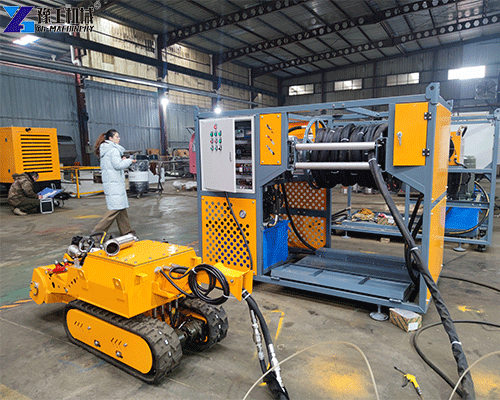
The price of a lake dredging robot depends on its model, pump capacity, power configuration, accessories, and project-specific requirements. A suitable quotation should reflect the actual working conditions rather than only the robot’s dimensions.
To help YG recommend an appropriate model, provide the following information:
- Lake or reservoir area: Approximate surface area and location of the working zone.
- Water depth: Normal and maximum operating depth.
- Sediment conditions: Material type, estimated thickness, and presence of sand or debris.
- Required removal volume: Estimated sediment quantity or project completion target.
- Discharge conditions: Pipeline distance, elevation difference, and discharge location.
- Power supply: Available electricity or preference for a diesel configuration.
- Site access: Shoreline conditions, transport limitations, and any restricted entry dimensions.
With these details, YG can assess the project requirements, recommend a suitable model for further confirmation, and prepare a quotation based on the required configuration.
FAQ about Lake Dredging Robot
1. What is a lake dredging robot used for?
A lake dredging robot is used to collect and pump suitable underwater sediment, including silt and sludge, from lakes, ponds, reservoirs, and artificial water bodies. The appropriate application depends on sediment composition, water depth, equipment configuration, and discharge conditions.
2. How much does a lake dredging robot cost?
The price depends on the selected model, pump configuration, power source, pipeline requirements, and accessories. Provide your project details to receive a quotation based on the required working conditions.
3. Can a lake dredging robot remove compacted sediment?
Its ability to remove compacted sediment depends on the material’s strength, particle size, and the robot’s collection and pumping configuration. Provide a description or sample of the sediment so the supplier can assess whether the standard setup is suitable or a customized solution is needed.
4. How do I choose the correct pump flow rate?
Consider the required sediment removal volume, solids concentration, pipeline length, elevation difference, and pump operating performance. The listed pump flow rate represents a nominal equipment specification and does not equal the guaranteed volume of sediment removed per hour.
5. Can the lake dredging robot be customized?
Model selection and configuration can be evaluated against project requirements such as working width, pumping arrangements, power supply, and site access. The available customization options should be confirmed with YG before ordering.
6. Does the robot require an operator?
The listed models use wireless remote control. An operator is required to control and supervise the equipment in accordance with the operating instructions and site safety procedures.
7. Can the robot work in every lake or reservoir?
No single model is suitable for every water body. Water depth, sediment composition, lakebed slope, obstacles, access conditions, discharge distance, and environmental restrictions must be assessed before selecting equipment.
8. What information should I provide to get a quotation?
Provide the water depth, sediment type and thickness, estimated removal volume, required discharge distance, available power supply, and site access conditions. Photos, drawings, or a short site video can also help the supplier evaluate the project.
Why Choose YG Machinery for Your Lake Dredging Robot?
YG Machinery supplies construction and environmental equipment for a range of industrial and infrastructure applications. For lake dredging projects, the equipment selection process should begin with the actual sediment conditions and site requirements.
YG can help customers compare available models, review pumping and power configurations, and identify the information needed for a project-specific quotation.
Whether you are maintaining an artificial lake, a private pond, or a larger reservoir, contact YG with your project details to discuss a suitable lake dredging robot.nt conditions, lake dimensions, and discharge requirements to discuss model suitability and pricing.