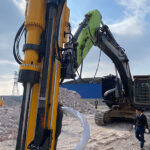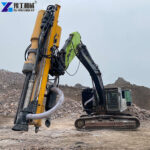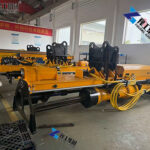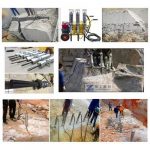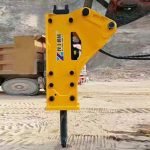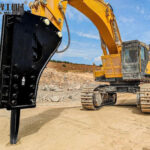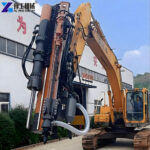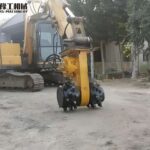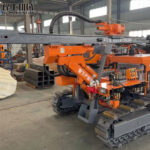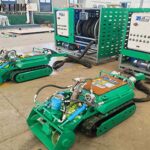


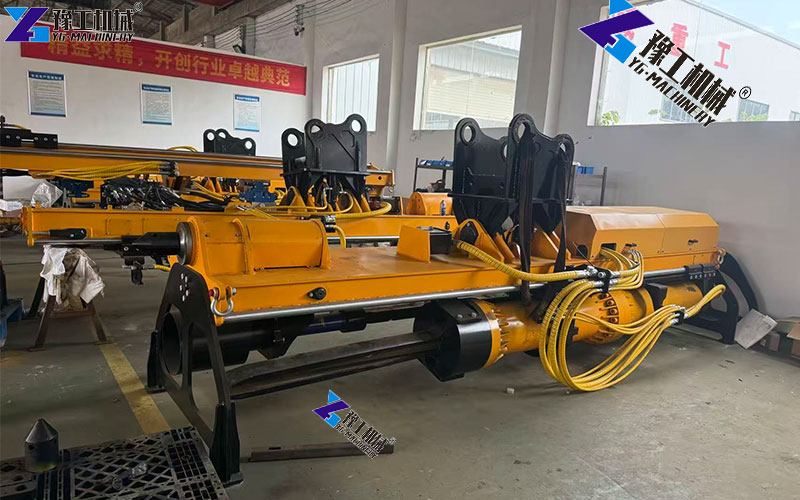
The YG Integrated Rock Drilling & Splitting Machine combines hydraulic rock drilling and hydraulic splitting in one excavator-mounted system. Instead of using a separate rock drill to create boreholes and then moving another machine into position for splitting, the integrated system completes both operations with the same machine.
This rock drilling and splitting machine is designed for hard rock excavation where controlled breaking, low vibration, and accurate fracture direction are more important than conventional impact breaking or blasting. It is suitable for tunnel excavation, quarrying, foundation excavation, road construction, trenching, and other projects where explosives or high-impact breakers are difficult to use.
The machine uses the excavator as its carrier and hydraulic power source. After drilling the required boreholes, the hydraulic splitter expands inside the holes and creates controlled fractures in the rock.
Key Benefits at a Glance
- Drilling and splitting in one excavator-mounted machine, reducing equipment movement between operations
- Designed for 20–65 ton excavators, depending on model
- Up to 30,000 tons of hydraulic splitting force
- Suitable for hard rock such as granite, basalt, and limestone
- Controlled rock breaking with low vibration
- A practical alternative where conventional blasting is restricted
- Remote or cab-controlled operation, depending on configuration
YG Rock Drilling & Splitting Machine Parameters
Choosing the right model depends mainly on the excavator size, required drilling depth, borehole diameter, rock conditions, and the scale of the rock-breaking project.
| Specification | YG1000 | YG1500 | YG2000 |
| Recommended Excavator | 20–36 T | 36–48 T | 48–65 T |
| Rock Drill Power | 22 kW | 30 kW | 33 kW |
| Borehole Diameter | 115 mm | 135 mm | 152 mm |
| Borehole Depth | 1,600 mm | 1,900 mm | 2,100 mm |
| Drilling Speed | 1 m/min | 0.8 m/min | 0.7 m/min |
| Splitting Depth | 1,000 mm | 1,250 mm | 1,500 mm |
| Splitting Force | 12,000 T | 15,000 T | 30,000 T |
| Rotation Angle | 120° | 120° | 120° |
| Air Compressor Displacement | 4.5 m³/min | 7.5 m³/min | 10 m³/min |
| Air Compressor Pressure | 5–8 bar | 5–8 bar | 5–8 bar |
| Total Weight | 4 T | 6 T | 6.5 T |
| Overall Dimensions (L × W × H) | 4,140 × 1,500 × 1,570 mm | 4,950 × 1,520 × 1,860 mm | 5,570 × 1,520 × 1,860 mm |
Specifications may vary according to machine configuration, drilling tools, rock conditions, and excavator hydraulic system. Final model selection should be confirmed according to your project requirements.
Need help selecting a model? Send us your excavator model, rock type, required drilling depth, and project application for a recommended configuration.


Why Use an Integrated Rock Drilling & Splitting Machine?
Traditional hard-rock excavation may require separate drilling and breaking equipment. The YG integrated rock drilling and splitting machine combines both operations on one excavator-mounted system, making rock excavation more controlled and efficient.
- One Machine for Drilling and Splitting: Drill boreholes and hydraulically split the rock with the same machine, reducing equipment changes and improving jobsite efficiency.
- Strong Splitting Force for Hard Rock: Two-stage splitting cylinders provide increased hydraulic pressure for breaking hard rock such as granite, basalt, and other high-strength formations.
- Multi-Angle Drilling and Splitting: The system supports multi-angle operation and can work on slopes, foundation pits, and other challenging excavation sections where access and working angles are limited.
- Controlled and Low-Vibration Rock Breaking: Hydraulic splitting creates controlled fractures with significantly less vibration than conventional impact breaking. The splitting direction and breaking pattern can be managed according to the drilling layout.
- Efficient Non-Blasting Excavation: Rock can be fractured progressively without conventional blasting, making the machine suitable for projects where blasting is restricted or difficult to use. Continuous operation can also help reduce equipment and labor requirements.
- Remote and Flexible Operation: Wireless remote control is available depending on configuration, allowing operators to work from a suitable position. The excavator-mounted design also makes transportation and repositioning easier.
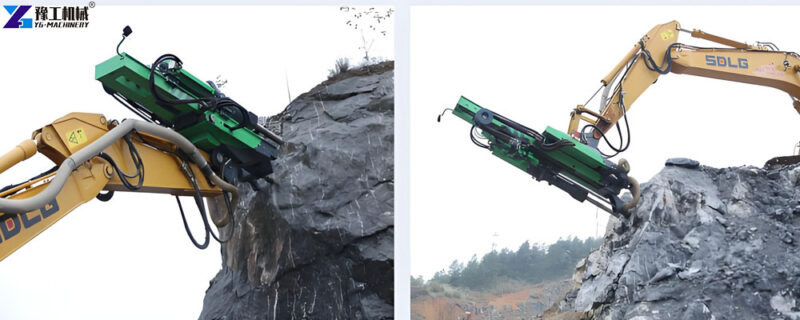
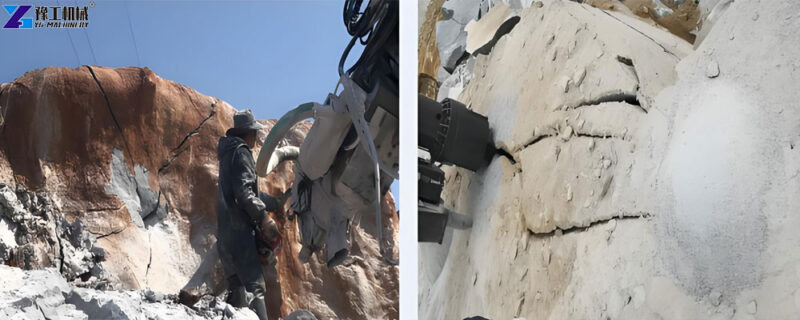
Main Applications of Integrated Rock Drilling And Splitting Machine
The YG rock drilling and splitting machine is designed for projects where hard rock must be broken in a controlled manner.
- Tunnel Excavation: Tunnel projects often require controlled rock removal while limiting unnecessary vibration and overbreak. The integrated system allows the operator to drill and split rock directly at the excavation face.
- Quarrying: For quarry operations, hydraulic drilling and splitting can be used where controlled rock fragmentation is required. It is suitable for hard materials such as granite, basalt, limestone, and other rock formations.
- Foundation Excavation: Urban foundation projects may encounter hard rock close to existing buildings or underground infrastructure. Controlled hydraulic splitting can help remove rock without relying on conventional blasting.
- Road and Bridge Construction: Rock encountered during road widening, bridge foundations, or other infrastructure projects may need to be removed without excessive vibration. The excavator-mounted design allows the machine to move between working areas using the carrier excavator.
- Trenching and Utility Construction: Rock in narrow trenches or utility corridors can be difficult to remove using large-scale blasting. The drilling-and-splitting process provides a more controlled method for selected trench excavation projects.
- Reinforced Concrete Demolition: The drilling and splitting principle can also be used for selected reinforced concrete breaking applications where controlled cracking is required. Project conditions and reinforcement structure should be evaluated before equipment selection.
How Does it Works?
- Position the machine precisely over the rock you need to break.
- Drill a strategic pattern of deep, narrow holes.
- Activate the hydraulic splitter inside the holes.
- Watch as the rock splits cleanly, with minimal debris and no flying fragments.
What Factors Should You Consider When Choosing a Model?
The largest model is not necessarily the best choice for every project. The correct rock drilling and splitting machine should match the excavator and actual site conditions.
1. Excavator Size and Hydraulic System
First check the excavator’s operating weight, hydraulic flow, hydraulic pressure, and available attachment connections.
The three YG models are designed for different excavator classes:
- YG1000: approximately 20–36 ton excavators
- YG1500: approximately 36–48 ton excavators
- YG2000: approximately 48–65 ton excavators
The excavator must provide sufficient hydraulic power for both drilling and splitting operations.
2. Rock Hardness and Structure
Rock type directly affects drilling speed, hole spacing, and splitting performance.
Common materials suitable for this type of equipment include:
- Granite
- Basalt
- Limestone
- Sandstone
- Hard rock formations
- Selected reinforced concrete structures
Rock fractures, bedding planes, and existing cracks should also be considered when planning the drilling pattern.
3. Borehole Diameter and Drilling Depth
The required borehole diameter and depth depend on the rock thickness, required splitting depth, and selected model.
For example, a project requiring deeper drilling or a larger splitting element may need a larger machine.
Providing your required hole diameter, drilling depth, and rock thickness helps determine the appropriate model and drilling tools.
4. Working Space and Excavation Conditions
Site conditions are equally important.
The machine can be considered for:
- Tunnel excavation
- Foundation pits
- Quarry faces
- Road and bridge projects
- Utility trenches
- Confined construction areas
- Urban rock excavation
The excavator and attachment must have sufficient space to position the drilling beam and splitting system safely.
5. Required Rock Fragment Size
The drilling pattern should be selected according to the final excavation requirement.
If the goal is controlled excavation rather than simply producing the smallest possible fragments, the borehole spacing, depth, and splitting direction should be planned accordingly.
For a detailed model-selection process, see our guide: [How to Choose an Integrated Rock Drilling & Splitting Machine].
Case Study: Uganda Tunnel Project
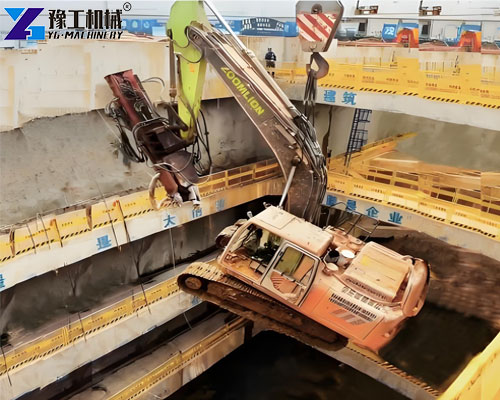
In March 2025, YG Machinery supplied an Integrated Rock Drilling & Splitter Machine for a tunnel construction project in Kampala, Uganda. The project required precise rock splitting in a confined underground space where traditional blasting was not an option due to safety and vibration concerns.

Our machine was deployed to drill deep, narrow holes and perform hydraulic splitting simultaneously. Within just 3 minutes per rock section, the team was able to split massive granite blocks safely and efficiently, without causing noise or dust pollution.
The project manager from Uganda commented:
“The YG Integrated Rock Drilling & Splitter Machine exceeded our expectations. It reduced labor costs, improved safety, and allowed us to maintain our schedule in a challenging tunnel environment. We highly recommend it for similar projects.”
This case demonstrates that YG’s all-in-one rock drilling and splitting solution is ideal for urban, environmentally sensitive, or confined construction sites worldwide.
FAQ about Integrated Rock Drill and Splitter
1. Can the rock drilling and splitting machine work with an air compressor?
Yes. An air compressor can be used with the drilling system when the selected drilling configuration requires compressed air for functions such as rock drilling or hole cleaning. The required compressor capacity depends on the drill configuration, borehole size, drilling depth, and site conditions. YG can recommend the appropriate air compressor setup based on the project requirements.
2. Can the machine drill vertically, horizontally, or upside down?
Yes. The integrated rock drilling and splitting machine can be configured for multi-angle drilling. When the excavator boom is extended or raised, the drilling system can work at different angles, including vertical or inverted drilling, depending on the machine configuration and working conditions. This makes it suitable for steep slopes, high-level rock faces, tunnels, and other difficult-access areas.
3. Can the rock drilling and splitting machine be lifted into a tunnel or confined area?
Yes. The machine can be transported or lifted into locations where conventional equipment has limited access. Its compact excavator-mounted design allows it to be disassembled when necessary and reassembled at the jobsite. For applications such as subway construction or underground excavation, lifting the equipment into the working area can provide greater flexibility.
4. How stable is the machine when the excavator boom is fully extended or raised?
The drilling and splitting system is designed to keep the working load close to the excavator’s front attachment area, helping maintain stability during drilling and splitting operations. However, actual stability depends on the excavator model, attachment configuration, boom position, ground conditions, and operating procedure. The machine should always be matched to a suitable excavator and operated according to the manufacturer’s requirements.
5. Can it break rock without a free surface?
The hydraulic splitting process can be used in some applications where a conventional free surface is limited, provided that the borehole layout, spacing, depth, and rock conditions are suitable. The drilling pattern is important because the hydraulic splitter needs the correct borehole position and rock geometry to create the desired fracture. YG can recommend the drilling and splitting arrangement based on the rock thickness and project conditions.
6. How does the two-stage splitting system improve rock-breaking performance?
The two-stage hydraulic cylinders apply increased pressure during the splitting process, generating high splitting force through the wedge mechanism. The long splitting stroke helps create a wider and deeper fracture, allowing the rock to break progressively from the drilled hole. Actual splitting performance depends on rock hardness, borehole diameter and depth, hole spacing, and the distance from the borehole to the free face.
7.Can it replace a hydraulic breaker?
It can replace or supplement a hydraulic breaker for projects where controlled rock breaking, lower vibration, or non-blasting excavation is important. A breaker may remain more suitable for some general demolition and impact-breaking applications.

Why Choose YG Machinery?
YG Machinery provides integrated rock drilling and splitting equipment for controlled hard-rock excavation and non-blasting construction applications.
- Manufacturer Support: We provide technical support for model selection, excavator matching, installation, operation, and maintenance.
- Project-Based Configuration: The machine configuration can be selected according to excavator size, drilling requirements, rock conditions, and working environment.
- Integrated Design: The combination of drilling and splitting reduces the need to coordinate separate machines at the excavation face.
- Global Export Experience: YG Machinery supplies construction equipment for international projects and provides support for customers selecting equipment for different working conditions.
Get a Rock Drilling & Splitting Machine for Your Project
If your project requires hard rock excavation without conventional blasting, an integrated drilling and splitting machine can provide a controlled alternative to conventional impact breaking.
Tell us:
- Your excavator model and operating weight
- Rock type
- Required drilling depth
- Required borehole diameter
- Rock thickness
- Project application
- Expected working environment
Our technical team can recommend the appropriate YG1000, YG1500, or YG2000 rock drilling and splitting machine for your project.ect requirements today, and our sales team will provide a customized quote within 24 hours.