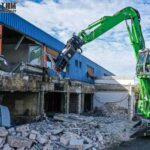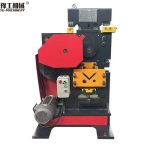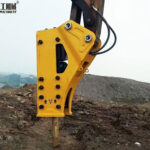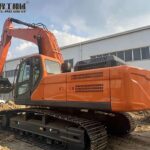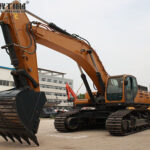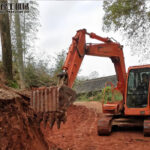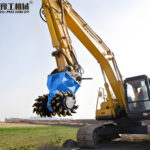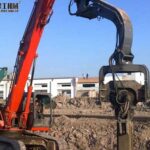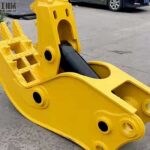
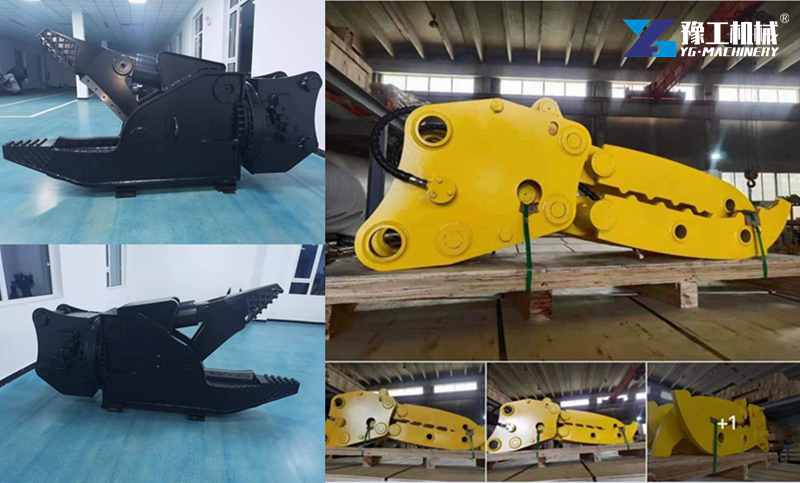
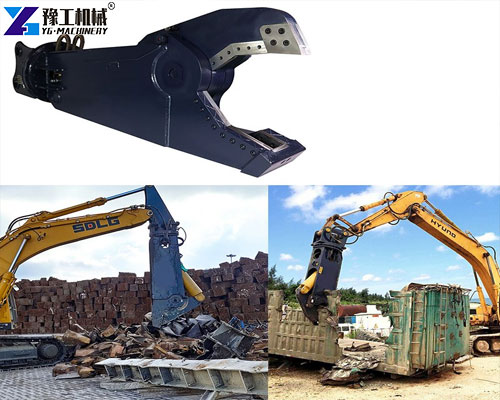
Hydraulic shears for excavators are attachments designed to cut steel, scrap metal, pipes, tanks, vehicle bodies, and steel structures during demolition and recycling work. Powered by the excavator’s hydraulic system, the shear uses a hydraulic cylinder and hardened cutting blades to apply controlled force to the material.
YG Machinery supplies excavator hydraulic shears in different configurations for various excavator sizes and cutting applications. The main product types are single-cylinder hydraulic shears and double-cylinder hydraulic shears, while features such as hydraulic rotation and vehicle dismantling are selected according to the working requirements.
What Is an Excavator Hydraulic Shear?
An excavator hydraulic shear is a hydraulic attachment mounted on the excavator boom or arm for cutting and separating metal materials.
Unlike a hydraulic breaker, which breaks concrete and rock through impact, a hydraulic shear applies cutting force to separate steel and other metal materials.
The basic working process is:
Excavator hydraulic system → hydraulic cylinder → shear jaws → cutting blades → metal cutting
For rotary models, a hydraulic rotation mechanism allows the operator to adjust the shear’s working direction without repositioning the entire excavator.
Excavator Hydraulic Shear Types
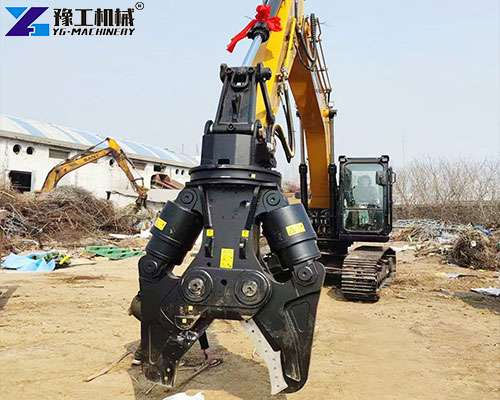
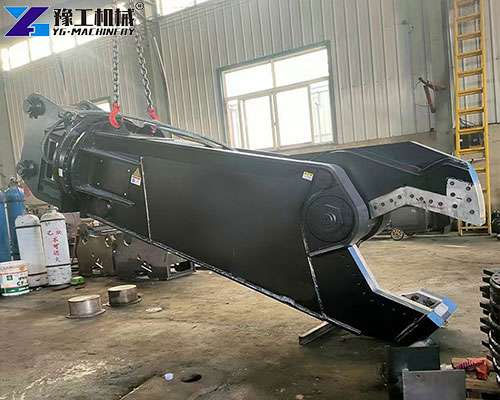
YG hydraulic shears can be classified primarily by the number of hydraulic cylinders used to operate the cutting jaws.
1.Single-Cylinder Hydraulic Shear
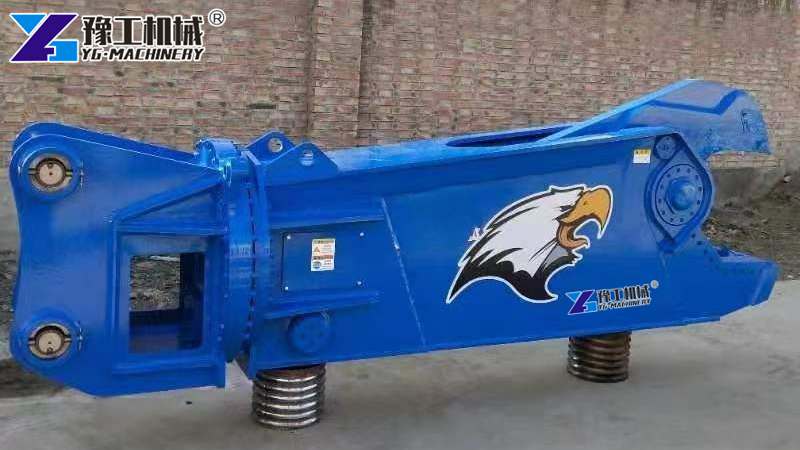
A single-cylinder hydraulic shear uses one hydraulic cylinder to open and close the cutting jaws.
Its compact structure makes it suitable for general metal cutting, scrap processing, pipe cutting, and light to medium demolition applications. The final configuration should be selected according to the excavator’s operating weight, hydraulic flow, working pressure, and the thickness of the material to be cut.
Typical applications include:
- Scrap metal processing
- Steel and pipe cutting
- Small steel structure demolition
- Waste metal recycling
- Light demolition work
2.Double-Cylinder Hydraulic Shear
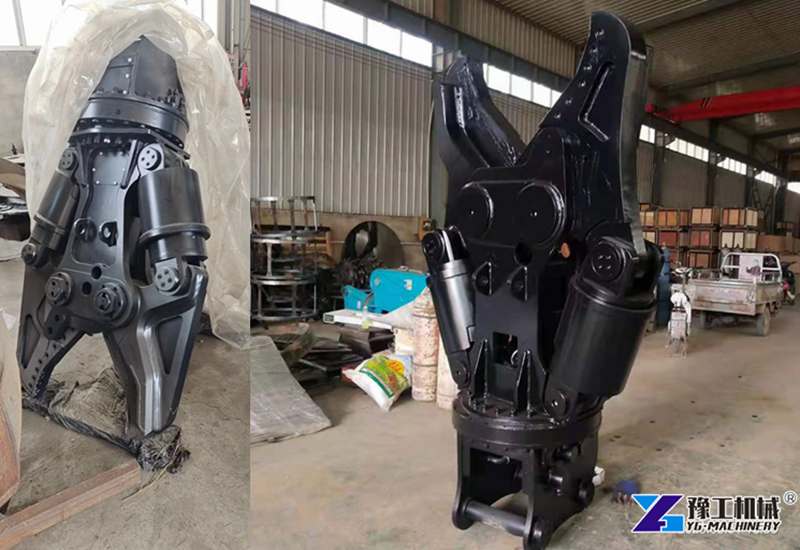
A double-cylinder hydraulic shear uses two hydraulic cylinders to operate the cutting jaws. Compared with a single-cylinder configuration, the two-cylinder design is suitable for applications requiring greater cutting force and a larger working capacity.
It can be used for cutting and processing:
- Thick steel materials
- Steel structures
- Scrap steel
- Pipes and tanks
- Vehicle bodies
- Demolition materials
The double-cylinder configuration is particularly suitable when the customer needs stronger cutting performance for demanding demolition or recycling work.
Key Features of Excavator Hydraulic Shears
1.Hydraulic Cutting Power: The shear is powered by the excavator’s hydraulic system, converting hydraulic pressure into jaw-closing force for cutting metal materials.
2.Single- or Double-Cylinder Configuration: The number of hydraulic cylinders can be selected according to the required cutting capacity and application. Single-cylinder models are suitable for lighter work, while double-cylinder models are designed for more demanding cutting applications.
3.Hydraulic Rotation Option: For applications where positioning is important, a rotary configuration can allow the operator to adjust the shear’s working angle during operation.
This is useful when dismantling steel structures, processing scrap, or working around complex structures where frequent excavator repositioning would reduce efficiency.
4.Hardened Cutting Blades: The cutting jaws are equipped with wear-resistant cutting blades designed for repeated contact with steel and other metal materials. Blade design and material should be selected according to the type and thickness of material being processed.
5.Excavator-Based Operation: The shear is mounted directly on a compatible excavator, allowing the operator to position and control the attachment from the cab without requiring a separate cutting machine.
Hydraulic Shear Applications
The right shear configuration depends mainly on the material being processed and the working environment.
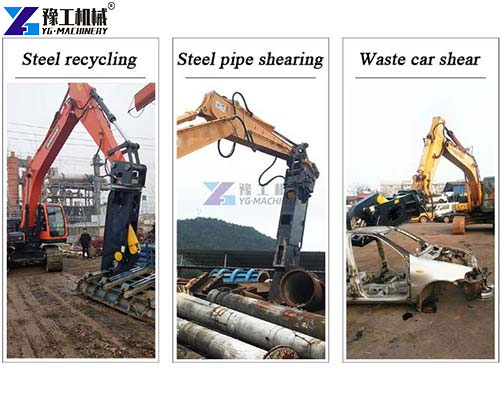
1.Steel Structure Demolition: Hydraulic shears can cut steel beams, pipes, plates, frames, and other metal components during building and industrial structure demolition.
The operator can progressively cut large structures into smaller sections for easier handling and transportation.
2.Scrap Metal Recycling: For scrap yards and recycling operations, hydraulic shears help reduce large steel components into manageable pieces.
They can process scrap steel, metal pipes, tanks, plates, and other recyclable materials.
3.Vehicle Dismantling: Hydraulic shears can also be configured for vehicle dismantling and scrap car processing.
They are suitable for cutting vehicle bodies and metal components during end-of-life vehicle recycling. For small cars, vans, and agricultural vehicles, a compact vehicle-scrapping configuration can be selected according to the required working capacity.
4.Industrial Plant Demolition: Old chemical plants, cement plants, steel facilities, workshops, and other industrial structures often contain large amounts of steel.
An excavator hydraulic shear can cut structural steel and metal components after the surrounding structure has been dismantled.
5.Shipbreaking and Heavy Scrap Processing: For heavy-duty metal recycling, larger excavator-mounted shears can be used to cut steel components from ships and other large structures. The excavator size, hydraulic system, jaw opening, and cutting capacity need to be matched to the specific application.
Hydraulic Shear vs. Hydraulic Breaker
Although both are excavator attachments, they are designed for different materials and working principles.
| Attachment | Main Function | Typical Materials |
|---|---|---|
| Hydraulic Shear | Cuts and separates material | Steel, pipes, tanks, scrap metal |
| Hydraulic Breaker | Breaks material through impact | Concrete, rock, masonry |
| Hydraulic Pulverizer | Crushes and separates material | Concrete and reinforced concrete |
| Hydraulic Grapple | Grabs, sorts, and handles material | Scrap, debris, structural materials |
If the main requirement is cutting steel rather than breaking concrete or rock, a hydraulic shear is generally the more appropriate attachment.
How to Choose a Hydraulic Shear for Your Excavator?
Before purchasing an excavator hydraulic shear, consider the following factors.
1. Excavator Operating Weight
The shear must be matched to the excavator’s operating weight and lifting capacity. An attachment that is too heavy can affect machine stability and working performance.
2. Hydraulic Flow and Pressure
Check the excavator’s auxiliary hydraulic flow and operating pressure against the shear manufacturer’s requirements.
Incorrect hydraulic matching can result in insufficient cutting performance or excessive stress on the attachment.
3. Material Type and Thickness
Identify the material you need to cut and its typical thickness.
Thin sheet metal, pipes, structural steel, vehicle bodies, and heavy steel components may require different shear configurations and cutting capacities.
4. Jaw Opening and Attachment Weight
Jaw opening affects how easily the operator can position material inside the shear. Attachment weight also needs to remain within the excavator’s recommended operating range.
5. Fixed or Rotary Configuration
If the application requires frequent adjustment of the cutting direction, a rotary configuration can provide greater positioning flexibility.
For simpler applications, a fixed configuration may be sufficient.
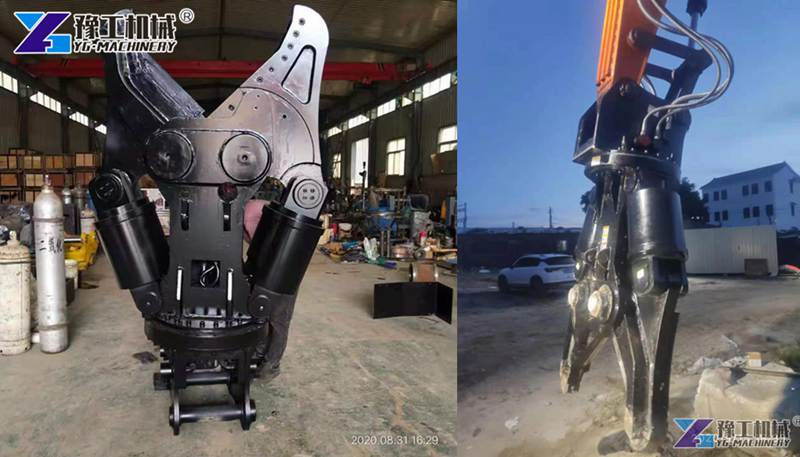
England Customer Ordered a Double-Cylinder Hydraulic Shear
A customer in England ordered a double-cylinder hydraulic shear from YG Machinery for metal cutting and demolition work.
The customer required an excavator attachment capable of handling steel and scrap materials while providing convenient feeding and cutting during operation.
YG Machinery recommended a double-cylinder hydraulic shear based on the customer’s application requirements.
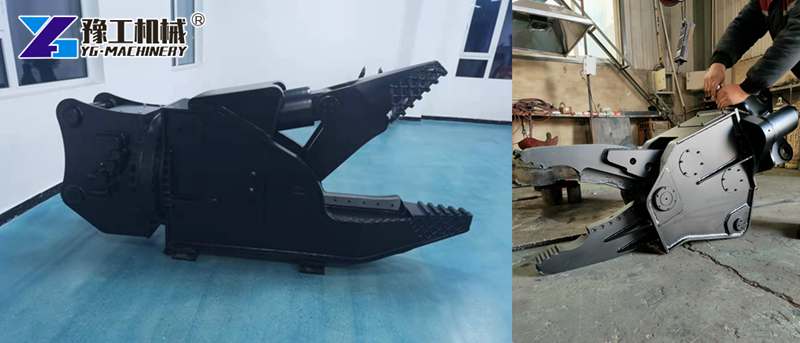
The straight-mouth jaw design provides an open feeding area for placing metal materials into the shear, while the two-cylinder configuration provides the hydraulic power required for demanding cutting work.
This case demonstrates why shear selection should be based on the material, cutting requirements, excavator size, and working conditions, rather than choosing an attachment based only on its appearance or nominal size.
Hydraulic Shear Maintenance
Regular maintenance helps maintain stable cutting performance and extend the service life of the attachment.
Key maintenance points include:
- Inspect cutting blades for wear or damage.
- Check hydraulic hoses and fittings for leaks.
- Inspect cylinder connections and pins.
- Keep pivot points properly lubricated.
- Check bolts and structural components regularly.
- Replace or sharpen cutting blades when required.
- Avoid cutting materials beyond the shear’s recommended capacity.
The actual maintenance interval should follow the manufacturer’s operating and maintenance instructions.
FAQ About Hydraulic Shears for Excavators
1.What can an excavator hydraulic shear cut?
Hydraulic shears can be used to cut steel structures, scrap metal, pipes, tanks, vehicle bodies, plates, and other metal materials. The suitable material thickness depends on the shear model and configuration.
2.What is the difference between a single-cylinder and double-cylinder hydraulic shear?
A single-cylinder shear uses one hydraulic cylinder to operate the jaws, while a double-cylinder shear uses two. The appropriate configuration depends on the required cutting capacity, material, excavator size, and working conditions.
3.Can a hydraulic shear rotate?
Yes. A hydraulic shear can be configured with a hydraulic rotation mechanism when the application requires flexible positioning. Rotation is a configuration feature rather than a separate basic product category.
4.Can an excavator shear be used for vehicle dismantling?
Yes. Hydraulic shears can be configured for vehicle dismantling and scrap car processing. The appropriate model depends on the vehicle type, material thickness, and excavator size.
5.How do I choose the right hydraulic shear?
Start with the excavator operating weight, auxiliary hydraulic flow and pressure, material type, material thickness, required jaw opening, attachment weight, and whether hydraulic rotation is needed.
Hydraulic Shears for Excavator for Sale
YG Machinery supplies single-cylinder and double-cylinder hydraulic shears for excavators for demolition, steel cutting, scrap recycling, vehicle dismantling, and industrial applications.
Send us your excavator model, operating weight, hydraulic flow and pressure, and the material you need to cut. We can recommend a suitable hydraulic shear configuration for your application.